Standing in the lubricants and adhesives aisle, you're not really choosing between two similar products. You're choosing between two entirely different repairs. The silicone lubricant is aimed at parts that need to move again. The E6000 adhesive glue is made for pieces that need to become one again. If you grab the wrong one, no amount of swapping will help you finish the job.
Quick Verdict
For parts that need to slide freely, the silicone lubricant is your pick. For a broken object that needs bonding, the E6000 adhesive is the one to reach for. Both are labeled industrial strength, but they solve opposite problems. The $4.24 price spread puts the lubricant at the higher price point and the glue at the lower one.
Price and Size Comparison
| Product | Price | Format | Size | Type | Best For |
|---|---|---|---|---|---|
| Silicone Lubricant Spray (Pack of 2) | $10.03 | Two canisters | 11 oz each | Silicone lubricant | Moving parts |
| E6000 Adhesive Glue | $5.79 | One tube | 1 fl oz | Multi-purpose adhesive | Bonding broken items |
Where Each Product Wins
Silicone Lubricant Wins When You Need Movement. The formula eliminates sticking and squeaking, won't attract dust and dirt, and protects against moisture without oxidizing. That makes it a solid match for metal tools, plastic tracks, wood drawers, rubber seals, vinyl trim, and leather items.
E6000 Adhesive Wins When You Need a Multi-Material Bond. The precision tip lets you control the flow, and the adhesive grips wood, glass, fabric, ceramic, gems, metal, marble, concrete, and fiberglass. It's the kind of glue you reach for when a broken object is worth saving.
Product Notes
Silicone Lubricant Spray (Pack of 2)
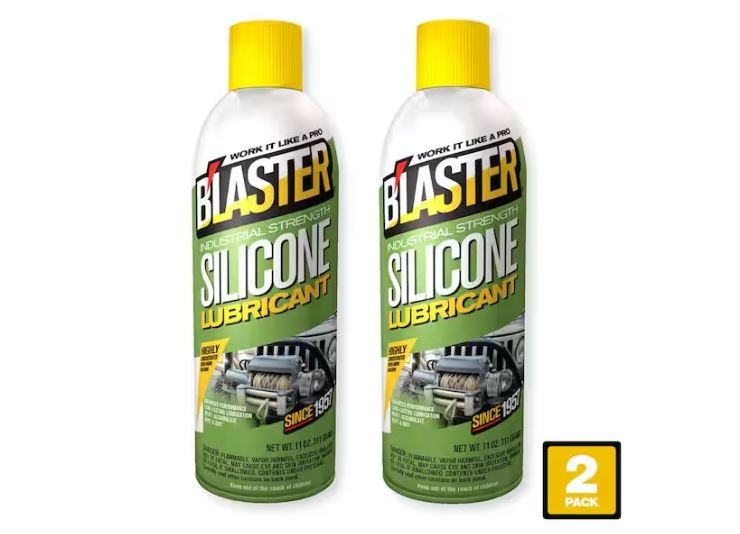
Choose this two-pack when your repair is about motion. You're getting two full canisters that can tackle squeaky door hinges, sticky locks, sliding plastic drawers, and rubber window seals. The silicone base resists water and won't oxidize, and the non-staining formula means it won't leave marks on leather or vinyl. It's a practical option if you have multiple mechanisms around the home. The two canisters give you enough product to keep one at home and one in a workspace. The main limitation is the format: it's a spray, so on small, tightly packed parts you'll want to apply carefully to avoid overspray.
E6000 Adhesive Glue
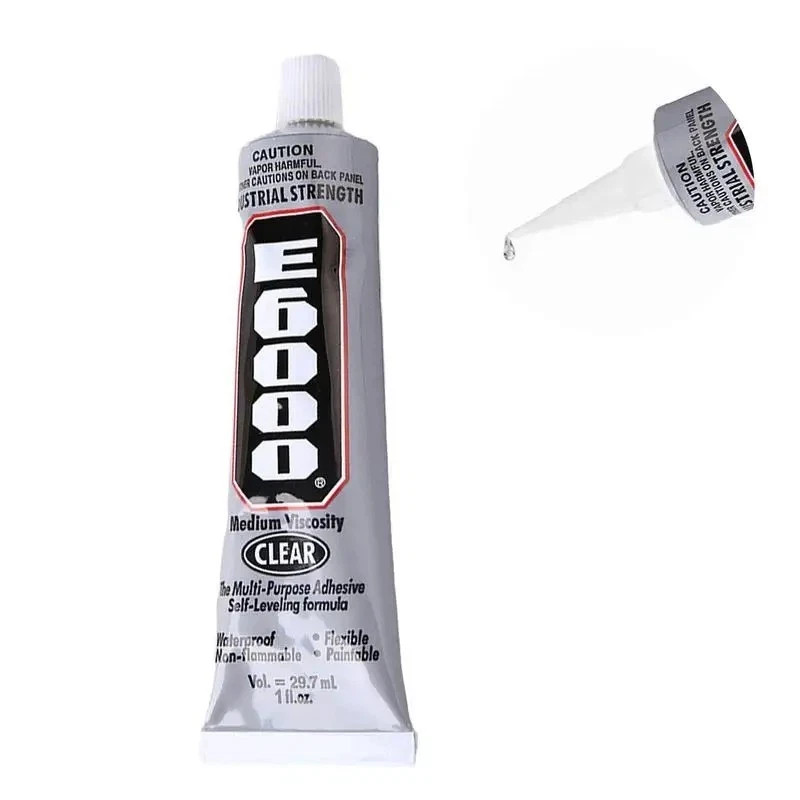
The E6000 tube gives you a single ounce of multi-purpose adhesive with a precision tip. That tip is the reason to grab it for detailed work like reattaching a rhinestone, fixing a ceramic dish, or bonding a metal clasp to fabric. The glue's compatibility with wood, glass, ceramic, gems, metal, marble, concrete, and fiberglass makes it a useful single-tube fix for projects that combine different materials. The white finish suits light-colored surfaces. Its limitation is the small size: for a big repair, like re-gluing a chair leg or a large ceramic tile, you'll likely need more than one tube.
Final Choice by Use Case
If your project is a cabinet hinge that needs to move freely, a window track that has slowed down, or a seal that needs to stay flexible, the silicone lubricant is the practical pick. If your project is a broken mug, a loose gem, or a detailed craft fix, the E6000 adhesive is the right tool. For a workshop that gets both kinds of jobs, having one of each covers far more ground than choosing between them.