When you're putting together a linear motion setup in hydraulics pneumatics, the first big question is whether air or hydraulic fluid should do the pushing. The two cylinders on the table sit on opposite sides of that answer: a compact pneumatic cylinder for $28.99 and a tie-rod hydraulic cylinder for $126.34. One is built for fast, light-duty cycling; the other for high-pressure force. The right pick comes down to the load you're moving, the space you have, and how often the cylinder will cycle.
Quick Verdict
Choose the air cylinder when you need quick, repetitive motion in a tight space and you're working with an air supply. Choose the hydraulic cylinder when the job demands real pushing strength and your system is already set up for hydraulic fluid.
At a Glance
| Product | Listed Price | Price Bar | Key Specs |
|---|---|---|---|
| Air Cylinder 16mm Bore 300mm Stroke | $28.99 | 16mm bore, 300mm stroke, double-acting, M5 port, 12.6 oz | |
| 2.5x6 Hydraulic Cylinder | $126.34 | 2.5-inch bore, 6-inch stroke, double-acting tie-rod, 2500 PSI |
Where Each Product Wins
- The air cylinder wins on speed and weight. At 12.6 ounces, it's light enough for small fixtures and its M5 port connects to typical pneumatic lines. The package also includes a Y connector and four quick fittings.
- The hydraulic cylinder wins on force. With a 12,270 lb column load, it's designed for heavy pushing and pulling in a tie-rod format. The 1-inch pin hole and 3/8-inch NPT port suit industrial mounting.
Product Notes
Air Cylinder 16mm Bore 300mm Stroke
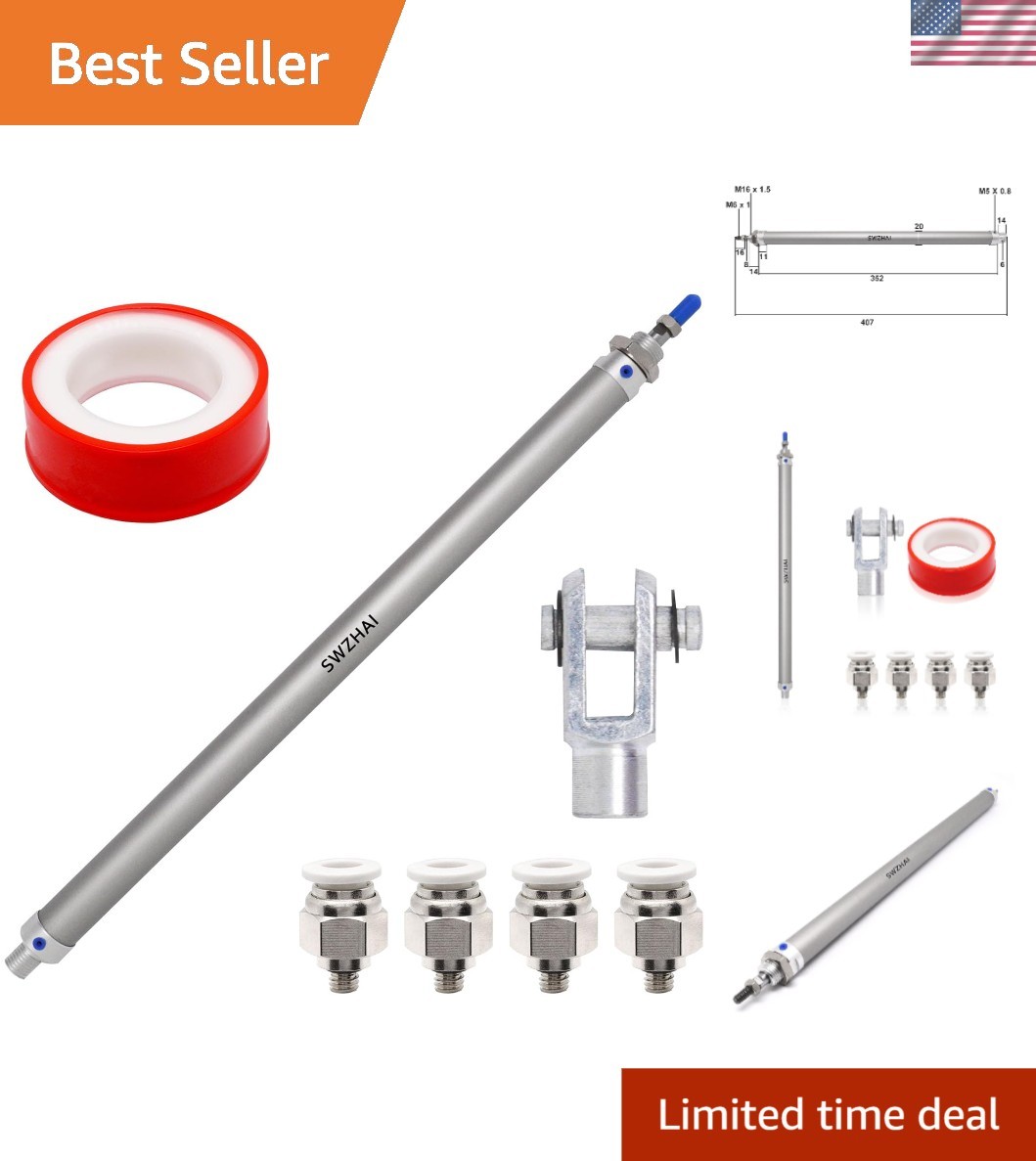
The air cylinder is a good fit when your cycle times are short and your loads are light. Its aluminum alloy body gets a hard oxidation treatment for wear resistance, and the guide-type bi-directional sealing helps it hold up in high-frequency working environments. The double-acting design gives you controlled motion in both directions, and the package includes a Y connector and four pneumatic quick fittings so you have the basic plumbing parts on hand. The small-diameter build keeps the package compact, but the trade-off is force: pneumatic systems are limited by air pressure, so the push force is much lower than a hydraulic cylinder's. If you only need to move small parts or actuate a lightweight mechanism, this cylinder keeps your setup small and simple.
2.5x6 Hydraulic Cylinder
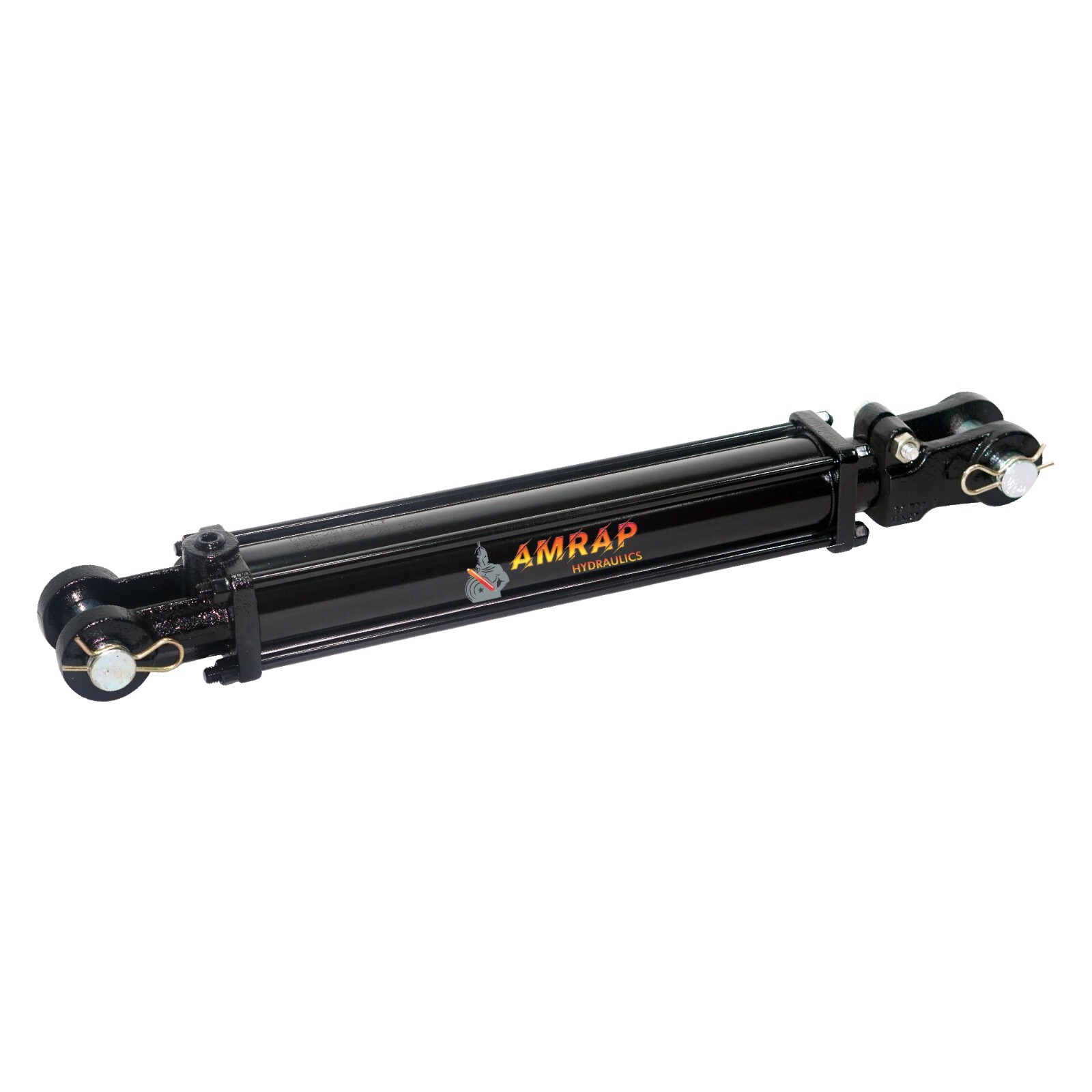
This AMRAP Co tie-rod cylinder is for the jobs that need serious muscle. It has a max operating pressure of 2500 PSI and a column load rating of 12,270 lbs, so it is built to handle substantial pushing and pulling. The double-acting design uses hydraulic fluid on both sides of the piston, giving you controlled motion in both directions. The tie-rod construction is a familiar setup for industrial cylinders, and the 1-inch pin hole plus 3/8-inch NPT port make it straightforward to connect. The practical limitation is its physical size: the retracted length is 16 1/4 inches and the extended length is 22 1/4 inches, so you need generous mounting space. Make sure the clearance is there before you commit.
Final Choice by Use Case
If your application is a light-duty automation jig, a gate, or a sorting mechanism that runs often, the air cylinder gives you the response time and low weight you want. If you are clamping, pressing, or lifting something heavy and you have a hydraulic power unit, the hydraulic tie-rod cylinder is the one to build around.