Two double-acting pneumatic cylinders are sitting at nearly the same price, but they are built for different jobs. One offers long travel in a narrow diameter, while the other pairs a wider bore with a short stroke. If you are choosing for an automation rig, a custom air-powered fixture, or a replacement part for an existing line, the right pick depends on how far the rod needs to move and how much space the cylinder can occupy. Both are new double-acting units, so you already know you are getting bidirectional force. The real question is whether you need reach or bore width first.
Quick verdict
For most compact automation work, go with the long-travel mini cylinder if travel distance is your limiting factor. Choose the SC32x100 if you prefer a wide bore with a short stroke for a tidy compact setup.
Comparison
| Feature | 16mm Bore 300mm Stroke | SC32x100 |
|---|---|---|
| Price | USD 28.99 | USD 28.72 |
| Bore | 16 mm | 1-1/4 inch |
| Stroke | 300 mm | 4 inch |
| Action | Double-acting | Double-acting |
| Body | Aluminum alloy with hard-oxidized surface | Aluminum alloy, silver finish |
Where each product wins
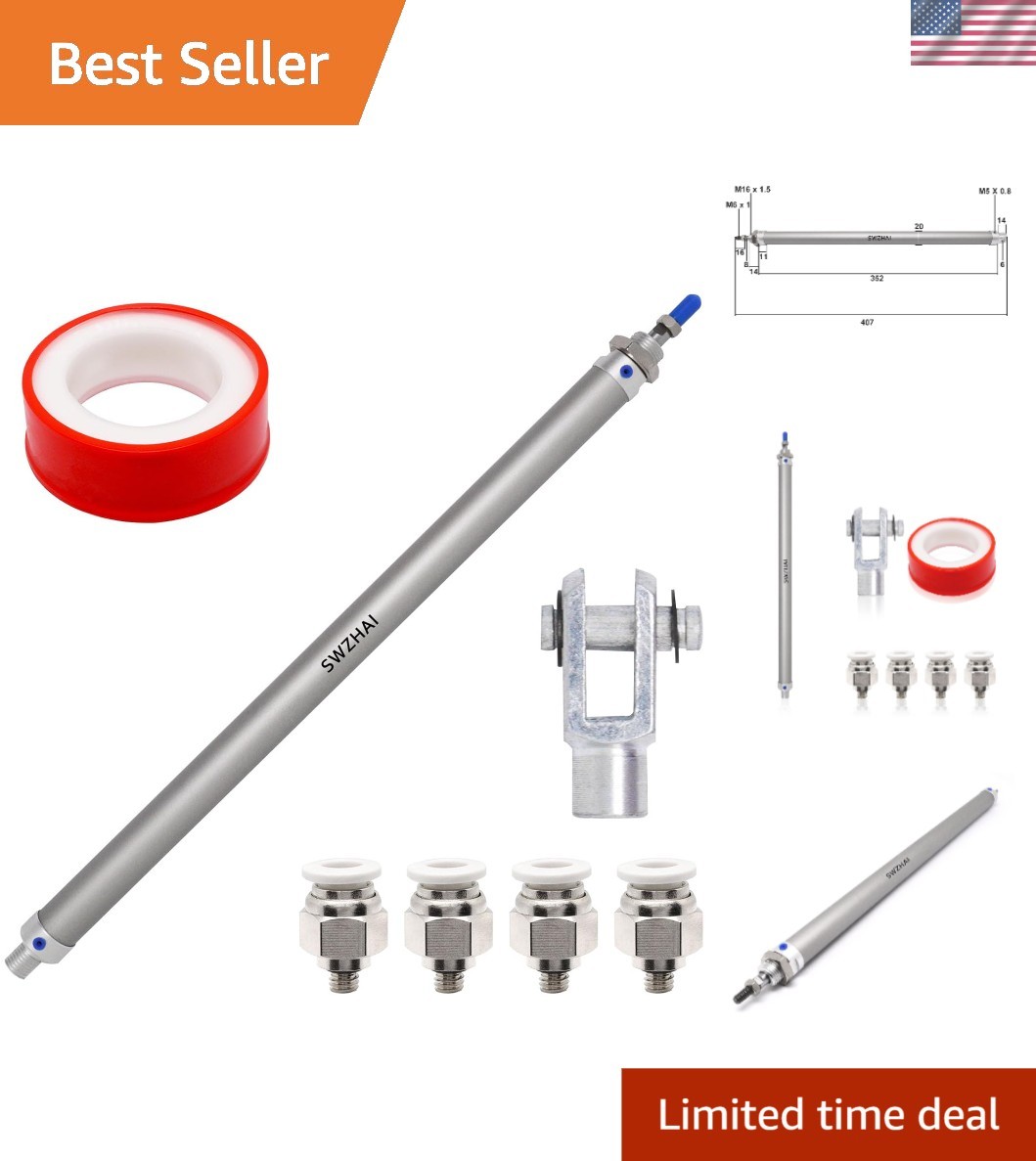
- The mini cylinder wins when travel distance matters more than bore width. The long stroke, combined with the included accessories, makes it easy to wire into a small pneumatic setup without buying extra parts.
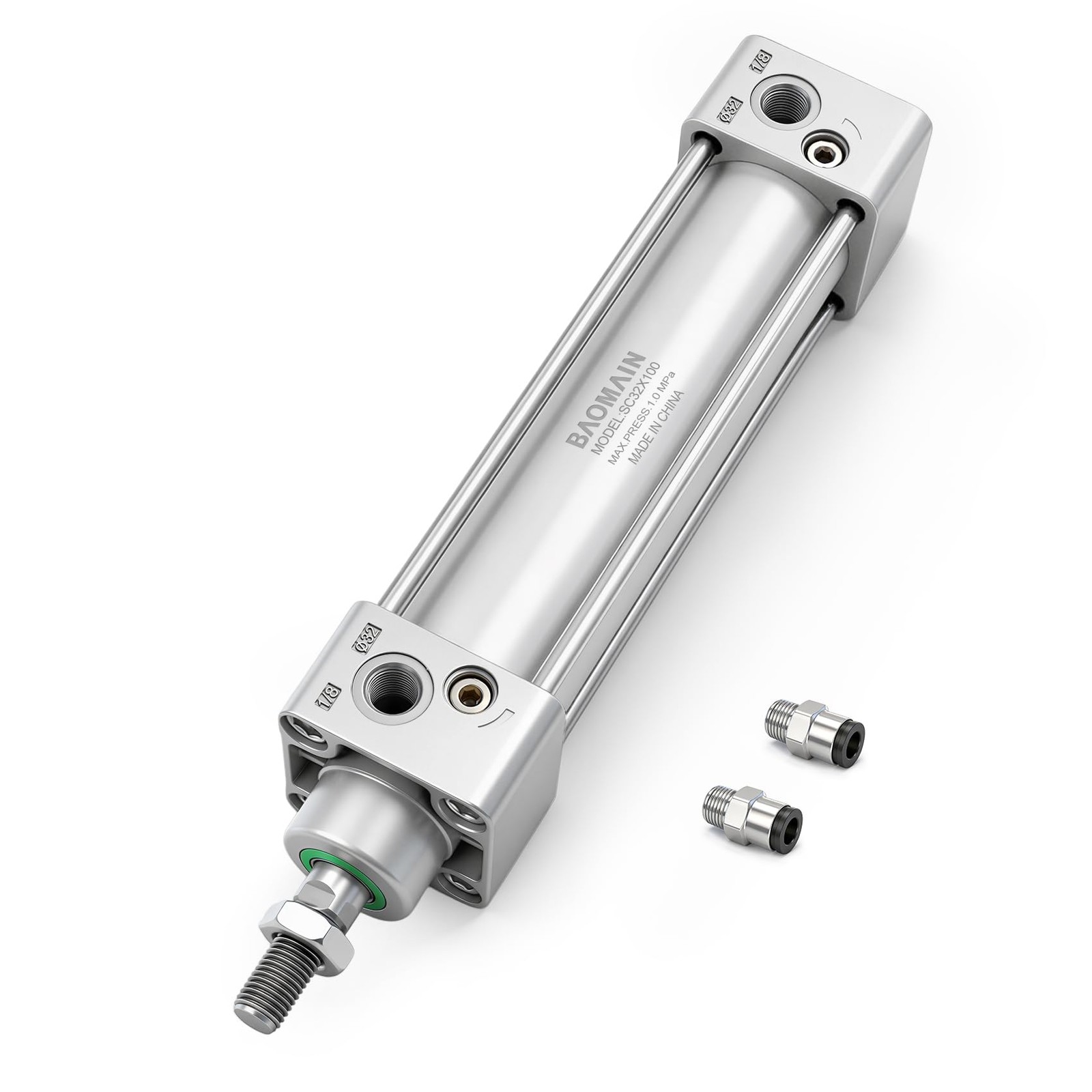
- The SC32x100 wins when you want a standard bore and a shorter stroke in a tidy package. Its self-lubricating bearing is a practical touch for applications where you do not want to deal with oiling the rod.
Air Cylinder 16mm Bore 300mm Stroke, Mini Air Pneumatic Cylinder Double Actio
The appeal here is the long 300mm stroke packed into a 16mm bore. The hard-oxidized surface improves wear resistance, and the package includes one MAL16 X 300 cylinder, one Y connector, and four pneumatic quick fittings. That makes it a convenient option if you are setting up a small automation fixture and want the connection pieces in the same box. Weighing 12.6 ounces and measuring 17.68 x 3.03 x 2.44 inches, it is light enough for compact rigs. The M5 port size suits compact air lines. The main limitation is the small 16mm bore: it is aimed at jobs where the rod needs to reach far, not at applications that require a large-diameter cylinder. If your setup has the space for a longer body, the 300mm stroke gives you plenty of travel.
Pneumatic Air Cylinder 1-1/4" Bore 4" Stroke SC32x100
This standard cylinder is aimed at industrial automation. It has a 1-1/4 inch bore and a 4 inch stroke, giving you a compact envelope for clamping, pushing, or lifting jobs. The silver-finished body is built for a compact envelope, and the self-lubricating bearing means the piston rod can move without needing additional oil. At $28.72, it costs $0.27 less than the 16mm bore model. If you need a known bore-and-stroke combination and want to avoid adding lubricant to the rod, this is the more convenient package. It is sold as a single unit. The shorter stroke means you will need to plan your travel around 4 inches, and the 1-1/4 inch bore is wider than the mini cylinder, so it takes up more cross-sectional space. For a fixed stroke in a compact automation cell, this is the option that keeps the design simple.
Final choice by use case
Choose the long-travel mini cylinder when reach is the priority and you can work with a narrow bore. It is a ready-to-hook-up option with the Y connector and quick fittings included, and the long stroke makes it easier to design for applications that move parts across a distance. Choose the SC32x100 when you want a conventional bore with a short stroke and a low-maintenance bearing. It is a straightforward option for typical pneumatic tasks where the travel is short and the cylinder needs to fit into a tight envelope. If you are still deciding, measure the travel you need first, then check the available space; that will point you to the right bore-and-stroke pairing.