In the PPE and LOTO workplace safety corner of an industrial supply room, two hazards tend to drive most purchases: falls from height and unexpected machine startup. They need completely different gear. This head-to-head compares a fall arrest system with a lockout tagout kit to help you choose the one that matches your actual work site.
Quick Verdict
If your crew works at height-on roofs, ladders, platforms, or in rescue operations-the fall arrest system at $57.48 is the immediate buy. If your team services machinery, electrical panels, or plumbing with stored energy, the lockout tagout kit at $157.98 gives you the devices to control hazardous energy. Let the work decide.
At a Glance
| Feature | 330-Lb Fall Arrest Equipment | Lockout Tagout Kit |
| Price | $57.48 | $157.98 |
| Price indicator | | |
| Primary hazard | Falls | Unintended startup |
| Best for | Rescue, height work | Machinery, electrical, plumbing |
| Key strength | 330-lb load capacity; 65.62-ft operating range | Wide range of lockout devices in one portable case |
| Limitation | Fall protection only | Energy isolation only |
Where Each Product Wins
For fall hazards, the fall arrest system wins. Its braking system, spring-loaded snap hook, and long operating range make it a solid fit for elevated tasks and rescue. For energy control, the lockout tagout kit wins. It bundles circuit breaker lockouts, padlocks, hasps, tags, cable ties, a cable lockout, plug lockout, and valve lockouts into a 304 steel box, so maintenance crews can secure multiple energy sources at once. This makes the choice straightforward once you identify the hazard your workers encounter on a typical shift.
330-Lb Fall Arrest Equipment

This system gives you a 65.62-foot operating range and a 330-pound maximum working load, with breaking strength above 8900N. The ratchet-style dual-disc braking system and spring-loaded snap hook are built for rescue and elevated work, while the aviation-grade alloy steel and aluminum construction resists rust and deformation. If your tasks involve rooftops, ladders, platforms, or rescue scenarios, this is the system that directly addresses fall hazards. The limitation: it is a fall arrest tool. It does nothing to isolate machinery energy or prevent a machine from starting during maintenance. That is a separate hazard requiring a separate lockout/tagout kit.
74 PCS Lockout Tagout Kit
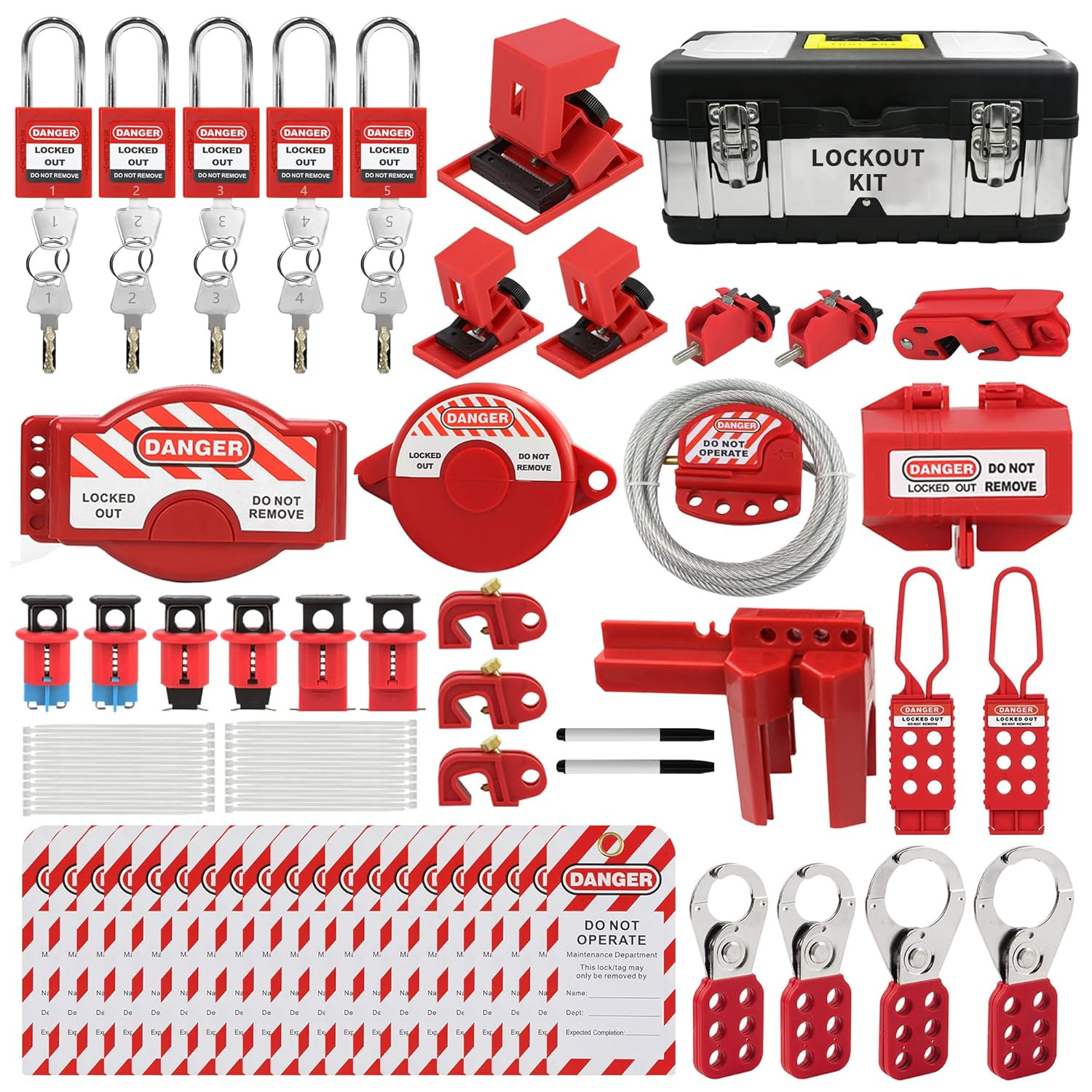
This kit bundles a broad set of energy-isolation devices: circuit breaker lockouts, key-different padlocks, lockout hasps, tags, nylon cable ties, a cable lockout, plug lockout, and valve lockouts, all housed in a 304 steel storage box. The included components let a maintenance team secure electrical and mechanical sources before servicing, from panels to valves. It is aligned with OSHA's lockout standard, making it a practical choice for industrial settings. Choose it when your crew regularly works with stored energy and needs multiple lockout points covered. The trade-off is its scope: it is purpose-built for lockout/tagout, not for fall protection. If your hazard assessment doesn't include stored energy, the kit's full set of devices may be more than you need.
Final Choice by Use Case
Choose the fall arrest system when your primary risk is working at height-roofs, platforms, ladders, rescue, or any task where a fall could occur. Choose the lockout tagout kit when your team services machinery, electrical panels, or plumbing where accidental startup is a danger. If both hazards exist, prioritize the one your crew faces most often; each product solves a different safety problem, and the right pick depends on the work, not the price difference. A complete safety program eventually needs both, but the right starting point is the hazard your workers actually meet on a typical shift.