Choosing the right coupling for a motor or shaft is rarely about picking the cheapest part; it's about whether the connection can handle torque, misalignment, and precision. In the bearings couplings power transmission space, two couplings on opposite ends of the design spectrum stand out: the 40Cr Steel CNC Flexible Shaft Coupling at USD 12.05 and the Rigid Coupling Aluminium Motor Shaft Coupling Coupler at USD 1.99. One gives you flexibility, the other gives you rigidity. Which one belongs on your machine?
Quick Verdict
If you are connecting a 4.76 mm (3/16") flexible shaft to a high-torque brushless motor and need some allowance for imperfect alignment, choose the 40Cr Steel CNC Flexible Shaft Coupling. If you need a backlash-free, torsionally rigid connection between a servo or stepper motor and a ball screw, and your shafts fall within the 5-10 mm bore range, the Rigid Coupling Aluminium Motor Shaft Coupling Coupler delivers that at a much lower price.
At a Glance
| Feature | 40Cr Steel Flexible Coupling | Rigid Aluminium Coupling |
|---|---|---|
| Price | USD 12.05 | USD 1.99 |
| Material | 40Cr steel | Aluminium |
| Shaft fit | 4.76 mm (3/16") flexible shaft | 5-10 mm bore; 6.35-10 mm inner diameter |
| Design | Flexible | Rigid |
| Best suited | High-torque brushless motors and flexible shaft runs | Precision machine tools, CNC systems, servo/stepper to ball screw |
Where Each One Wins
The 40Cr steel flexible coupling wins whenever your shafts are not perfectly aligned or when you are working with a flexible shaft system. Its CNC-machined steel body is built for high-torque applications, and the bore is intentionally 0.02 mm smaller than the marked diameter to create a tighter grip. That also means installation can be stubborn: the description advises heating the coupling to 200-300°C if it doesn't slide on easily.
The rigid aluminium coupling wins on price and unyielding precision. It is designed to prevent any relative displacement-axial, radial, or angular-at the connection point. That makes it a natural fit for machining centers, CNC lathes, precision grinding machines, and engraving machines where positioning accuracy depends on backlash-free power transmission.
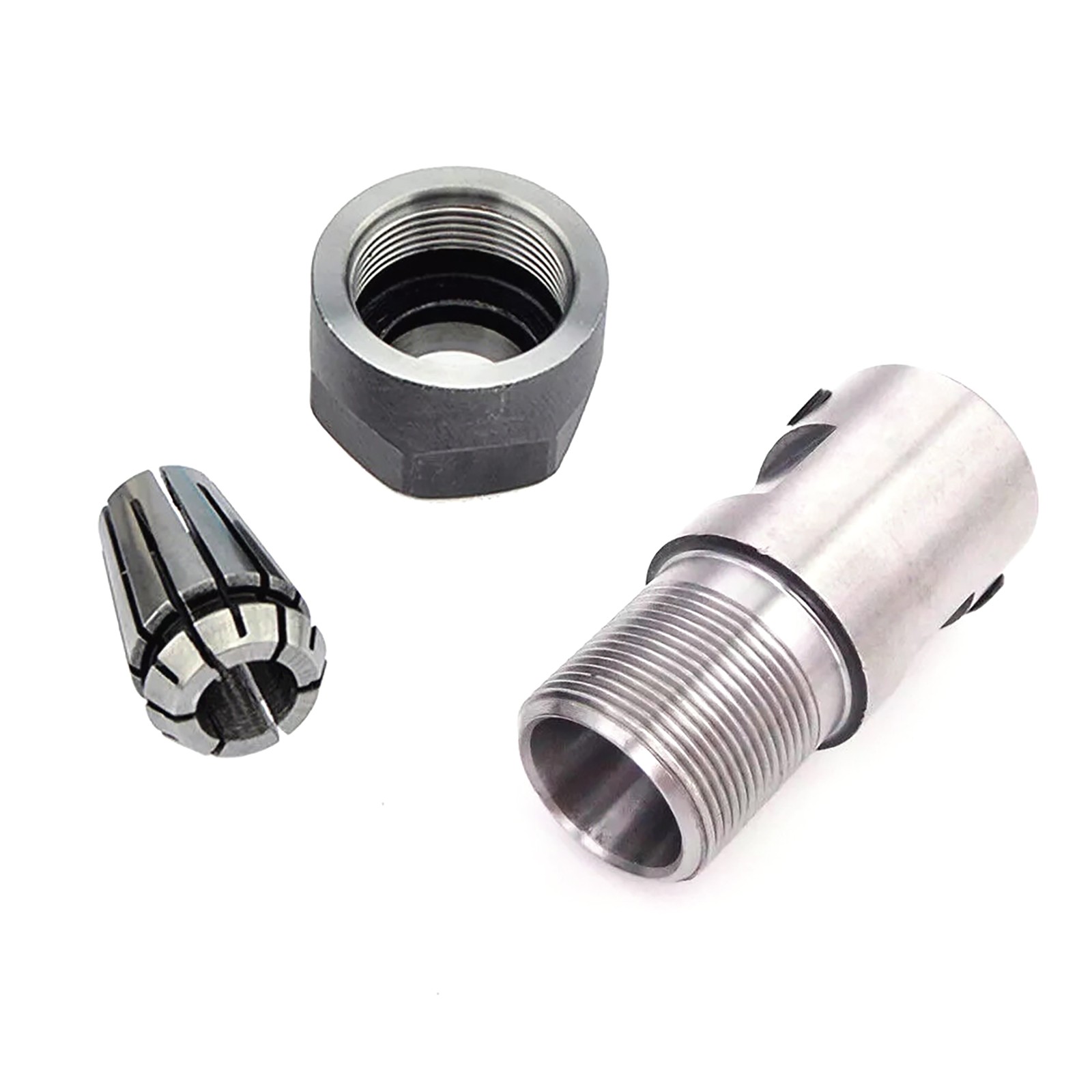
40Cr Steel CNC Flexible Shaft Coupling Fits For 4.76mm (3/16") Flexible Shaft
This coupling is built for situations where you need torque transfer along a flexible shaft, not just a straight rigid connection. The 40Cr steel construction and CNC machining make it a strong candidate for high-torque brushless motors like those in the 5694 series. One standout detail is the negative tolerance bore: it is 0.02 mm smaller than the marked diameter, so once installed, the shaft is less likely to slip. Keep in mind that the tight fit can make installation difficult. If it does not go on, the manufacturer recommends heating the coupling to 200-300°C first. At USD 12.05, it costs noticeably more than the rigid aluminium option, but for flexible-shaft applications, that added grip and steel strength can be worth it. The package includes one set of flexible shaft couplings, so check your shaft size before ordering.
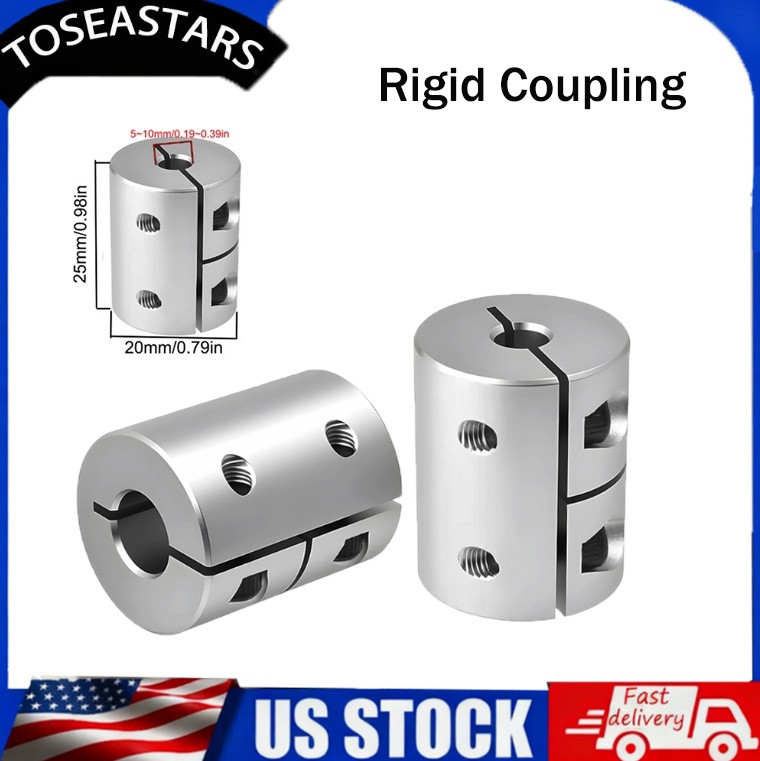
Rigid Coupling Aluminium Motor Shaft Coupling Coupler 1/5To2/5" Flanged Coupling
This is the low-cost, high-rigidity choice. Made from aluminium and measuring 20 mm in outer diameter with a 25 mm inner length, it accepts bores from 5-10 mm (inner diameter 6.35-10 mm). The design is deliberately simple: no flexible elements, no moving parts, just a solid coupler with high torsional rigidity. That makes it well suited for precision machine tools and CNC systems where backlash would ruin positioning accuracy. It is also described as low maintenance and cost-effective to operate. The main limitation is that it is rigid, so any misalignment between the motor shaft and the driven component will not be absorbed. You need to make sure your shafts are properly aligned, and that their diameters fit within the listed bore range. At USD 1.99, it is a very affordable way to get a stable, synchronized connection in a rigid setup.
Final Choice by Use Case
Go with the 40Cr Steel CNC Flexible Shaft Coupling if you are dealing with a 4.76 mm flexible shaft, especially on a high-torque brushless motor, and you want some forgiveness in alignment. Go with the Rigid Coupling Aluminium Motor Shaft Coupling Coupler if you are building or repairing a precision machine with a 5-10 mm shaft and you want a tight, backlash-free connection without spending much. Your decision really comes down to whether the system needs to bend or stay perfectly straight.