Walk into any workshop or utility closet and you'll find at least one can of spray lubricant. But when the task ranges from silencing a squeaky hinge to keeping a conveyor belt moving, you need to pick the right formula. The two Blaster sprays here take very different routes: one delivers a liquid silicone film that stays flexible on many materials, and the other leaves a dry graphite coating that handles heat and resists dust. Your job's demands - not the price tag alone - should drive the decision.
Quick Verdict
If you want a versatile lubricant for rubber, plastic, metal, wood, vinyl, and leather, choose the Blaster Silicone Lubricant Spray 11 Oz. If you need a dry film for locks, chains, gears, hoists, and high-temperature applications, go with the 5.5 oz. Industrial Graphite Dry Lubricant Spray.
Price & Attributes at a Glance
| Product | Price | Size | Relative Price |
|---|---|---|---|
| Blaster Silicone Lubricant Spray 11 Oz. Industrial Strength | $4.09 | 11 oz | |
| 5.5 oz. Industrial Graphite Dry Lubricant Spray | $10.75 | 5.5 oz |
The silicone spray costs less and comes in a larger can, while the graphite spray is the higher-priced specialty option. Both are new-condition Blaster products, but their formulas target different jobs.
Where Each Lubricant Wins
- Blaster Silicone wins on versatility and volume: the 11 oz can is the larger size in this matchup, and the non-evaporating, non-staining formula is well suited for general maintenance across a wide range of materials.
- Blaster Graphite wins on dry-film performance: the 5.5 oz can delivers a dry graphite coating, and the product description highlights high-temperature and low-load uses, plus gaskets, transfer belts, conveyor belts, locks, rollers, wheels, gears, chains, hoists, and thread anti-seize.
Product Notes
Blaster Silicone Lubricant Spray 11 Oz. Industrial Strength
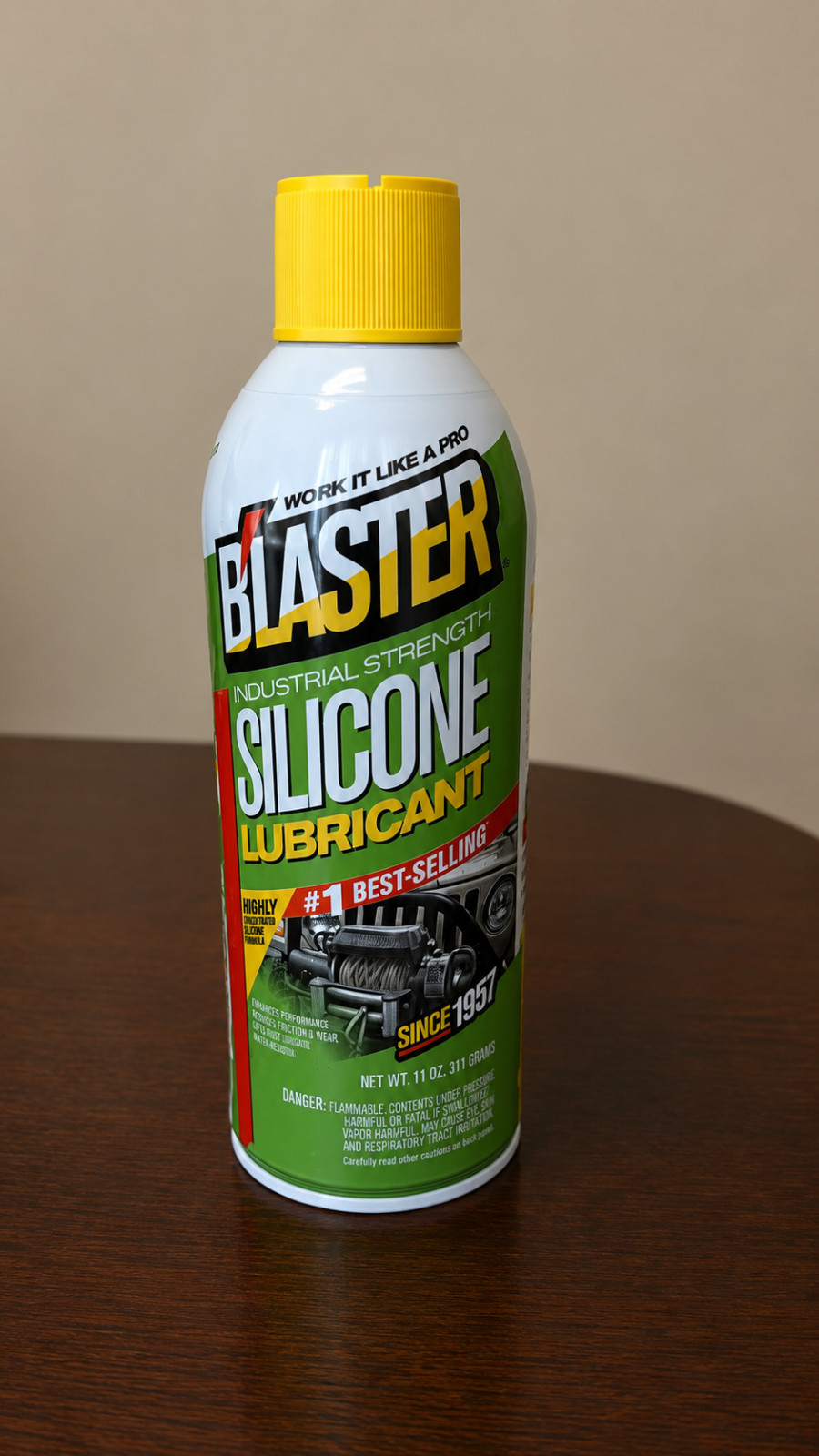
At $4.09 for an 11 oz can, this is the value pick in this pairing. The silicone formula is non-evaporating, so the film stays put for longer-lasting lubrication, and it's non-staining. It's meant for elastomers, metal, plastic, wood, rubber, vinyl, and leather, and it leaves a tack-free film that won't accumulate dust and dirt. If you're lubricating a door hinge, a plastic gear, a rubber seal, or a leather item, this spray is a safe first choice. The main limitation: it's not the specialty answer for high-temperature parts. The graphite spray explicitly covers that territory, while the silicone spray's description focuses on general maintenance and friction reduction without a heat rating.
5.5 oz. Industrial Graphite Dry Lubricant Spray
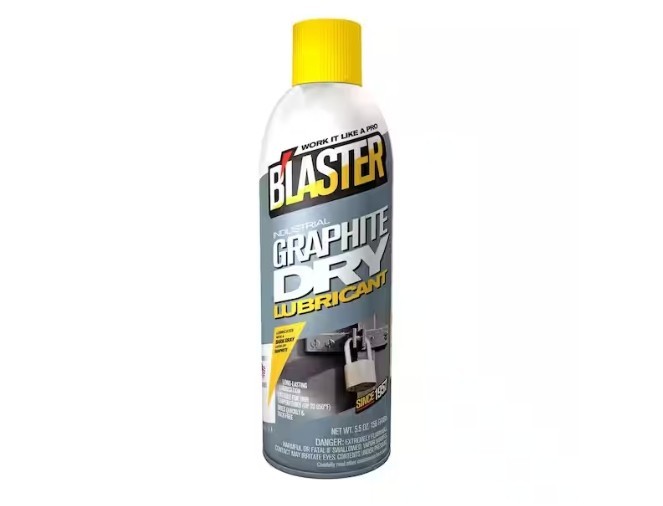
The graphite spray asks for $10.75, so it costs significantly more than the silicone spray for about half the liquid volume. You're paying for a dry-film lubricant that dries to a dark gray/black coating. That dry film makes it useful on gaskets, transfer belts, conveyor belts, locks, rollers, wheels, gears, chains, and hoists. The description also calls it a thread lubricant and anti-seize, and it's recommended for high-temperature and low-load applications. The trade-off is the price and the dark residue: it won't stay invisible, and it's not positioned for the same multi-surface household versatility as the silicone spray. For dusty or high-heat environments, though, the dry graphite film has the clear edge.
Final Choice by Use Case
Choose the Blaster Silicone Lubricant Spray when you want one low-cost can that works across rubber, plastic, metal, wood, vinyl, and leather, and you want a non-staining, tack-free film that won't attract dust. Choose the 5.5 oz. Industrial Graphite Dry Lubricant Spray when your priority is a dry graphite coating for locks, chains, gears, hoists, conveyor belts, gaskets, or any high-temperature/low-load job. Both are Blaster products in new condition, but they solve different problems. For general-purpose shop use, the silicone spray's all-around formula is the easier daily pick. For specialized dry-film performance, the graphite spray is the right tool.