When you're choosing a shaft coupling for a power transmission setup, the first decision is whether your line needs to be locked down or allowed to flex. A rigid coupling connects two shafts as one solid unit, while a flexible coupling absorbs minor misalignment and vibration. These two couplings approach that job from opposite directions, and the right choice depends on your shaft configuration and how much movement you can tolerate. The choice between them isn't about which is heavier or stronger-it's about matching the coupling to the shaft and the alignment reality of your machine.
Quick verdict
For a fixed keyed shaft line that's already aligned, the rigid coupling is the clear pick. For a flexible-shaft motor installation, the CNC-machined flexible coupling offers a simpler fit at a lower listed price.
Comparison at a glance
| Consideration | 40Cr Steel CNC Flexible Shaft Coupling | RC-075-KW, (1-EACH) 3/4" RIGID SHAFT KEYED COUPLING |
|---|---|---|
| Listed price | USD 12.05 | USD 18.59 |
| Shaft fit | Fits 4.76mm (3/16") flexible shaft | For 3/4" diameter keyed shaft |
| Misalignment tolerance | Flexible design absorbs movement | Rigid one-piece, no tolerance |
| Construction | CNC-machined 40Cr steel, 42mm length | Black-oxide steel, one piece, set screw |
| Included | 1 set flexible shaft coupling | 1 each, 2 hex socket set screws |
Where each product wins
- The rigid coupling wins when your shafts are already fixed in position and you need one solid unit.
- The flexible coupling wins when you're working with a small flexible-shaft motor.
- The rigid coupling's one-piece construction is built for continuous forward/reverse or start/stop operation.
Product notes
#### 40Cr Steel CNC Flexible Shaft Coupling Fits For 4.76mm (3/16") Flexible Shaft
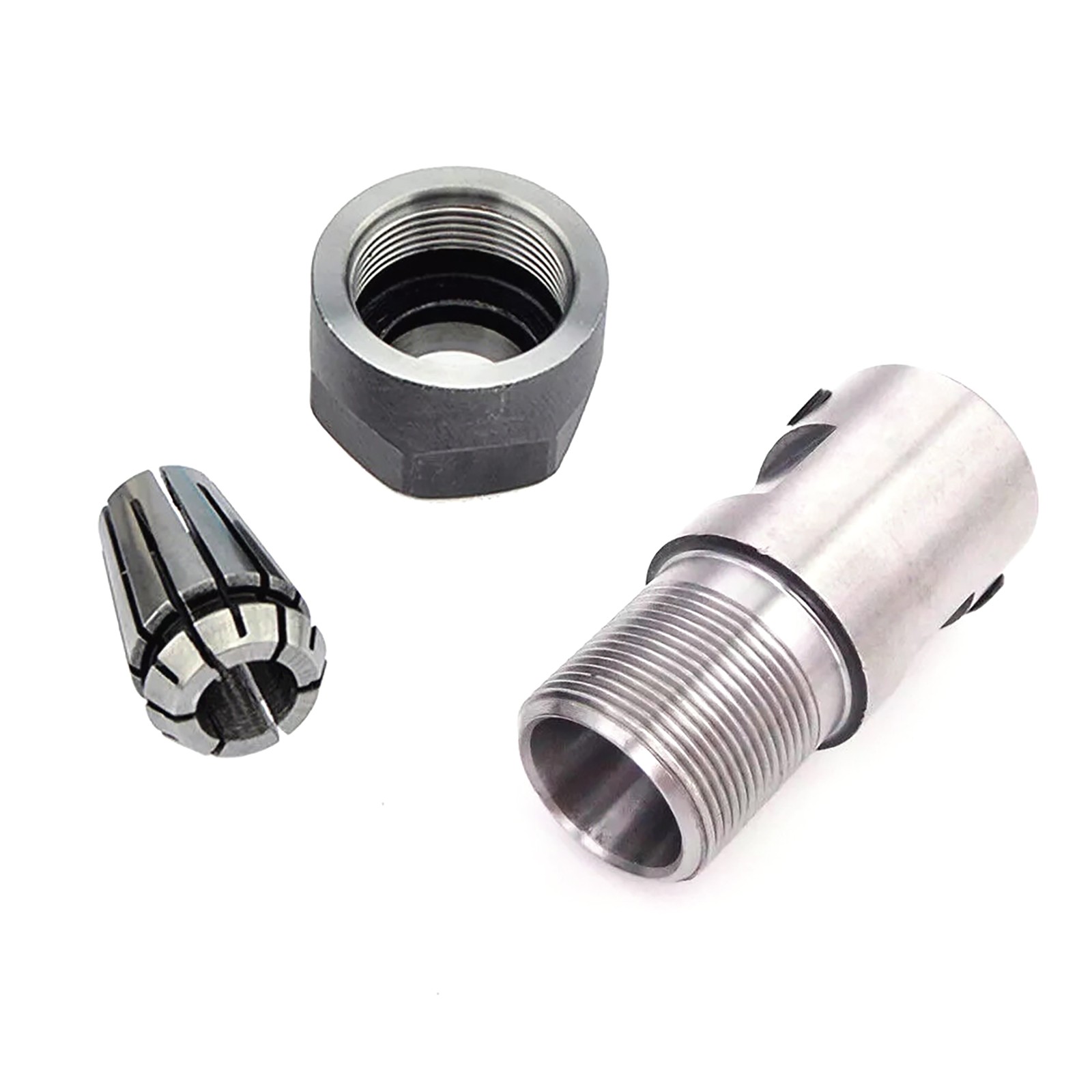
This coupling is specifically made for a 4.76mm (3/16") flexible shaft, with a bore that's deliberately 0.02mm smaller than the marked size for a tighter grip. The 40Cr steel body is CNC machined and sized for high-torque brushless motors, and the flexible design gives you some forgiveness when the shaft centers aren't perfect. It comes as one set.
The catch is installation: because the bore is undersized, you may need to heat the coupling to 200-300°C to slide it onto the shaft if the fit is too tight. That's an extra step you won't deal with on a conventional keyed coupling. All holding power comes from the friction fit-fine for flexible-shaft motor applications, but not a replacement for a keyed lock on a big driven load.
#### RC-075-KW, (1-EACH) 3/4" RIGID SHAFT KEYED COUPLING BLACK OXIDE FINISH
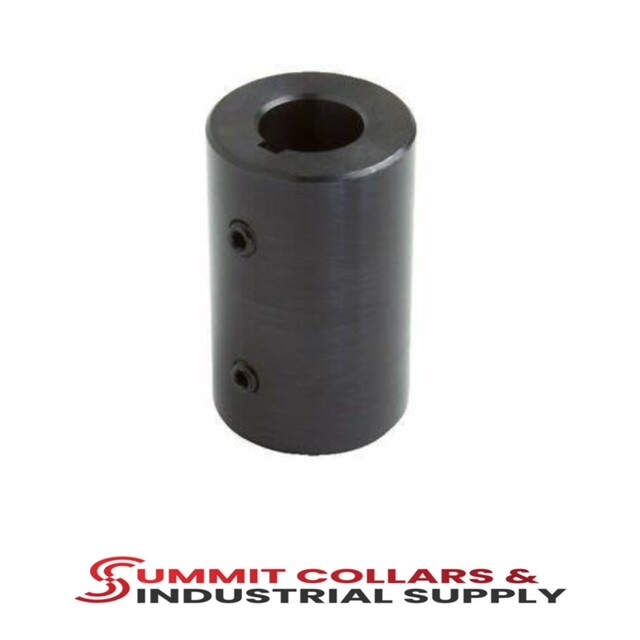
This Summit Collars coupling is a one-piece rigid steel block with a 3/4" bore and a 3/16" x 3/32" keyway cut into it. Two hex socket set screws hold the coupling to the shafts, and the black-oxide finish gives it a corrosion-resistant surface. With an overall length of 2", an outside diameter of 1.5", and a weight of 11.6 oz, it's a solid, compact part. The torque rating of 1,420 in-lbs and maximum speed of 3,450 rpm make it a match for continuous and reversing duty where shafts are already aligned.
The limitation is that it has zero tolerance for misalignment. If the two shafts aren't true, a rigid coupling will transmit that stress straight into the bearings. It is built for 3/4" keyed shafts.
Final choice by use case
If you're building or repairing a machine with a large keyed shaft line and the alignment is already set, choose the RC-075-KW rigid coupling. If you're working with a smaller flexible motor shaft and want some compliance in the connection, the 40Cr steel CNC flexible coupling is the one to order. Once you know your shaft diameter and whether the line can flex, the right coupling becomes clear.