When you're setting up industrial pumps flow control, the first question isn't which pump is better-it's which duty you're actually asking it to do. These two pumps approach fluid handling from opposite directions. One meters small, accurate volumes with adjustable precision; the other uses compressed air and reciprocating diaphragms to push large quantities quickly. Your application decides the winner.
Quick verdict: If you need repeatable, low-flow dosing with adjustable speed and direction, the Industrial Precision Peristaltic Pump is the clear choice. If you need to transfer compatible chemicals or petroleum fluids at up to 35 gallons per minute with line pressure up to 120 PSI, the Air-Operated Double Diaphragm Pump delivers far more volume for $124.13 less.
| Aspect | Precision Peristaltic Pump | Air-Operated Double Diaphragm Pump |
|---|---|---|
| Price | USD 250.14 | USD 126.01 |
| Flow rate | 0.07-380 mL/min | up to 35 GPM |
| Drive | Electric, 30W max, variable speed | Air-operated, 38 CFM average air consumption |
| Construction | ABS casing, PPS pump head, stainless steel drill | Aluminum body, acetal balls, nitrile diaphragm |
| Best for | Dosing, metering, chemical feed | High-volume fluid transfer |
Where the Precision Peristaltic Pump Wins
The peristaltic pump earns its keep when precision matters more than volume. Its variable-speed control lets you fine-tune flow rate, and you can reverse the direction of rotation through the control panel or connected external controls-useful for priming, flushing, or adjusting a dosing line. The 3-digit LED display makes settings easy to read, and the combination of ABS, PPS, and stainless steel points to a durable build for long-term service. This pump is built for tasks like reagent dosing, adding additives, or any job that needs measured milliliters per minute rather than gallons per minute.
Where the Air-Operated Double Diaphragm Pump Wins
If your task is moving volume, the air-operated pump leaves the peristaltic pump behind. With a 1-inch inlet and outlet and a flow rate up to 35 GPM, it can handle bulk transfer jobs that would take the peristaltic pump hours. The 120 PSI rating and 150°F temperature capability broaden its range for heavier industrial service. Its aluminum body, acetal ball valves, and nitrile diaphragm give it a robust, field-repair-friendly design. The trade-off is that it requires a steady supply of compressed air-about 38 CFM average-so you need air infrastructure already in place.
Industrial Precision Peristaltic Pump Variable Speed Liquid Metering Dosing Pump
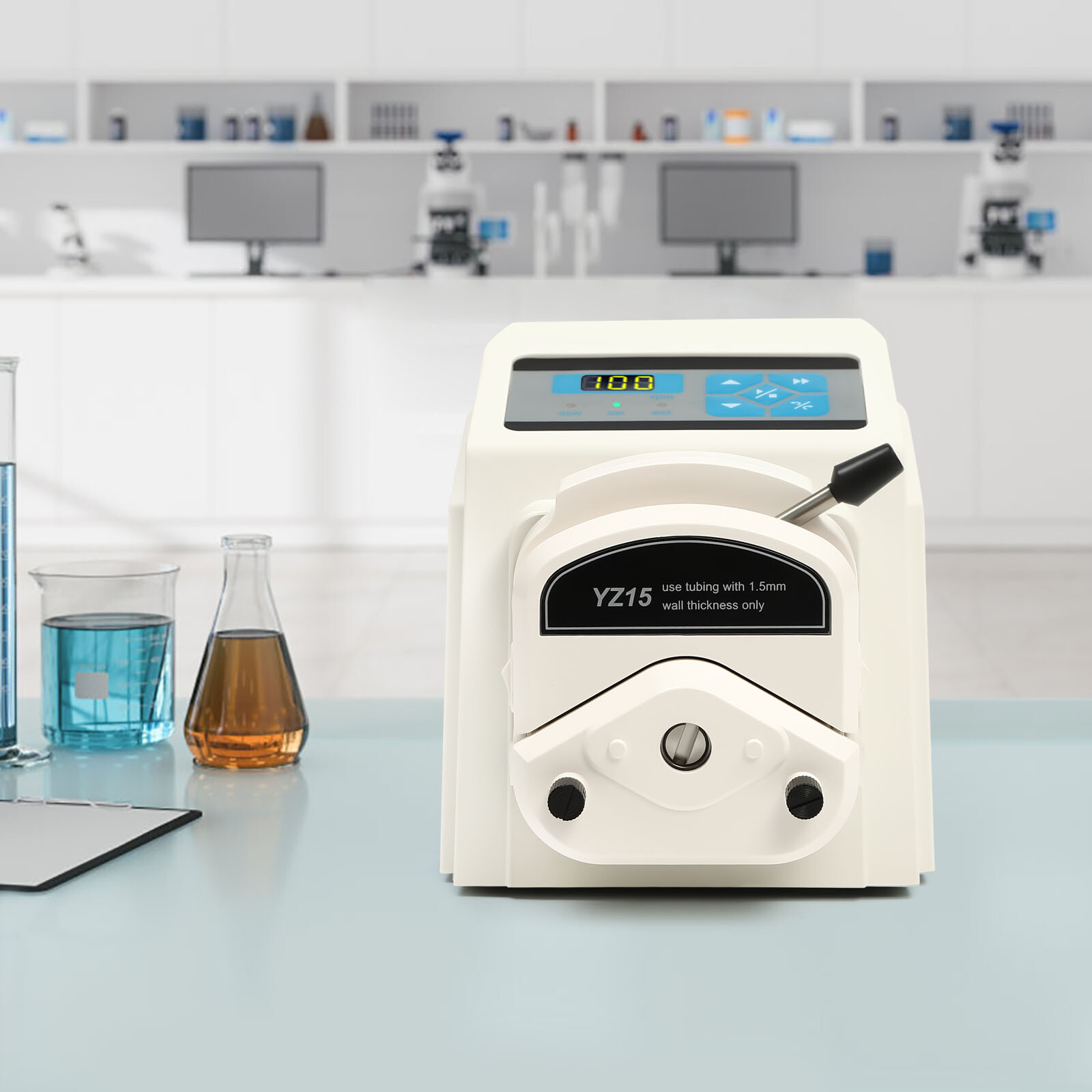
If you're feeding chemicals, dosing water treatment products, or metering a precise flow into a process, this pump gives you control that the diaphragm pump simply can't match. You can adjust speed, flow rate, and rotation direction on the fly, and the 3-digit LED display keeps you informed. The high-quality ABS casing, PPS pump head, and stainless steel drill are chosen for durability in continuous use. The limitation is the flow ceiling: at a maximum of 380 mL/min, it's not built for transferring a tank in a hurry. If your operation mixes small, accurate doses with occasional large transfers, you may need a second pump or a different approach. But for precision as the priority, this is the pump to reach for.
120PSI Industrial Chemical Air-Operated Double Diaphragm Pump 1" Inlet+Outlet
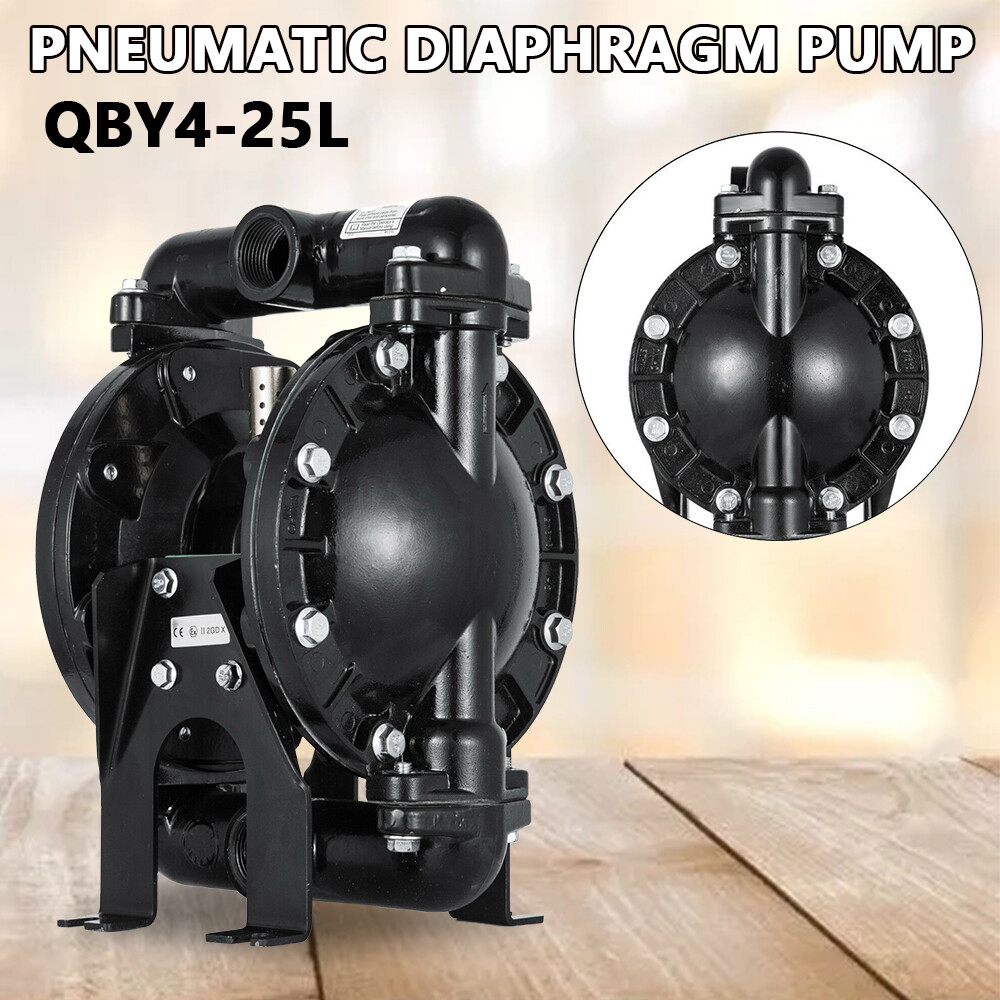
When you need to move a lot of fluid fast, this diaphragm pump does the heavy lifting. The 1-inch inlet and outlet feed a design capable of up to 35 GPM, and the 120 PSI rating means it can push fluid through longer lines or against pressure. It handles temperatures up to 150°F, and the aluminum body, acetal ball valves, and nitrile diaphragm are practical choices for pump rooms where parts may need replacing over time. The catch is that this pump isn't self-contained: you need a compressed air source capable of sustaining 38 CFM, plus an NPT 1/2-inch air supply line. At $126.01, it's the more affordable option, but only if you already have the air system and need volume over precision.
Final Choice by Use Case
Choose the Precision Peristaltic Pump if your work is about accurate dosing, low flow rates, and adjustable metering-it offers control that the diaphragm pump cannot, and the higher $250.14 price reflects that focus. Choose the Air-Operated Double Diaphragm Pump if your priority is moving up to 35 GPM of compatible fluid quickly, especially on a budget. Knowing your flow rate and available utilities settles the debate before you even look at the price tag.