When you're shopping in the bearings, couplings and power transmission aisle, the first decision is often whether to make a rigid connection or leave room for flex. A rigid shaft coupling locks two shaft ends together so torque passes straight through. An elastic spider insert, on the other hand, sits inside a coupling assembly and works as a buffer, absorbing shock and cushioning the joint. Your decision affects how much vibration travels through the driveline and how much give the joint has. Those two goals lead to different products at different price points.
Quick verdict
If your priority is a direct, no-nonsense shaft connection for motors, pumps, generators, or similar rotating equipment-and you want the lower listed price-the Shaft Coupling 7/8" Bore 1-3/4" OD 2" Length Rigid Coupling, 4 Set Screws is the straightforward pick. If you need a damping element for larger equipment and mechanical cushioning, the Elastic Spiders For Shaft Coupling MT PU Insert Coupling Shaft Coupling/Buffer is the flexible alternative. The listed price difference between the two is about $61.67.
Price and attribute comparison
| Product | Listed price | Price bar | Type | Key details |
|---|---|---|---|---|
| Shaft Coupling 7/8" Bore 1-3/4" OD 2" Length Rigid Coupling, 4 Set Screws | $34.32 | Rigid coupling | 45# (ASTM1045), black oxide, four set screws | |
| Elastic Spiders For Shaft Coupling MT PU Insert Coupling Shaft Coupling/Buffer | $95.99 | Flexible spider insert | TPU/CPU, 90~95A hardness, -35~+100°C, 22.4~2500 Nm |
Where each product wins
- Rigid coupling wins for a simple, fixed connection and a lower listed price. The steel construction and set screw mechanism suit direct torque transfer in motors, pumps, and generators.
- MT spider insert wins for flexibility and shock cushioning. Its flexible construction and hardness rating make it a better fit for large equipment needing dampening.
Product notes
Shaft Coupling 7/8" Bore 1-3/4" OD 2" Length Rigid Coupling, 4 Set Screws
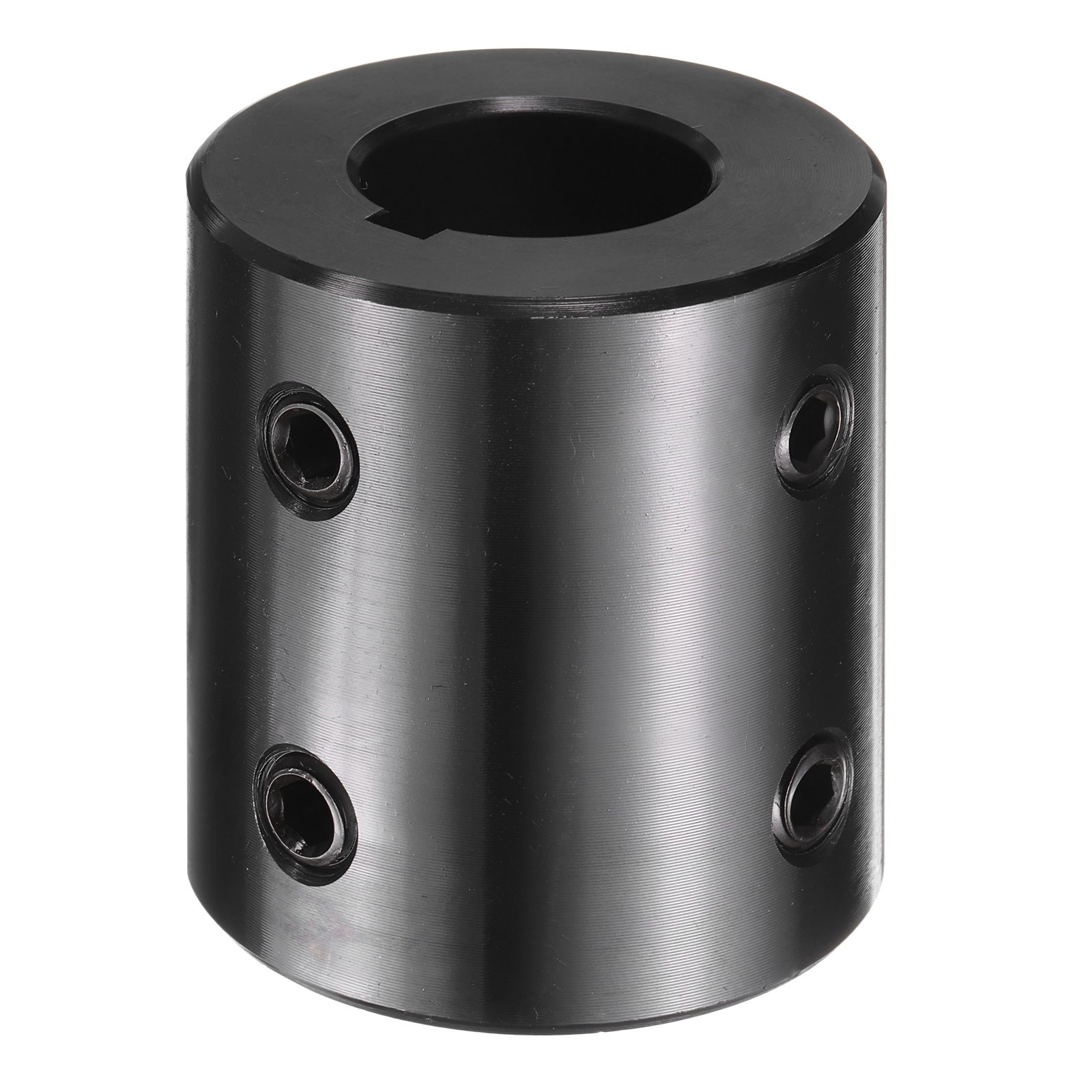
This uxcell coupling is made from 45# (ASTM1045) steel with a black oxide coating for corrosion resistance and durability. It uses four set screws to hold the shaft connection firm and precise, and its simple design includes installation instructions, so you can mount it without special tools. At its listed price, this is the lower-priced option when you want direct power transmission between rotating components. Try it for tasks where a rigid shaft connection is acceptable. The trade-off is that a rigid coupling offers no built-in cushioning, so it doesn't dampen shock the way a flexible insert does. It also carries a California Prop 65 warning related to cancer and reproductive harm, so handle it accordingly.
Elastic Spiders For Shaft Coupling MT PU Insert Coupling Shaft Coupling/Buffer
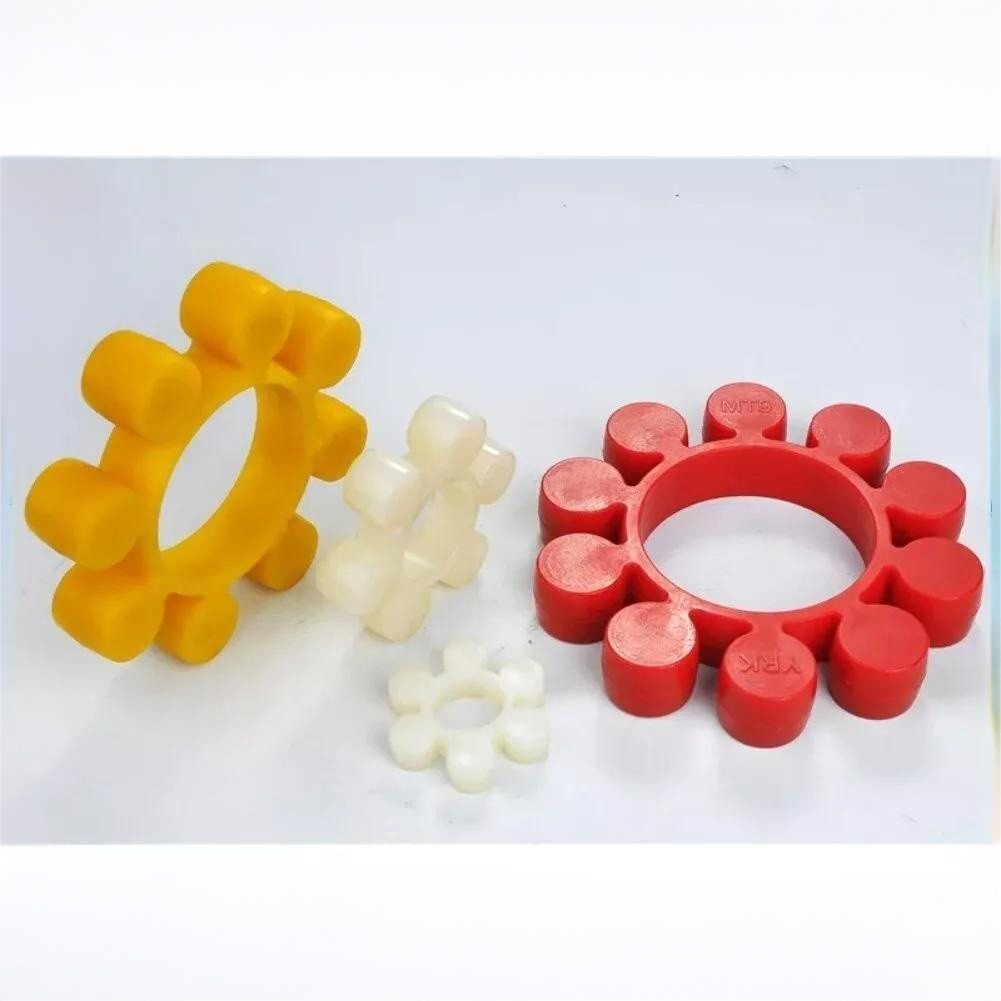
This MT spider insert is the cushioning element for a shaft coupling assembly, made from TPU/CPU and rated at 90~95A hardness. The technical data lists a temperature range of -35~+100°C and torque handling from 22.4 to 2500 Nm, with a natural color and GB5272-85 standard. It's described as suitable for large equipment and mechanical cushioning at the transmission-shaft joint, which makes it a strong candidate for applications where vibration or impact is a concern. The listed price makes it the higher-priced product of the two. As an insert, it is the flexible cushioning element rather than a complete rigid coupler.
Final choice by use case
For a fixed motor-to-pump or generator hookup, the rigid coupling's set screw mechanism and lower listed price make it an easy pick. For heavy equipment where dampening and flexibility matter more than a bare rigid joint, the MT spider insert brings the cushioning effect you need. Choose the rigid coupling at $34.32 when you want direct, lower-priced torque transfer; choose the $95.99 spider when shock absorption is the priority.