When you're stocking for workplace safety, one budget and two very different hazards: do you lock out the energy that could start a machine, or protect the worker who could fall from height? The right choice depends on where your crew spends its risky hours. This head-to-head lays out which of two safety purchases fits the work: a lockout/tagout kit or a fall arrest system.
Quick verdict
For most teams, the Uimoso lockout/tagout kit is the broader everyday safety purchase because it addresses energy isolation across a range of machines and panels. The fall arrest system is the narrower but critical purchase for elevated work. The Uimoso kit costs $27.79 less than the fall arrest system. If you already have basic energy-isolation gear, the fall arrest system becomes the priority; if you already have harnesses, the Uimoso kit fills more gaps.
At a glance
| Product | Price | Price indicator | Best for | Standout detail |
|---|---|---|---|---|
| Uimoso Lockout Tagout Kit | USD 29.69 | Locking out energy sources before work begins | 47-piece carrying pouch set | |
| Fall Arrest System for Rescue | USD 57.48 | Stopping falls during elevated work or rescue | 330-lb workload with breaking strength above 8900N |
Where each wins
The Uimoso kit wins when the goal is preventing accidental start-ups: padlocks go on switches, hasps let multiple workers lock one energy source, tags communicate who is working, and ties keep everything organized. It wins for maintenance teams, electricians, and anyone doing lockout/tagout procedures.
The fall arrest system wins when the danger is gravitational: working near roof edges, on elevated platforms, or in rescue situations. Its ratchet-style braking system and snap hook are designed to arrest a fall while keeping the worker connected. It wins for roofers, tower crews, and rescue teams.
Product notes
Uimoso Lockout Tagout Kit
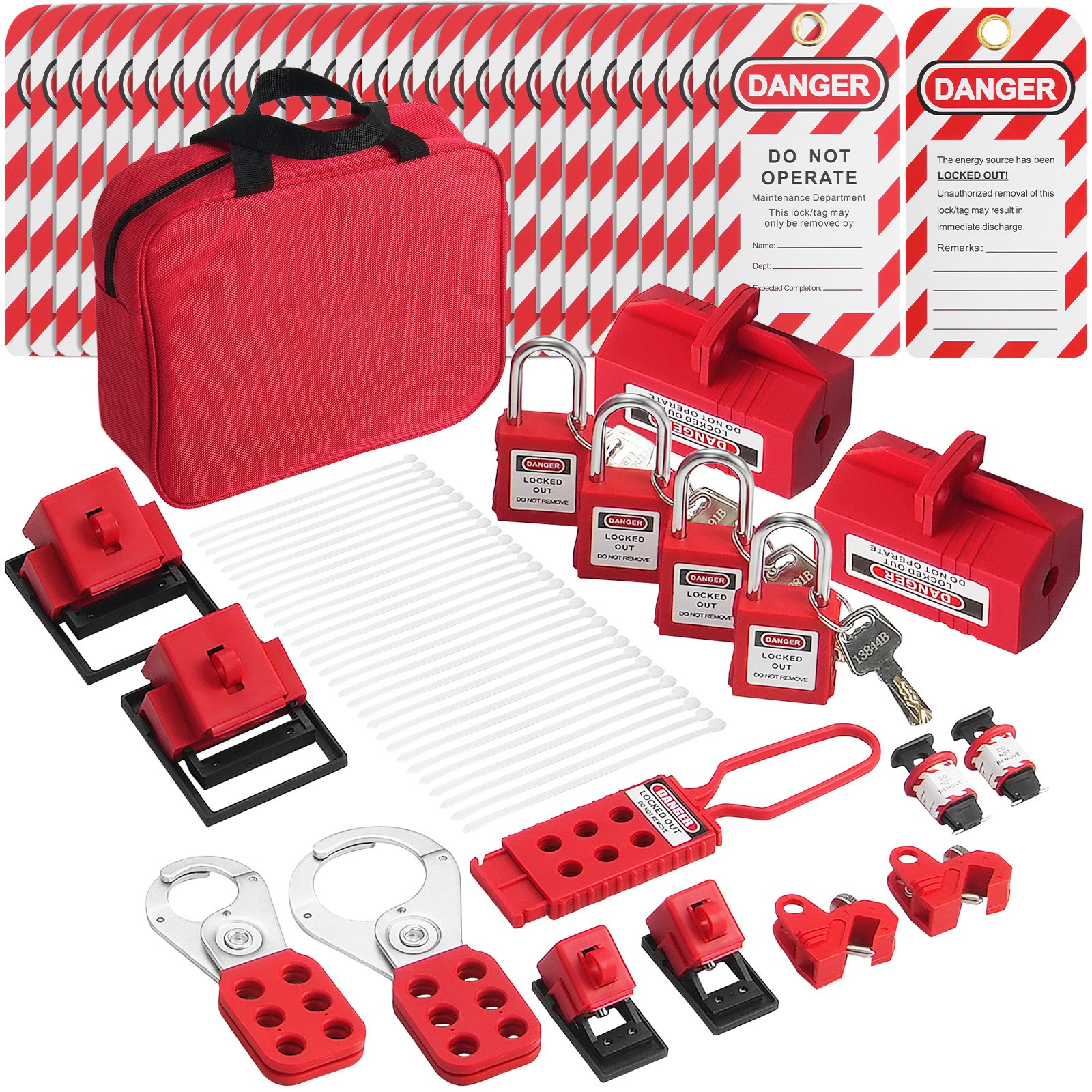
If your repairs start with 'make sure this cannot turn on,' the Uimoso kit is the working answer. It arrives with four safety padlocks, three hasps, 30 lockout tagouts, 30 nylon cable ties, two plug lockouts, eight circuit breaker lockouts, and a carrying pouch. The red padlocks are non-conductive thermoplastic molded as a single unit, and each carries two keys, so a lost key doesn't stop the job. That breadth is what makes it easy to recommend: one bag covers multiple isolation points. What it won't do is catch a fall. It is built for energy isolation, not height protection, so a high-risk roof crew still needs a separate fall arrest solution. For electricians, maintenance teams, and lockout/tagout programs, it's the practical foundation.
Fall Arrest System for Rescue
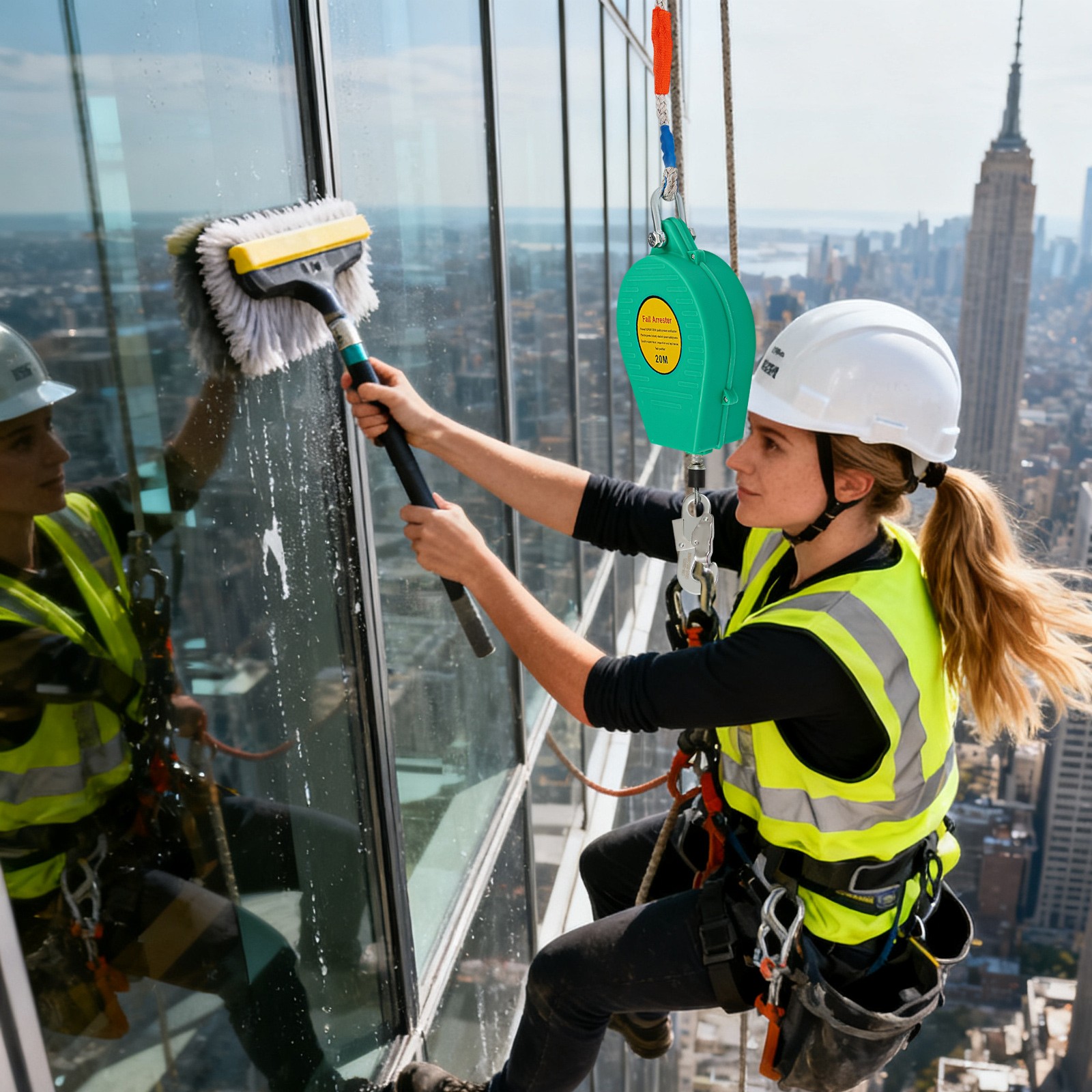
For elevated work, the fall arrest unit earns its place through numbers that matter: a maximum workload of 330 lb, a breaking strength above 8900N, and a 65.62-foot operating range that lets a worker stay mobile while tied off. The ratchet-type dual-disc brake and spring-loaded snap hook are meant to stop a fall fast, which is exactly what you want when the anchor point is the only thing between a worker and the ground. That is the reason it belongs on a roof or rescue job. It is not, however, a lockout/tagout kit; it has no padlocks, hasps, tags, or ties for controlling energy sources. The two products solve different hazards, and the fall arrest system should be chosen when gravity, not stored energy, is the danger.
Final choice by use case
Pick the Uimoso lockout/tagout kit when your priority is preventing accidental start-ups during maintenance and repair. Pick the fall arrest system when your team works at height or responds to rescues. If your workplace has both hazards, keep both on the PPE shelf-they were built for different failures, not competing ones.