Filtration separation buying usually starts with an either/or: are you maintaining a housing that already exists, or are you installing the water treatment equipment itself? The two products here sit on opposite sides of that answer. One is a supply of string wound sediment cartridges for a large-format 10-inch housing. The other is a complete WSS water treatment system for an industrial process line. The goal is not to crown a single winner but to match each product to the job it is actually built for.
Quick verdict
If you need a dependable supply of sediment cartridges for an existing whole-house or light-commercial filter housing, the string wound cartridge pack is the straightforward choice. If you are equipping a treatment system for manufacturing and production, the WSS unit is the purchase to evaluate. These are different scales of filtration separation, and the right pick depends on which scale you are working in.
At a glance
| Product | Price | What stands out | Best fit |
|---|---|---|---|
| 20-pack 10" x 4.5" String Wound Sediment Water Filter 1/5/10 Micron for Big Blue | USD 152.45 | 20-pack, 1/5/10 micron options, 30,000-gallon capacity, NSF-certified material, Big Blue-style compatibility | |
| WSS Water Treatment System Chem-Tainer Tank Qilipsu Waterus Filtration | USD 6,000.00 | Water treatment system with Chem-Tainer tank and Qilipsu Waterus filtration |
Where each product wins
- The string wound filter pack wins for cartridge replacement. It gives you a bulk supply at USD 152.45, with sediment removal as the stated job and a replacement-friendly format for a housing you already have.
- The WSS system wins for process-scale scope. The USD 6,000 price reflects an integrated water treatment effort, and the used condition fits a buyer planning a full installation rather than a filter change.
Product notes
String Wound Sediment Cartridges for Big Blue
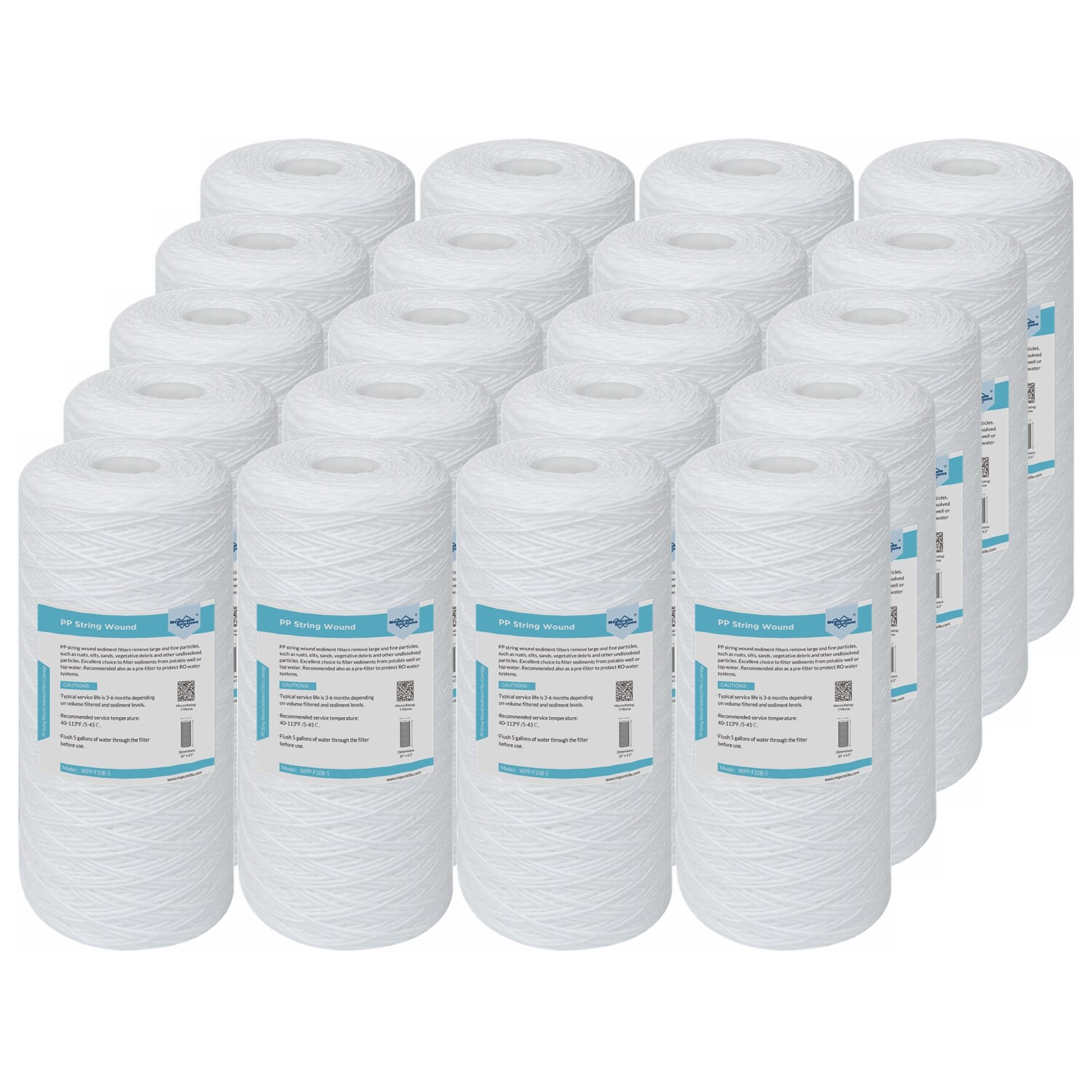
This is a cartridge pack built for a 10 x 4.5 Big Blue-style housing. It comes in a 20-pack with 1, 5, and 10 micron options, so you can match the filter to the particulate load instead of locking into a single rating. The string wound construction targets sediment, removing up to 99% of rust, silt, sand, and other undissolved particulates, and the 30,000-gallon capacity gives you a large treating volume for a whole-house prefilter stage. The food-grade polypropylene material is NSF-certified, lead-free, and BPA-free.
Choose this pack when the job is restocking an existing sediment prefilter. The compatibility list includes Big Blue housings from 3M, APEC, Aquaboon, Culligan, Express Water, iSpring, Pentek, and others. The trade-off: this is a consumable, not a treatment system. You still need the housing and the rest of your filtration design in place.
WSS Water Treatment System with Chem-Tainer Tank and Qilipsu Waterus Filtration
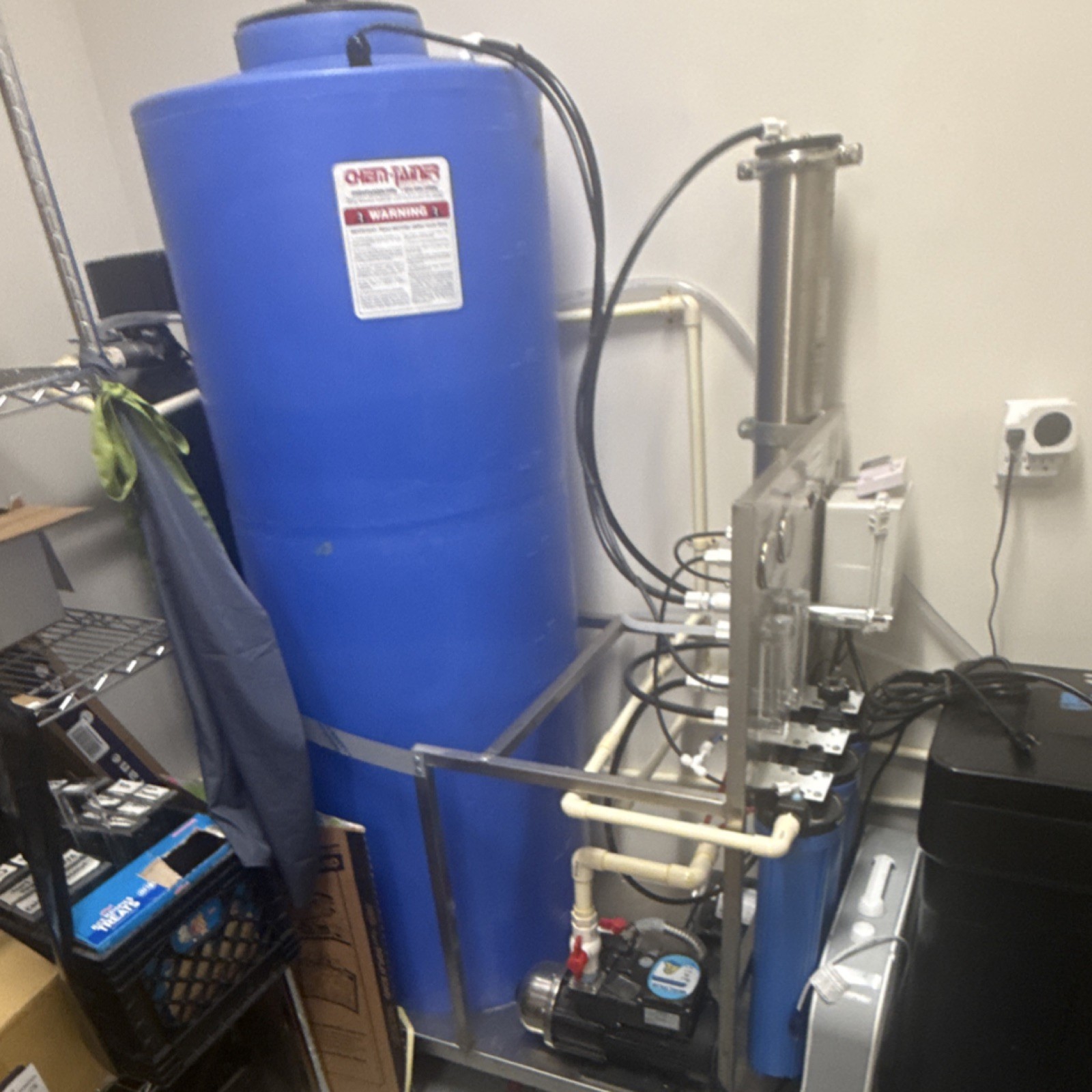
This is a used commercial reverse osmosis water treatment system that brings together a Chem-Tainer tank, a Qilipsu Waterus filtration system, and other specialized equipment into one integrated package. It is intended for treating water in industrial manufacturing and production processes, which makes it a project piece rather than a point-of-use appliance.
Its strength is integration: instead of sourcing a tank, filtration components, and supporting equipment separately, you can evaluate one assembled system from the WSS/Chem-Tainer/Qilipsu/Waterus collaboration. What holds it back is the scale of commitment. The used condition, the commercial scale, and the need to match the system to an existing industrial process line mean this only makes sense for a buyer with a clear installation plan and the ability to work with large-format equipment.
Final choice by use case
Choose the string wound filter pack when your filtration separation task is restocking a sediment prefilter in an existing setup. The bulk format keeps spare cartridges ready for routine replacement.
Choose the WSS system when the task is a full process-water treatment installation. This is the selection for a buyer building out water treatment capacity rather than replacing a cartridge.