When you need to move air through a workshop, clear welding fume, or pull dust and vapour away from a workbench, the choice often comes down to two very different blower designs: a 370W air blower and a 300W centrifugal extractor. Both sit in the compressors, blowers, and air treatment space, but they prioritize different jobs. One is more of an everyday utility tool, and the other is built for moving large volumes of air. For a small workshop, a single machine, or a spot where soldering and buffing happen, a blower that you can position close to the source may be enough. For ducted extraction and high-volume fume, you need something with more push. The decision comes down to the scale of the job and where you plan to stage the unit.
Quick Verdict
Go with the 370W Air Blower if you want a straightforward utility blower for close-range fume and ventilation tasks. Choose the 300W Centrifugal Blower if you need high extraction volume through ducting. The $43 difference in price separates a utility blower from a high-volume extractor.
At a Glance
| Product | Price | Airflow | Motor and Build | Exhaust / Noise |
|---|---|---|---|---|
| 370W Air Blower | $141.14 | 80 m³/h | All-copper motor, 2800 r/min, aviation aluminum | Built-in sound insulation |
| 300W Centrifugal Blower | $184.23 | 2300 m³/h | 300W, 1450 r/min, PP construction | 250mm port, 40 dB |
Where Each Product Wins
Where the 370W Air Blower Wins
- The all-copper motor and 2800 r/min speed suit ventilation, air exchange, and local fume work.
- Built-in sound insulation sponges help keep noise down at the bench.
- The rust-resistant build helps in damp or dusty shops.
Where the 300W Centrifugal Blower Wins
- The 260 Pa hydrostatic pressure helps push air through ducting rather than just circulate it.
- The centrifugal working method is well suited to ducted extraction.
- If you need whole-area fume removal, this side of the comparison has the edge.
Product Notes
370W Air Blower
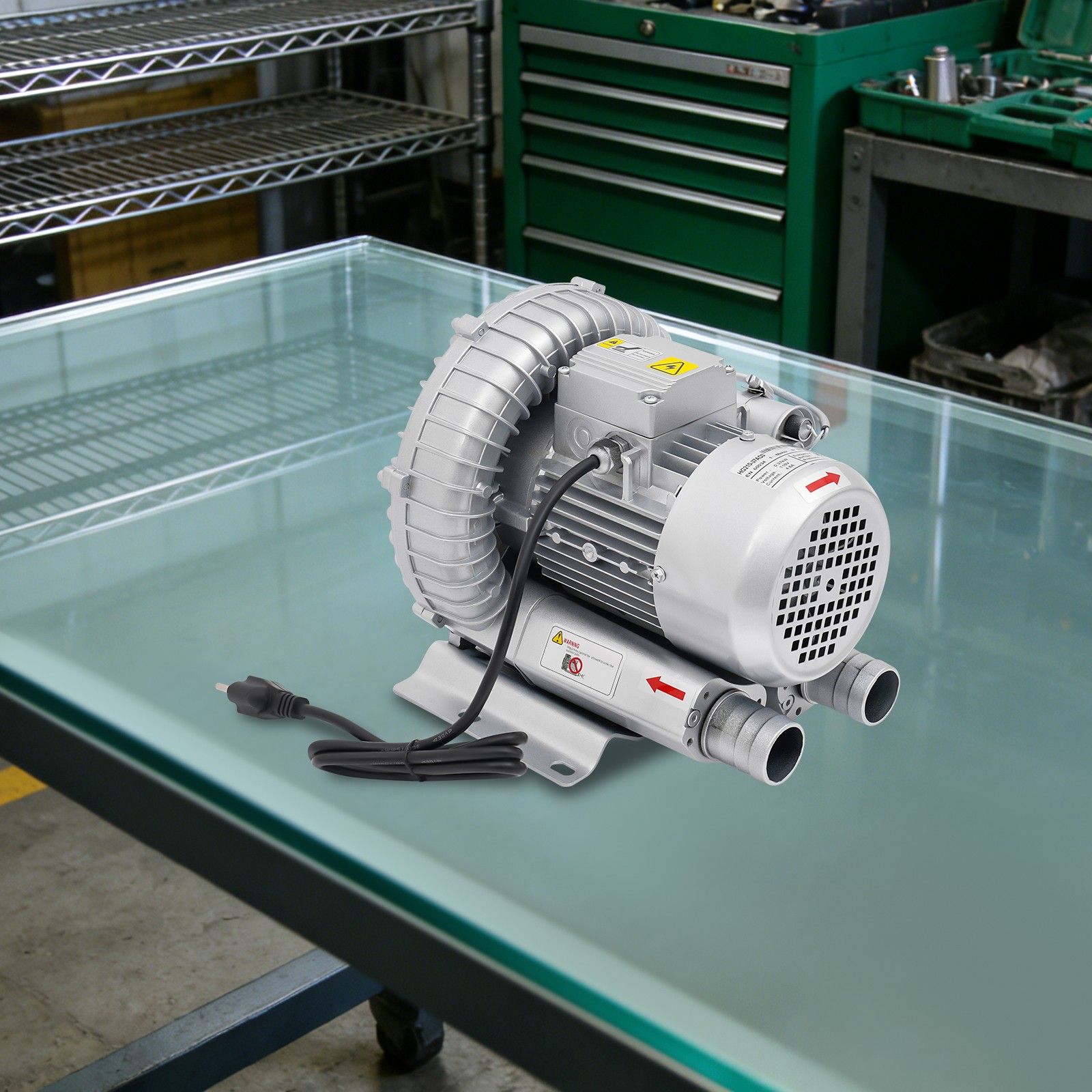
This 370W air blower earns its place for workshop tasks that don't require enormous volumes of air. Its aviation aluminum housing is cast to resist rust, making it suitable for humid or dusty shops. It suits ventilation, air exchange, smoke extraction, and dust extraction, and the unit is rated for 80 m³/h of airflow. That airflow is the main limitation: for large open spaces or heavy fume, the volume is modest. It works best when you can position it close to the source. If you need a maintenance blower for localized fume control, this one fits.
300W Centrifugal Blower
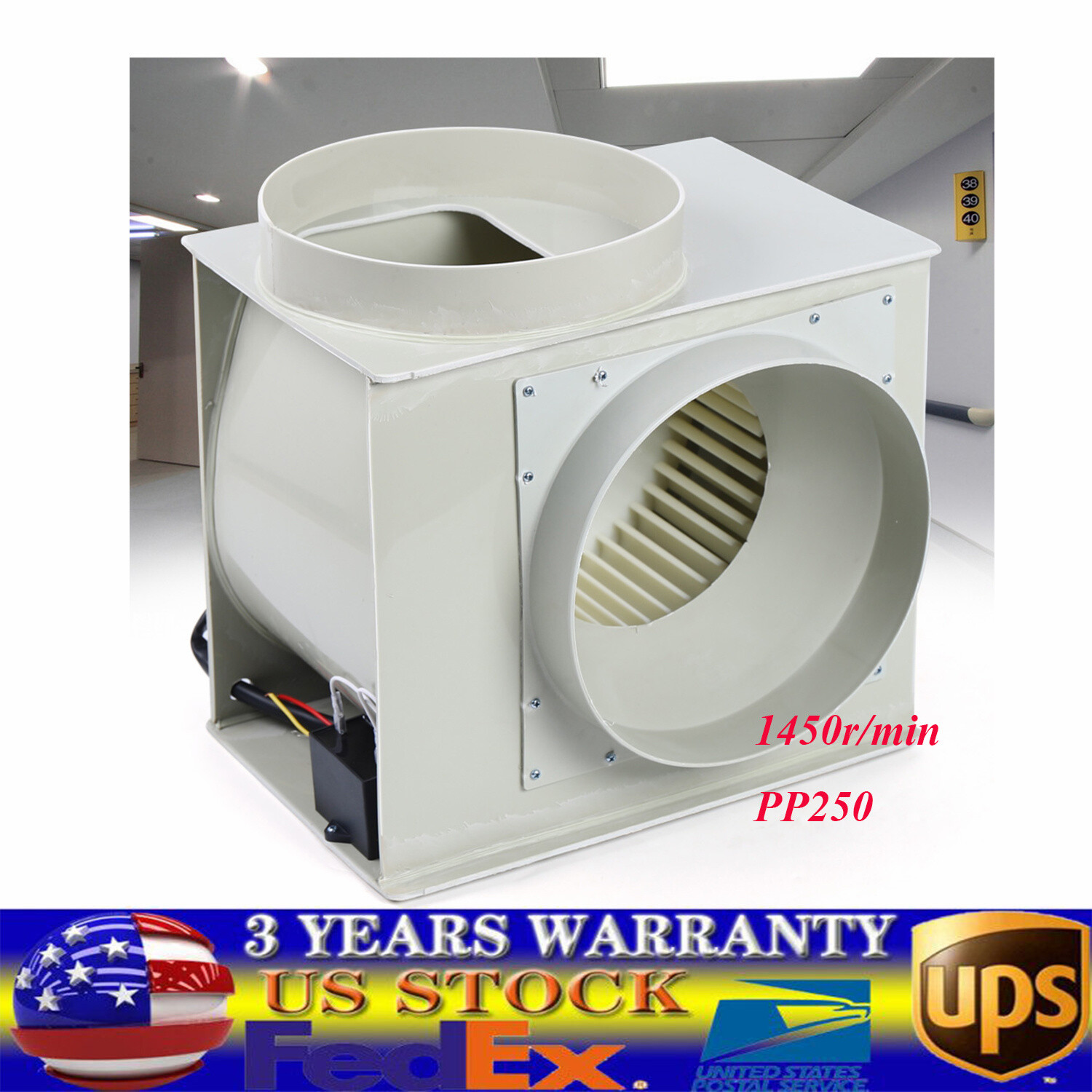
The 300W Centrifugal Blower Fume Industrial Extractor Fan Dust Smoke Vapour Exhaust goes after serious extraction jobs. It moves 2300 m³/h and generates 260 Pa hydrostatic pressure, which is enough to push air through ducts and pull smoke, dust, and vapour away from the work area. The exhaust port diameter is 250 mm, so it connects to larger ducting. Its PP body is corrosion-resistant, wear-resistant, and temperature-resistant, and the 1450 r/min speed keeps operation steady. A rated 40 dB noise level also helps if you're working near the extractor for long shifts. The trade-off is footprint: the packing size is 42×38×38cm, so you'll need a clear space for the unit. If your goal is whole-area fume extraction rather than spot ventilation, this is the stronger choice.
Final Choice by Use Case
For soldering fumes, paint mist, or dust from a single machine, the 370W Air Blower offers a practical way to keep the immediate work area clear. For a larger bench, a vented cabinet, or ducted smoke and vapour removal, the 300W Centrifugal Blower is the stronger choice.