When you're shopping for an industrial motor, the first question isn't which brand to buy-it's whether the motor will match the power already running through your shop. The two motors featured here are built around very different electrical setups, and that difference drives everything from installation cost to the kind of equipment you can run. It also affects how easily you can replace an existing motor and whether you'll need extra electrical components to make the new unit work.
Quick verdict
The decision between these two motors comes down to your power supply and the load you need to drive. Choose the Baldor 0962-28 if you need a light-duty replacement with a clear model number. Choose the other motor if you want more output and a lower price. Both are new, both are induction motors, but they serve different parts of the shop. Think carefully about the electrical specs before you commit, because swapping motor types isn't always a direct bolt-in. Pay close attention to the motor's electrical requirements before you buy.
Comparison at a glance
| Motor | Price | Speed | Phase | Voltage | Key Specs |
|---|---|---|---|---|---|
| Baldor 0962-28 | USD 395.00 | 1425 RPM | 3-phase | 660V | 1/4 HP, model 0962-28 |
| 115/230V Motor | USD 144.06 | 1725 RPM | Single-phase | 115/230V | 56C frame, 5/8'' keyed shaft |
Where each product wins
- The Baldor 0962-28 is the better fit when you need a named replacement with a clear model number and your equipment is already set up for the supply it requires.
- The 3/4 HP motor is the better fit when you want more output and a simpler electrical hookup for everyday shop machines.
Product notes
Baldor 0962-28
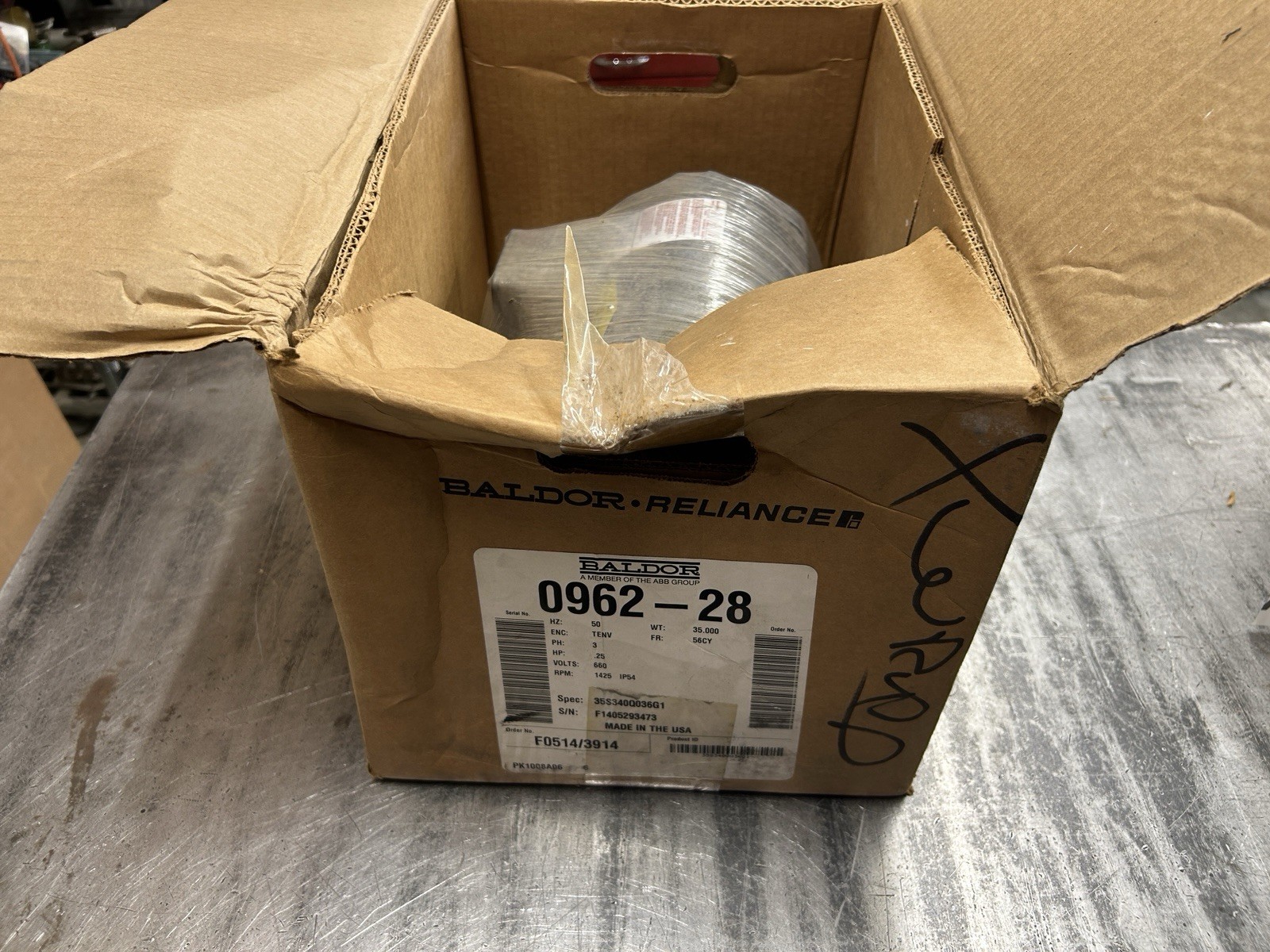
This new Baldor motor is designed for a 660V feed, which makes it a good match for industrial machines that already have that power available. The 0962-28 model number gives you a clear spec to match, and the new condition means you're getting an unused part rather than a reconditioned unknown. The trade-off is the modest 1/4 HP output; it's built for light-duty tasks like small fans, coolant pumps, or conveyors rather than heavy loads. Also, because it needs 660V, you can't feed it from a standard 230V circuit without a step-up transformer, so double-check your shop's line voltage before ordering. If your machine matches that voltage, the Baldor model number makes this a straightforward replacement part. This is especially helpful if you're replacing a motor that failed and you want to stick with the original part number.
115/230V Motor
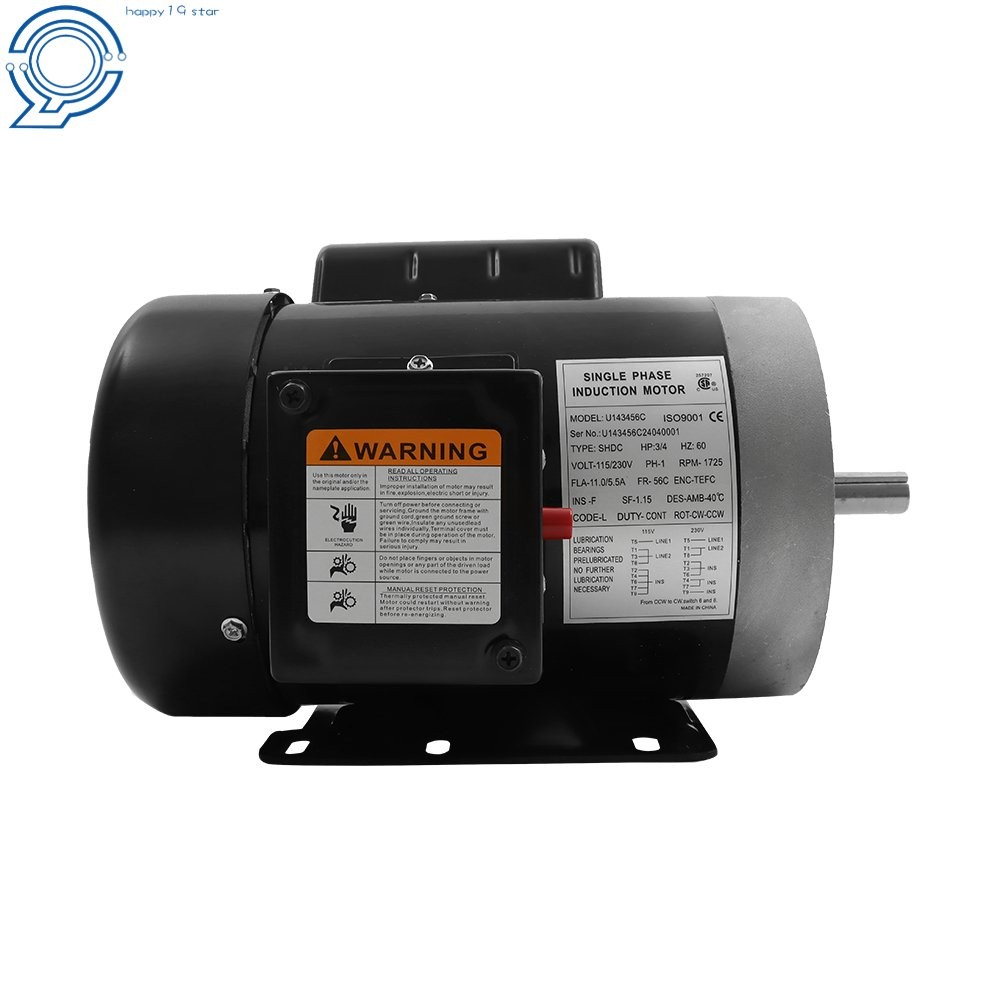
This motor plugs into single-phase power, which is the standard in most workshops and many home shops, so wiring it up is usually a straightforward job. The 56C frame and 5/8'' keyed shaft make it a practical fit for a wide range of machines, from air compressors to belt grinders. It's also reversible, so you can set the rotation direction to match your equipment without a separate changeover. The TEFC enclosure and IP55 rating tell you it's protected against dust, dirt, and water jets, which is useful for floor-mounted motors in a busy shop. The main limitation is that it's single-phase only; if your equipment runs on three-phase, this motor won't work without a phase converter. Additionally, the 1.15 service factor gives you a little overload headroom, but you should still confirm the mounting bolt pattern and shaft key before installation.
Final choice by use case
If your priority is a specific Baldor replacement part with a clear model number, choose the 0962-28. If your priority is higher output and an easier electrical hookup, choose the other motor.