When you're replacing an industrial motor, the decision isn't just about brand-it's about matching the motor to the electrical service already in your building. The Baldor 0962-28 and the Baldor-Reliance RL1324A are both serious pieces of equipment, but they're wired for different electrical environments. Understanding that split is the first step to making the right buy. The right motor has to spin at the speed you need, deliver enough horsepower, and fit the power that your panel can supply. Getting this wrong can mean a motor that hums but never spins, or one that draws too much current for your wiring. So take a moment to compare the two before you commit.
Quick verdict
The New Baldor 0962-28 is listed at $395, and the Baldor-Reliance RL1324A is listed at $275. The lower listed price belongs to the RL1324A, but the right choice depends on your power supply and the horsepower your application requires.
Comparison table
| Feature | New Baldor 0962-28 | Baldor-Reliance RL1324A |
|---|---|---|
| Listed price | $395.00 | $275.00 |
| Horsepower | 1/4 HP | 3/4 HP |
| Phase | 3 PH | Single Phase |
| Voltage | 660V | 115/230V |
| RPM | 1425 | 1725 |
| Condition | New | New - Open box |
Where each wins
The Baldor 0962-28 is the match for a three-phase 660V installation. The Baldor-Reliance RL1324A is the match for a single-phase 115/230V installation. The phase difference is the central decision point, and everything else takes a back seat to making sure the motor will actually turn on. Both motors share the same brand and are built for industrial duty, but their electrical requirements couldn't be more different.
Product notes
New Baldor 0962-28 Industrial Electric Motor
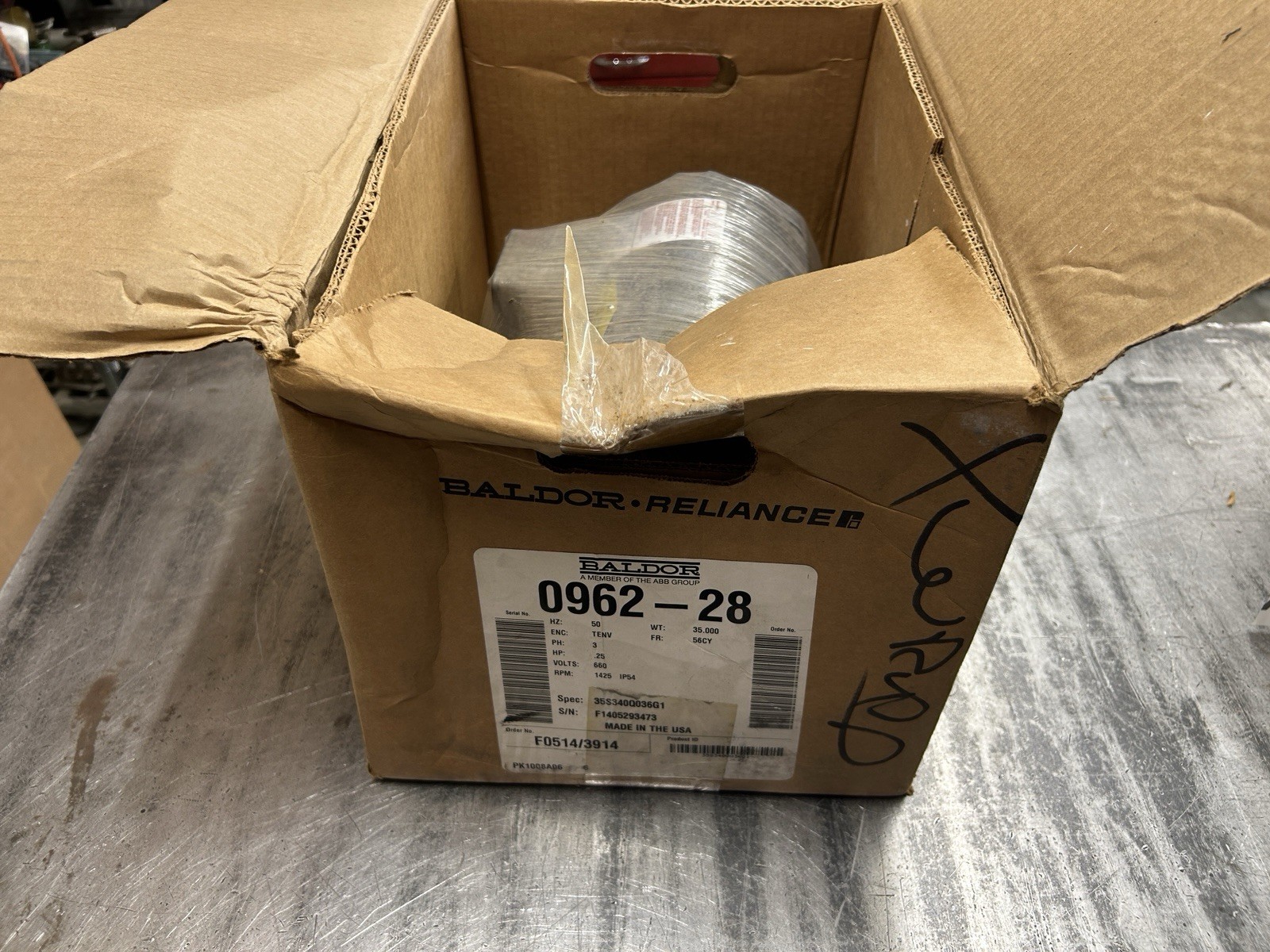
This motor carries a 1/4 HP rating at 1425 RPM, placing it in the light-duty category. It's listed as new, so you're getting a factory-fresh unit that hasn't been opened or used. The 1/4 HP output is best for tasks like moving air, spinning fans, or driving small conveyors. The limitation is the same 1/4 HP ceiling: if your load needs more torque than a quarter horsepower can supply, this motor won't be enough. Match it to equipment with modest power requirements and low starting torque, and it's a straightforward drop-in replacement for light industrial applications. It won't drive heavy machinery, but that's not what it's designed for.
Baldor-Reliance RL1324A Industrial Electric Motor
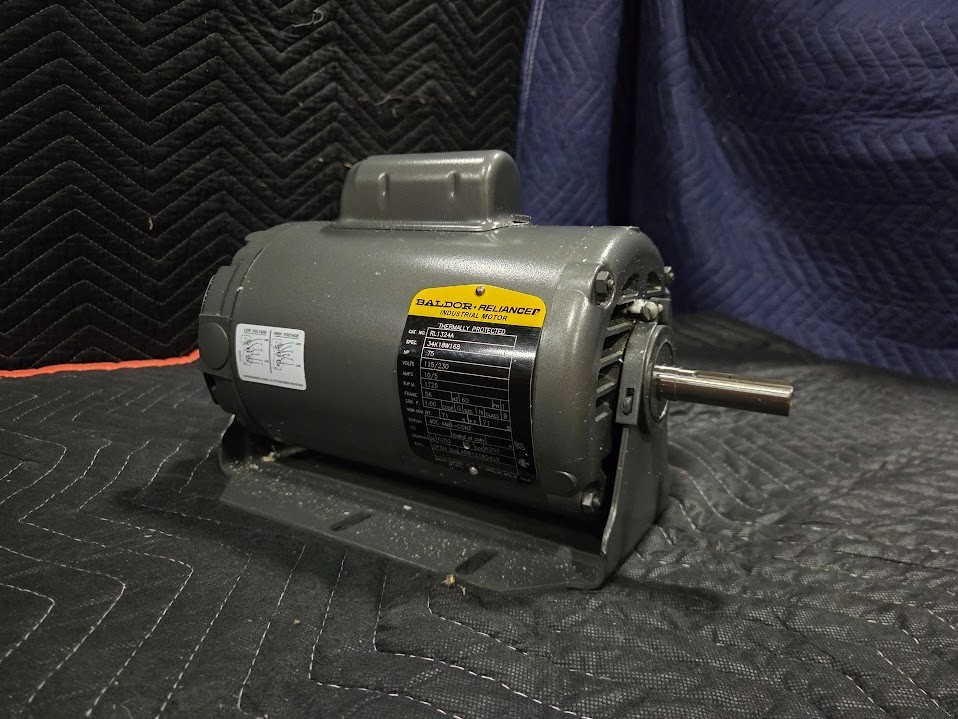
With 3/4 HP at 1725 RPM, this motor is the higher-output choice in this pairing. Its listed specs include a 60 Hz frequency rating, an open enclosure, and full-load amps of 10/5, so you have a clear view of its operating envelope. The condition is new open box-unused, but the original packaging has been opened. The extra horsepower is what makes it the more capable option for heavier loads. If your equipment needs more push than a quarter horsepower, this motor has the muscle. The extra 1/2 HP makes a real difference in practice. So it's the one to lean on when your application is anything beyond light duty.
Final choice
Your next step is simple: check the phase and voltage of your existing supply against the table above. The right motor is the one whose listed values match your facility. Then make sure the horsepower rating is enough for the load, and you're ready to order. Take your time to verify the exact voltage your motor needs. Even a small mismatch can cause poor performance. The table gives you the hard numbers; the context in each product note will help you avoid a mismatch. If you're still unsure, take a photo of the motor nameplate you're replacing and compare the phase and voltage columns.