Filtering liquids in a workshop is rarely one-size-fits-all. You might be swapping bags in a filter vessel, polishing a batch of biodiesel or waste vegetable oil, or dealing with oil that keeps floating on your cutting fluid. These jobs all fall under filtration separation, but they need very different tools. The options here span from a single filter sock to a powered separator, so the first decision is whether you're buying a consumable you'll replace often or a machine that removes oil from coolant on its own.
Quick take
If you need one bag to test a process, the $19.99 filter sock is the least expensive way in. For routine bag changes, the sewn lot at $316.00 supplies a full batch; the welded lot at $327.83 is the step up for cleaner, fiber-free seams. If your issue is tramp oil in machine coolant, the $1,886.00 separator is a separate category: it skims and separates floating oil instead of trapping solid particles.
At a glance: listed prices
| Product | Listed price | Relative price | What it is |
|---|---|---|---|
| Sewn Industrial Filter Sock Bags Water Liquid Biodiesel WVO Oil Dust Fuel Diesel | USD 316.00 | Lot of 50, Size #4 (4" x 14"), sewn, 0.5 micron | |
| Industrial filter bag, 1 Micron Filter Sock Bags, Water Liquid Oil Dust Fuel-1um | USD 19.99 | Single 18" bag, 1 micron, traditional style | |
| Welded Industrial Filter Sock Bags Plastic Ring Flange Water Liquid Oil WVO Fuel | USD 327.83 | Lot of 50, Size #4 (4" x 14"), welded, plastic ring flange, 0.5 micron | |
| 208-240V 3-Phase Industrial Oil-Water Separator Oil Skimmer for Cutting Fluid | USD 1,886.00 | Powered oil-water separator/skimmer for cutting fluid |
How to choose
- If you want to verify whether fine filtration will fix your liquid before buying in bulk, the single filter sock is the lower-commitment pick.
- If you're changing bags often and want a stock of sewn bags with a fine rating, the sewn lot is the straightforward choice.
- If your fluid needs the same fine filtration but you want fused seams and easier removal, the welded lot is worth the higher price.
- If your goal is to extend cutting fluid life in a machine tool sump rather than filter particle-laden liquid, the 208-240V 3-phase separator is the fit.
Product notes
Sewn Industrial Filter Sock Bags
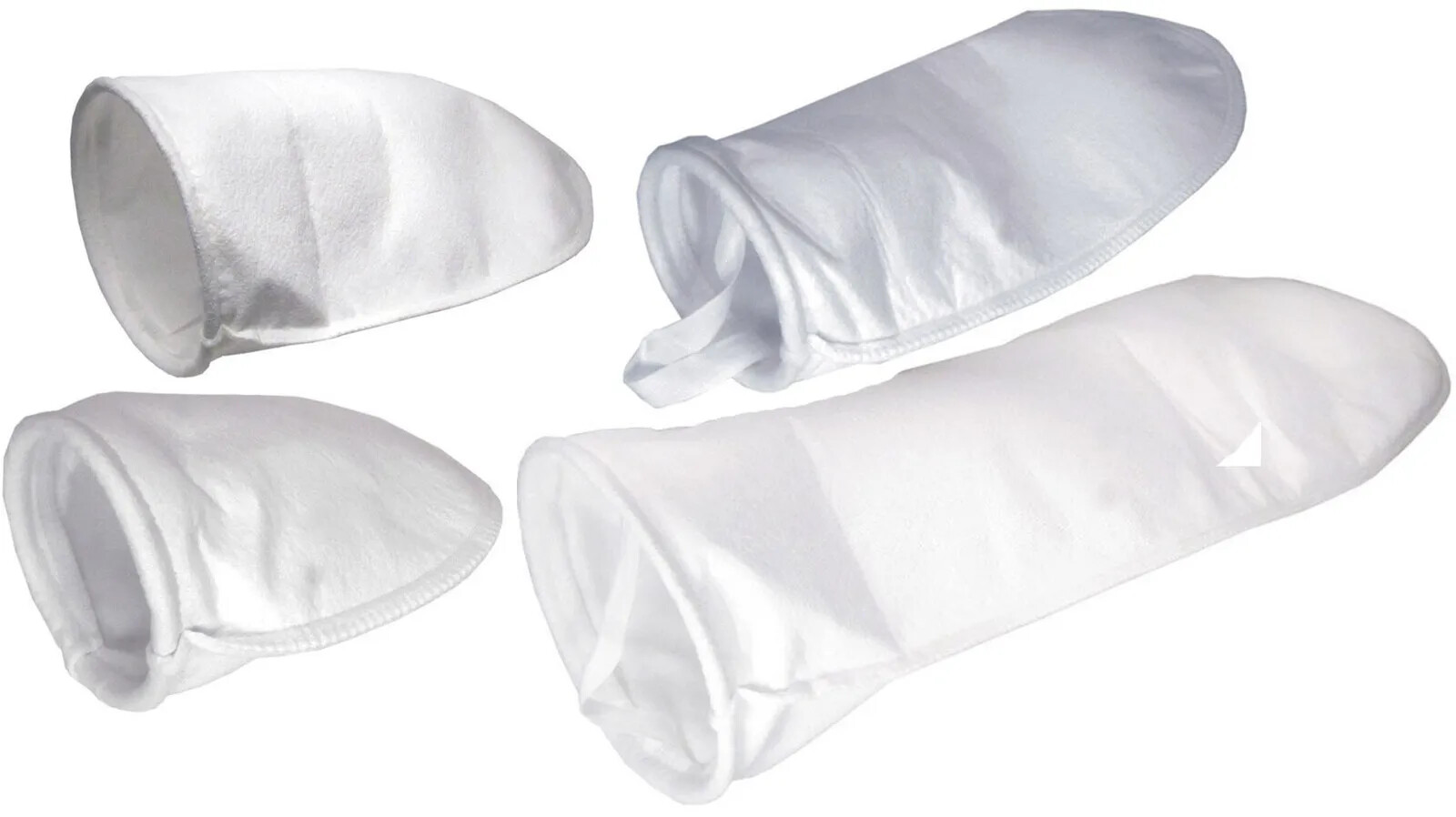
The sewn lot is the no-frills way to keep a filter housing stocked. The 50-count bulk format suits shops that go through multiple changes, and the Size #4 bag with a fine micron rating gives you one consistent spec. The reason to pick this option is the combination of a fine rating and a bulk format: you can standardize on one bag without ordering one at a time. The limitation is the sewn construction. Stitching creates needle holes and thread at the seams, so if your process is sensitive to fiber migration or bypass around seams, a sewn bag may not be the cleanest choice.
Industrial Filter Bag, 1 Micron
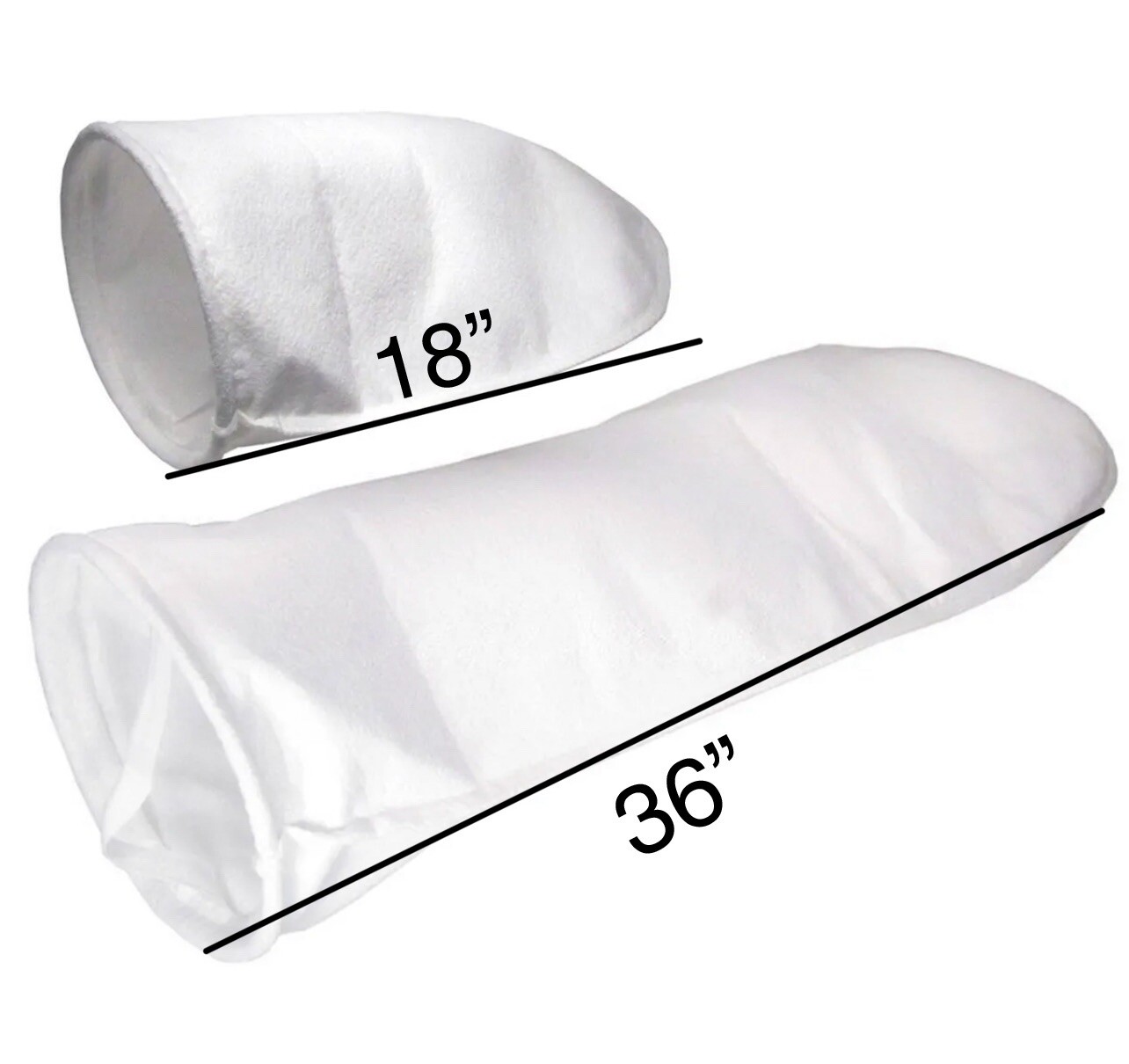
The main reason to choose this bag is also the simplest: it removes the guesswork of buying in bulk before you know whether 1-micron filtration solves your problem. The bag is 18 inches long, uses a traditional style with a round bottom, and is sold as a single unit. For a small batch or a one-off job, that low commitment is the appeal. The trade-off is format: you're working with a single unit rather than a lot, so high-volume bag changes will require more orders. And if you need the finer 0.5-micron rating, this 1-micron bag is not the match.
Welded Industrial Filter Sock Bags
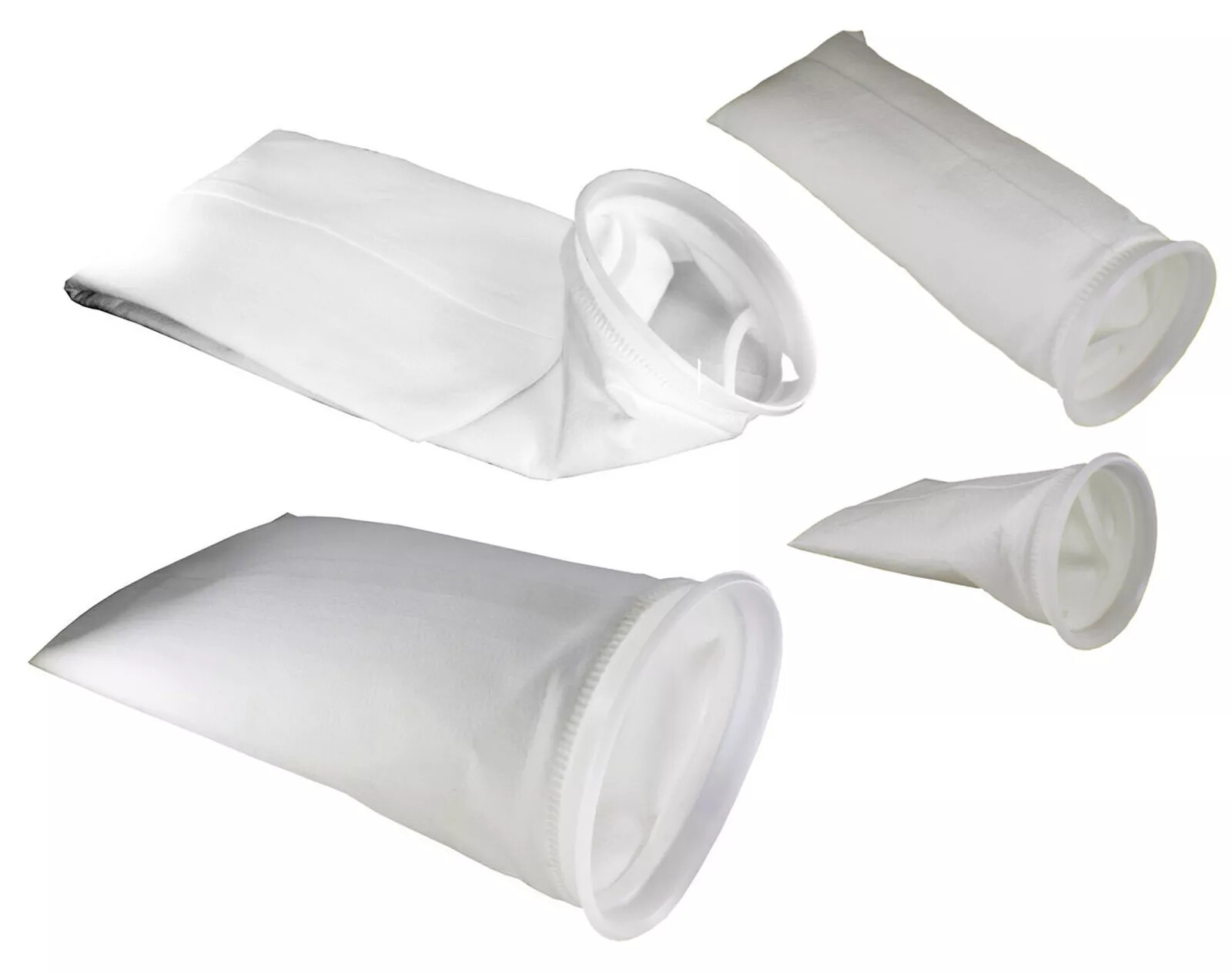
The welded construction is the main reason to choose this lot. Because the seams are bonded rather than stitched, there are no needle holes and no thread contamination. The plastic ring flange with handles also makes removal from a filter housing easier than reaching for a sewn bag. The trade-off is cost: the welded version carries a higher list price than the sewn equivalent, and you're paying for the cleaner seam plus the flange even if a basic sewn bag would do the job.
208-240V 3-Phase Industrial Oil-Water Separator
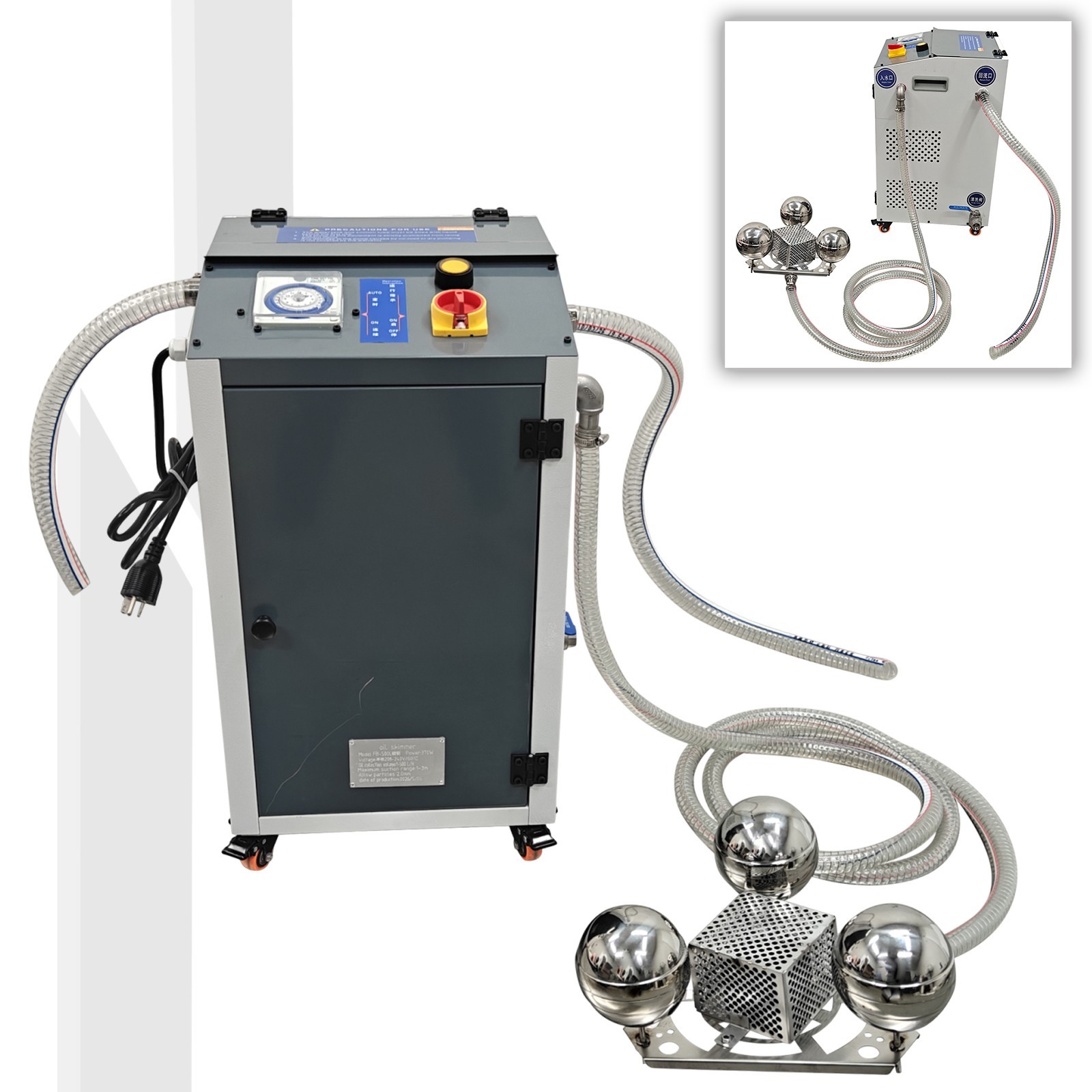
This unit makes sense in a different workflow. Instead of replacing a filter bag, the 208-240V 3-phase separator removes floating oil from cutting fluid and can recover that oil through drainage, which helps extend the life of both the coolant and your cutting tools. If your shop already runs machine tools on 3-phase power, this is a process machine rather than a consumable. The limitation is the higher investment and the dedicated role: it runs on 208-240V three-phase power and is designed for coolant maintenance, not for filtering solid particles from a liquid stream.
Final recommendation by use case
- For a first trial or small batch: the single filter sock is the lower-investment option and a sensible place to start.
- For regular fine-filtration bag changes in volume: the sewn lot gives you a full batch at a lower listed price than the welded lot.
- For sensitive fluids where seam contamination is a concern: the welded lot directly addresses that concern.
- For machine shops fighting oil in coolant: the 208-240V 3-phase separator is the product here that directly addresses that job.