Choosing between a nitrogen membrane separator and an air dryer and water separator comes down to one question: do you need to produce nitrogen, or just dry the compressed air going to your plasma cutter or paint spray? These two filtration separation systems solve very different problems, and the $1,342 gap between their prices makes sense once you see what each one is actually doing.
Quick verdict: If your operation needs a dedicated nitrogen supply, the Green Air Nitrogen Membrane Separator is the piece of equipment that does that work. If your goal is simply dry, clean compressed air for cutting or painting, the Air Dryer and Water Separator is the more straightforward buy. The two are not really competing for the same installation, so the right answer depends on your application.
Comparison at a glance
| Product | Price | Condition | Key Specs | Best Match |
|---|---|---|---|---|
| Green Air Nitrogen Membrane Separator | USD 1,500.00 | Used | 45-inch length, 6-8 inch width, ~30 lbs, 200 PSI rating | Producing nitrogen for beverage, medical, industrial, or processing systems |
| 3/4" NPT 4-Stage Air Dryer | USD 158.00 | New | 7 lbs, 240 PSI max, 3/4" NPT ports, 5-micron filter, auto drain | Drying compressed air for plasma cutters and paint spray |
Where each product wins
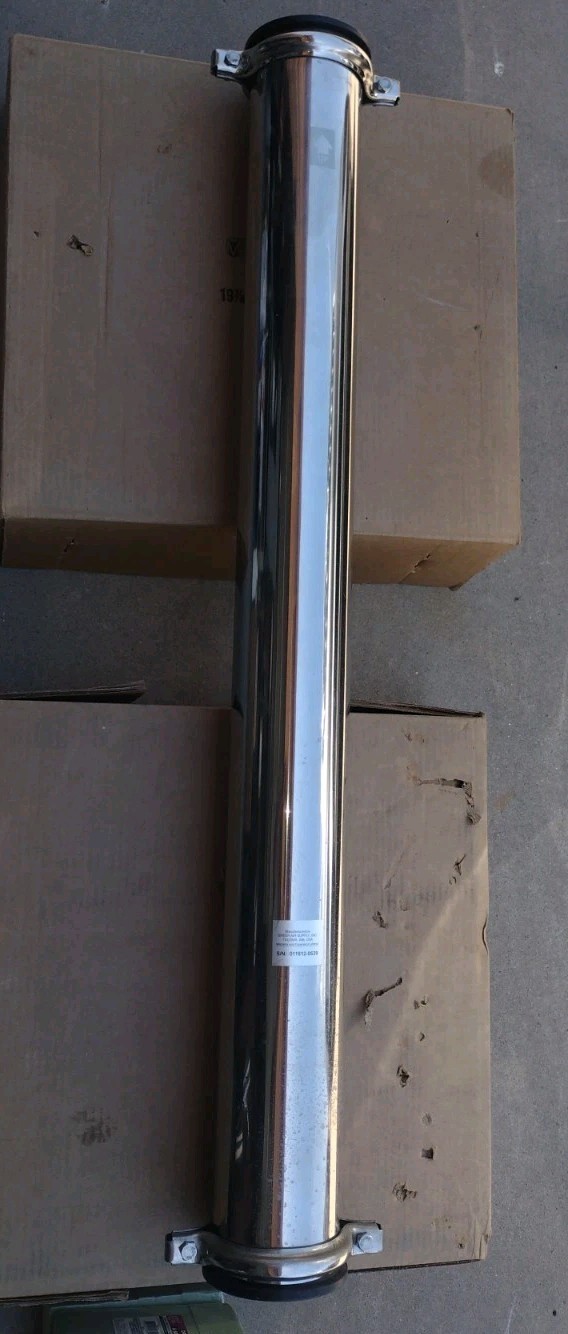
Green Air Nitrogen Membrane Separator - This is the only one of the two that actually produces nitrogen. It was used to feed a high-demand draught beer system, so it has real service history in a demanding application. It is a large membrane, not a small filter, and it requires a compressor setup to feed it. If your filtration separation need is gas generation rather than moisture removal, this is the direction to go.
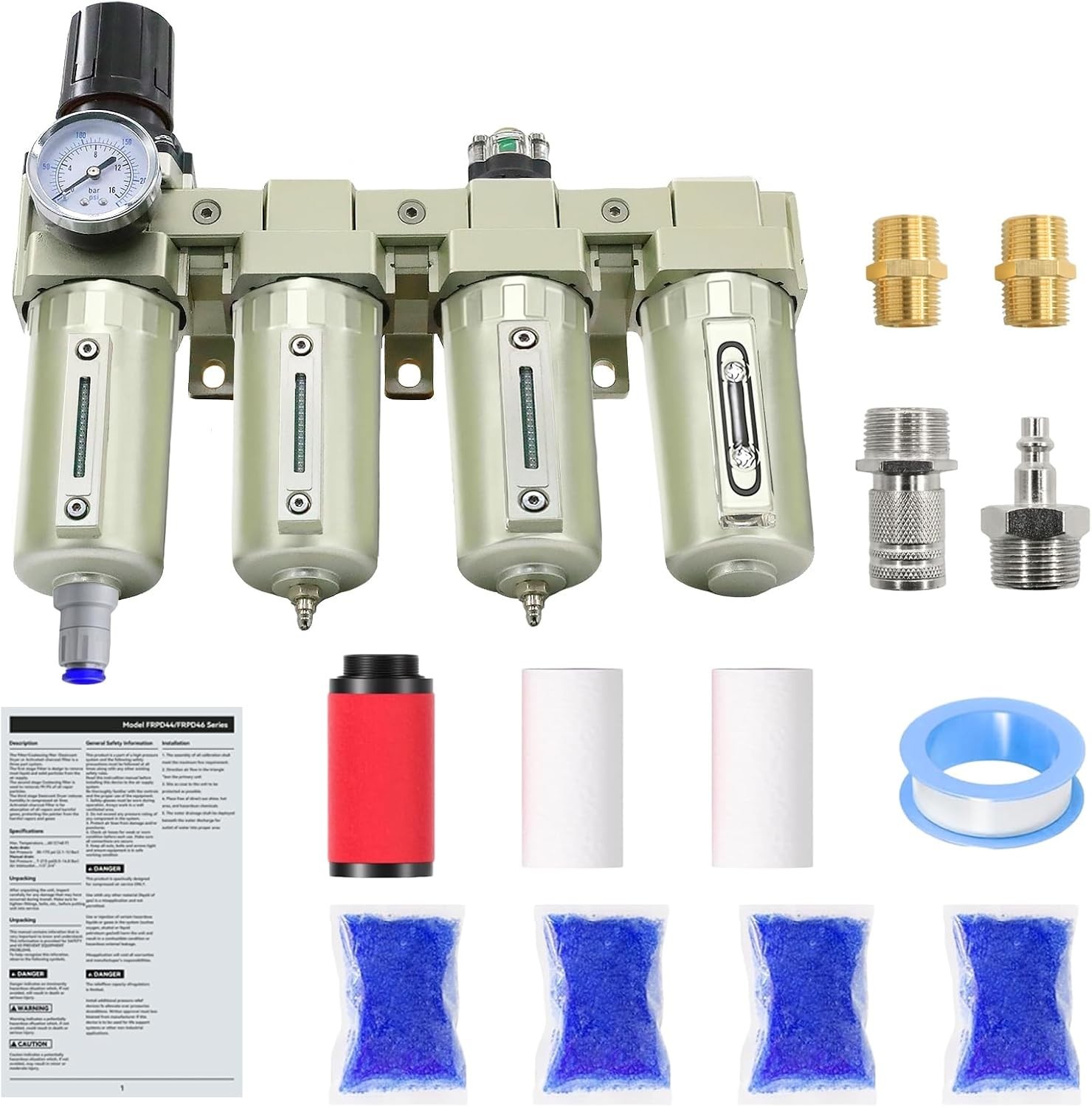
The Air Dryer and Water Separator - This one wins on being lightweight and purpose-built for shop air. It is designed for a plasma cutter or paint spray and goes to work quickly with the included filter elements and fittings. The whole system is sized to live on a 7-pound frame, which makes mounting a far simpler job than accommodating a 30-pound membrane. For shop use, that is exactly the protection you need.
Green Air Nitrogen Membrane Separator
If your process depends on a continuous nitrogen supply, this used Green Air membrane was doing exactly that for a high-demand draught beer system before the location closed. It is a large component: roughly 45 inches long and 6 to 8 inches wide, with a 200 PSI rating. It is only the membrane, so you need to connect it to your own compressor and air receiver. The upside is that it is a dedicated nitrogen separator, not just a moisture filter. The limitation is that it is a used part, so you are accepting its prior service life, and you have to provide the air source that feeds it. If you are prepared to do that, it is the only product here that will put you in the nitrogen business.
3/4" NPT 4-Stage Air Dryer
This new system puts three filters and one dryer between your compressor and your plasma cutter or paint spray gun. It includes the pressure gauge, connectors, pipe fittings, filter elements, desiccant beads, and tape, so the essential parts arrive together. With two 3/4" NPT air ports and a 1/4" NPT gauge port, it is built to accept a sizable air flow, and the maximum working pressure is 240 PSI. The 5-micron filter is rated to remove 95% of particles and moisture, which is meaningful for painting and cutting. The main limitation is also the main distinction from the membrane separator: it dries air, it does not generate nitrogen, and you should not install it horizontally. If your work is plasma cutting or spraying, you are looking at the correct tool.
Final choice by use case
Choose the Green Air Nitrogen Membrane Separator when your filtration separation requirement is a continuous nitrogen supply for beverage, medical, industrial, or processing applications and you have a compressor and receiver to feed the membrane. Choose the Air Dryer and Water Separator when your goal is dry, filtered compressed air for a plasma cutter or paint spray and you want a new, compact system. They are both serious tools, but they are not serving the same task. Match the tool to the gas you actually need at the point of use, and the right pick becomes clear.