When you need filtration separation, the toughest part is often choosing between two very different tools. Do you buy a bulk pack of sediment filters for water or a machine-tool oil water separator for coolant? The two options here sit at opposite ends of the price range: the string wound sediment filter pack at $152.45, and the industrial oil water separator at $1,703.84. That spread of $1,551.39 means the real question is about the liquid you need to clean and the scale of the job.
Quick Verdict
If your goal is sediment removal from incoming water-think rust, silt, and sand-the string wound sediment filters are the clear choice. They're a practical way to protect water equipment. If you're maintaining a machine shop and need to keep cutting fluid clean, the industrial oil water separator is the specialized tool, even though it's the more expensive option.
Comparison
| Product | Price | Price Bar | Best For |
|---|---|---|---|
| 20-Pack 10" x 4.5" String Wound Sediment Water Filter | $152.45 | Sediment removal in water filtration | |
| 208-240V Industrial Oil Water Separator | $1,703.84 | Oil separation from cutting fluid |
Where Each Product Wins
String Wound Sediment Filters Win On...
- Capacity for the money: The 30,000-gallon listed capacity and bulk pack format give you repeated changes for a whole-house sediment filtration setup.
- Certification and material: NSF-certified against NSF/ANSI Standard 42 for material requirements, with food-grade polypropylene that's lead- and BPA-free.
- Compatibility: Designed for Big Blue housings and compatible with a wide range of brands.
Industrial Oil Water Separator Wins On...
- Purpose-built design: It separates floating oil from cutting fluid, which extends the service life of the fluid and helps protect cutting tools and machining accuracy.
- Industrial maintenance features: Fast oil recovery, oil drainage for reuse, and a cleaning valve for sludge at the tank bottom.
- Workplace and tool protection: By keeping coolant clean, it also supports a cleaner working environment and employee health.
A Closer Look
String Wound Sediment Water Filter Pack
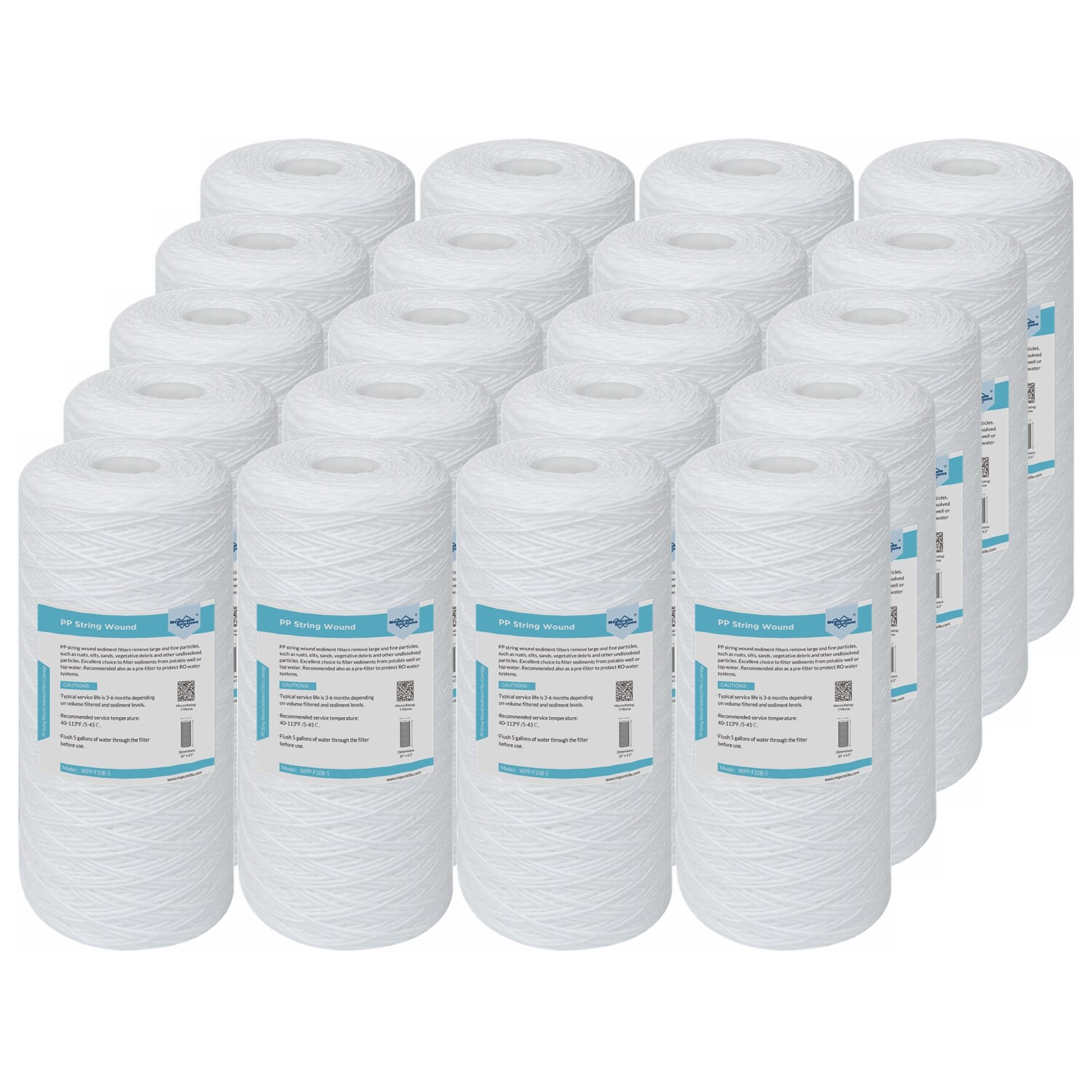
The filter pack gives you a direct answer. Each 10" x 4.5" string wound cartridge targets rust, silt, sand, and other undissolved particles, and the 1/5/10 micron options let you adjust the filtration density to your water condition. The 30,000-gallon capacity means you're not replacing cartridges constantly, and the NSF certification for material requirements adds confidence for water-contact use. It's also a practical fit for Big Blue housings, with compatibility across a long list of brands. The limitation is the scope: this is a sediment filter for water, not an oil water separator for coolant. If your problem is floating oil in a cutting fluid tank, the cartridge won't solve it and you'd need the industrial separator instead.
Industrial Oil Water Separator
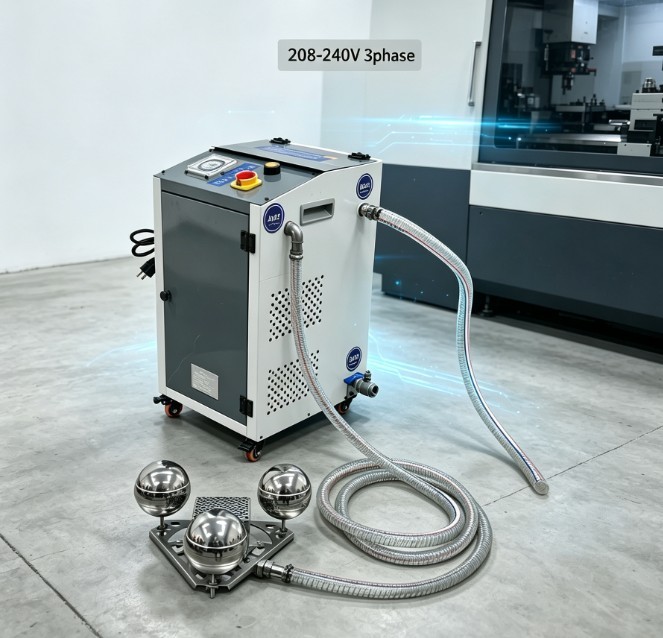
Machine shops that run cutting fluid face a different filtration separation challenge: oil that floats on top of the coolant. The 208-240V, 3-phase separator is built for that job. It pulls floating oil off the cutting fluid, which extends fluid life and helps maintain machining accuracy. The fast oil recovery and oil drainage routes recovered oil back for reuse, and the cleaning valve helps remove sludge from the tank bottom. For a shop that runs continuous operations, that's a meaningful way to protect both tools and the working environment. The clear limitation is the investment: it's a major purchase compared with a cartridge filter pack, and it requires a 208-240V 3-phase power supply. It's also not a water filter, so it won't address sediment in incoming water.
Final Choice by Use Case
- For sediment-heavy water or whole-house filtration: Choose the string wound sediment filter pack. Its filtration density and certification make it a solid first-stage choice.
- For machine-tool coolant maintenance: Choose the industrial oil water separator. Its purpose-built design makes it the appropriate tool for keeping coolant clean.
- If you're still undecided: Look at the liquid you're trying to clean. Water with particles points to the sediment filters; coolant with oil contamination points to the separator.