When you're shopping for compressors, blowers, and air treatment equipment, the first decision is whether you need high pressure or high volume. A rotary screw air compressor builds enough pressure to run tools and cylinders, while a regenerative blower moves a much larger volume of air at modest pressure. The right choice depends on the tasks in your shop.
Quick verdict: Choose the 3 Phase 10HP Rotary Screw Air Compressor if your operations demand 125 PSI for pneumatic tools, cylinders, or blow-off stations. Choose the 2.3 Hp Industrial Blower if you need high-volume airflow for drying, conveying, aeration, or vacuum hold-down setups, and you want to keep the initial investment lower.
| Feature | 3 Phase 10HP Rotary Screw Compressor | 2.3 Hp Industrial Blower |
|---|---|---|
| Price | $3,099.00 | $950.00 |
| Price bar | ||
| Compressor type | Rotary screw | Regenerative blower |
| Power | 10 HP | 2.3 HP |
| Airflow | 34 CFM | 182 CFM |
| Maximum pressure | 125 PSI | 76" H2O |
| Power phase | 3-phase | 1-phase |
| Voltage | 230V | 220V |
Where the rotary screw compressor wins
The 10HP rotary screw unit is the clear choice when your equipment requires compressed air at the higher pressure only a compressor can provide. It delivers a steady airflow that can run air tools and cylinders in an industrial setting. Its three-phase 230V design is built for continuous operation in a dedicated compressor installation. If you already have three-phase power in your facility, this compressor can become the backbone of your pneumatic system.
Where the regenerative blower wins
The 2.3 HP blower offers a dramatic airflow advantage over the compressor, making it ideal for applications like parts drying and pneumatic conveying. It also runs on single-phase 220V power, so it's far easier to install in shops that don't have three-phase service. The price difference is substantial: $950 versus $3,099.
3 Phase 10HP Rotary Screw Air Compressor
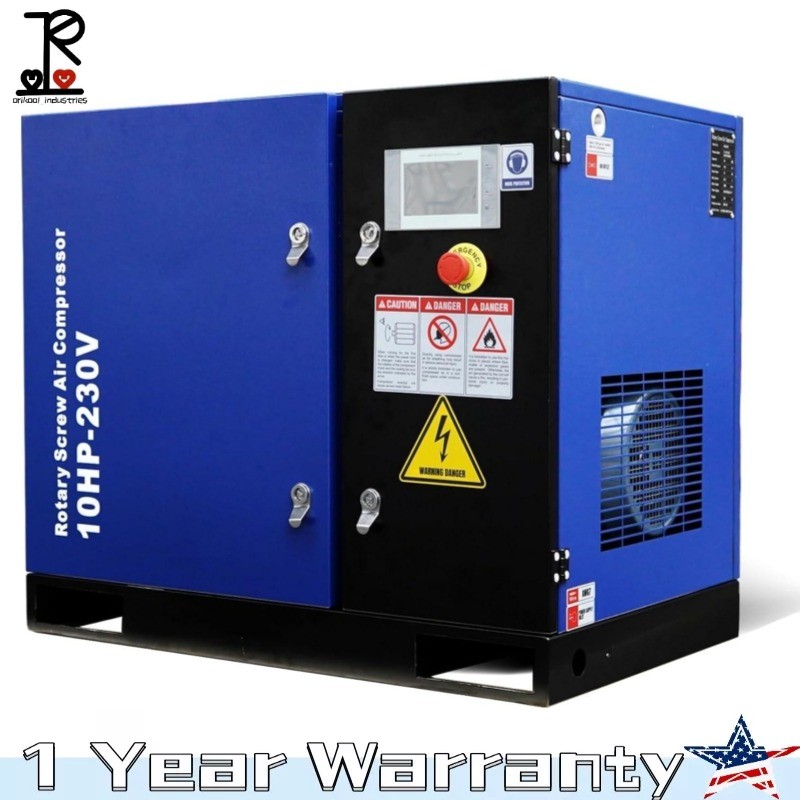
This compressor is engineered for high-pressure tasks that a blower simply cannot handle. With a maximum pressure of 125 PSI and a flow of 34 CFM, it can operate air cylinders, impact wrenches, and spray equipment. The 230V three-phase motor, rated at 10 HP with a max current of 28.1A, is designed for heavier duty industrial use. The rotary screw design runs with less pulsation than a reciprocating unit, making it a solid foundation for a shop air system. The main limitation is the three-phase electrical requirement, which disqualifies it for single-phase service. The higher price is a reflection of the increased output and industrial-grade construction.
2.3 Hp Industrial Blower
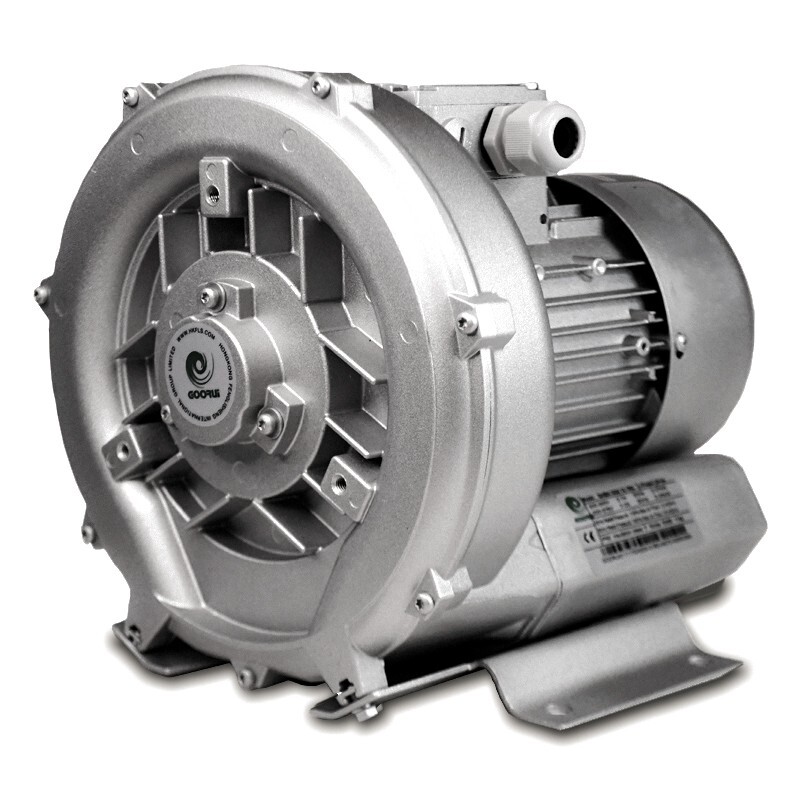
This regenerative blower is aimed squarely at high-volume, low-pressure applications. It generates 182 CFM of airflow at 76 inches of water column pressure, making it effective for drying, aeration, conveying, and vacuum operations. The single-phase 220V motor simplifies installation in typical commercial buildings. It's also oil-free and maintenance-free, which cuts ongoing upkeep. Since it can operate in both pressure and vacuum modes, it's a flexible tool for many airflow tasks. The limitation is its low pressure, as it won't drive pneumatic tools or high-pressure cylinders. If your application needs volume rather than pressure, this blower delivers that at a significantly lower price point.
Final choice by use case
For a metal fabrication shop running air tools and cylinders, the 3 Phase 10HP Rotary Screw Air Compressor is the appropriate investment. For a packaging line moving lightweight materials or a wood shop using vacuum hold-down, the 2.3 Hp Industrial Blower matches the job with lower cost and simpler installation. Match the unit to the pressure and flow your process actually requires.