When your shop's air tools start sputtering or your spray finish comes out blotchy, the first instinct is often 'I need a bigger compressor.' But sometimes the real problem is moisture in the lines, not a lack of volume. That decision-more compressed air versus cleaner compressed air-is exactly the fork between a rotary screw compressor and a refrigerated compressed air dryer. One is a complete air source; the other is a treatment stage for the air you already produce.
Quick verdict
If your bottleneck is volume, the rotary screw compressor is the missing piece. If your bottleneck is moisture, the SCHULZ refrigerated dryer is the more direct fix. The deciding factor is what your air system actually runs out of first: CFM or clean, dry air.
At a glance
| What to compare | 3 Phase Rotary Screw Compressor | SCHULZ Refrigerated Compressed Air Dryer |
| Primary job | Generates compressed air | Removes moisture from compressed air |
| Airflow rating | 34 CFM | 50 CFM @ 100 PSI |
| Maximum pressure | 125 PSI | 200 PSI max inlet |
| Power supply | 230V, 3 phase | 115V, single phase |
| Listed price | USD 3,099.00 | USD 1,552.28 |
Where each product wins
Choose the rotary screw compressor when air demand is the bottleneck: you need steady airflow for tools that run for long stretches, and your facility can supply the required power. Choose the SCHULZ refrigerated dryer when the air volume is already adequate but condensation is damaging tools, paint, or equipment. The dryer's treatment duty makes it the targeted fix for wet air, while the compressor answers a shortage of supply.
Product notes
3 Phase 10HP Rotary Screw Air Compressor 34 CFM 125 PSI 230V Industrial Grade
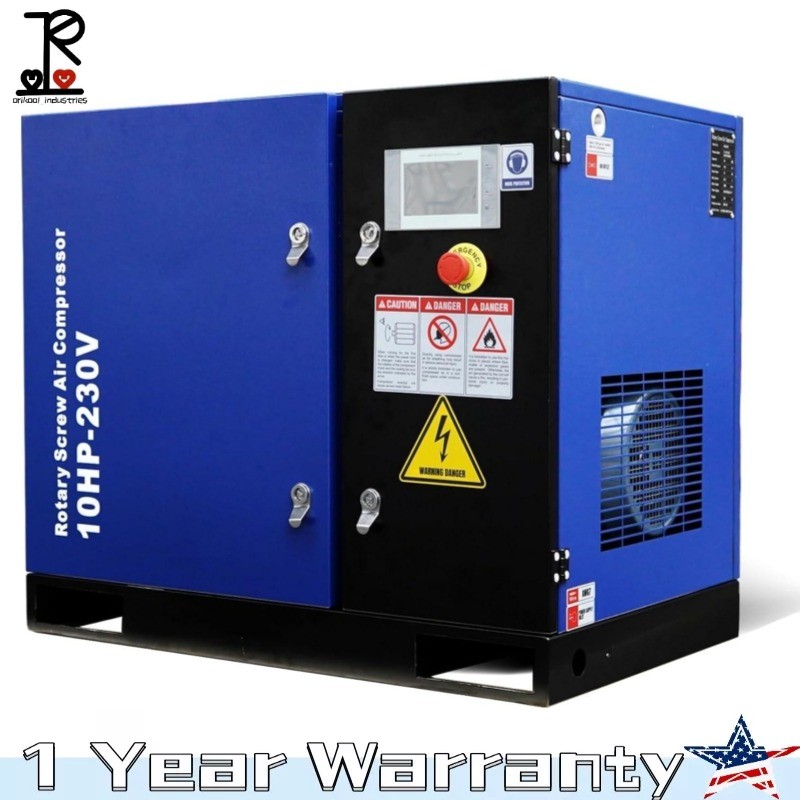
If your shop is undersupplied on air volume, this rotary screw unit changes the math. It delivers 34 CFM at up to 125 PSI from a fixed-speed motor, so it can carry continuous production work rather than just quick blast jobs. The oil gauge, oil-air separator, and acoustic insulation point toward a machine built for ongoing duty in a working shop. The caveat is the power feed: this compressor requires 230V three-phase, so the electrical supply has to match. At USD 3,099.00, it is a serious investment, but the payoff is a steady supply of compressed air at the point of use. Choose it when you genuinely need more air, not when moisture is your only complaint.
SCHULZ 50 CFM REFRIGERATED COMPRESSED AIR DRYER, 10HP & 15HP COMPLETE KIT, 115V
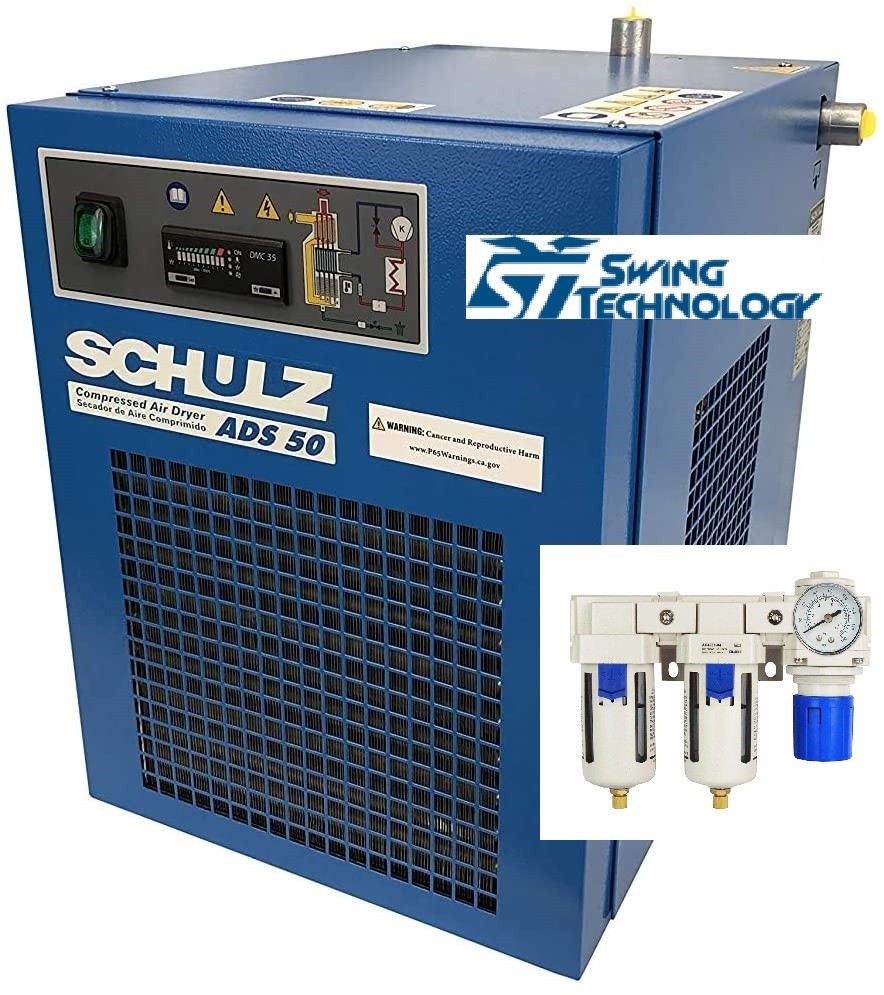
If your compressor already supplies enough air but water is rusting tools and ruining finishes, this refrigerated dryer targets the actual problem. It is a non-cycling refrigerated dryer with an integrated electronic controller that manages operating temperature, dew point, drain valve, and condenser fan, so the unit works hands-off once connected. The limitation is that it conditions air rather than creates it. If your system is already short on volume, this dryer will not restore the missing airflow. Choose it when condensation is the visible failure and your existing compressor is otherwise keeping up.
Final choice by use case
Buy the rotary screw air compressor if your tools starve for air during continuous work. Buy the SCHULZ refrigerated air dryer if your compressor keeps up but water keeps contaminating your lines. The two upgrades solve different problems, so the correct answer is the one that matches whatever your shop actually runs out of first: volume or clean, dry air.