Buying air equipment can feel like a fork in the road: do you need to store compressed air or move air through a system? In the compressors, blowers, and air treatment space, these two products sit on opposite sides of that question. The Industrial Air Compressor Receiver Tank is a large storage vessel for high-volume compressed air. The industrial air blower is a regenerative blower designed to create pressure or vacuum for industrial processes. The right choice depends on your application.
Quick Verdict
At a $1,220 difference, the tank is the bigger investment, but it's also a different class of equipment. If you already run a larger compressor and need surge capacity, the receiver tank is the straightforward pick. If your need is moving air for drying, cooling, or conveying, the blower delivers that at a lower listed price.
At a Glance
| Feature | Industrial Air Compressor Receiver Tank | 2.8 HP Industrial Air Blower |
|---|---|---|
| Listed price | USD 1,999.00 | USD 779.00 |
| Primary role | Compressed air storage | Pressure/vacuum air movement |
| Capacity/power | 270-gallon tank, 160 PSI max | 2.8 HP / 2.05 kW, 150 CFM |
| Material | Carbon steel | Cast aluminum alloy, oil-free |
| Connections | 1", 2", and 3" NPT | 2" inlet and outlet |
| Certifications | ASME available | CE, ISO9001, RoHS |
Where Each Product Wins
The receiver tank wins when you need compressed air storage, surge protection, and a vessel built to standards for a larger compressor system. It also offers versatile port arrangements and multiple connection sizes to match existing piping.
The blower wins when you need low-noise air movement in a compact package. Its cast aluminum alloy housing, IP55 enclosure, and inlet and outlet ports make it easy to integrate into drying, ventilation, or conveying lines.
Product Notes
Industrial Air Compressor Receiver Tank Vertical Horizontal ASME 270 Gallon
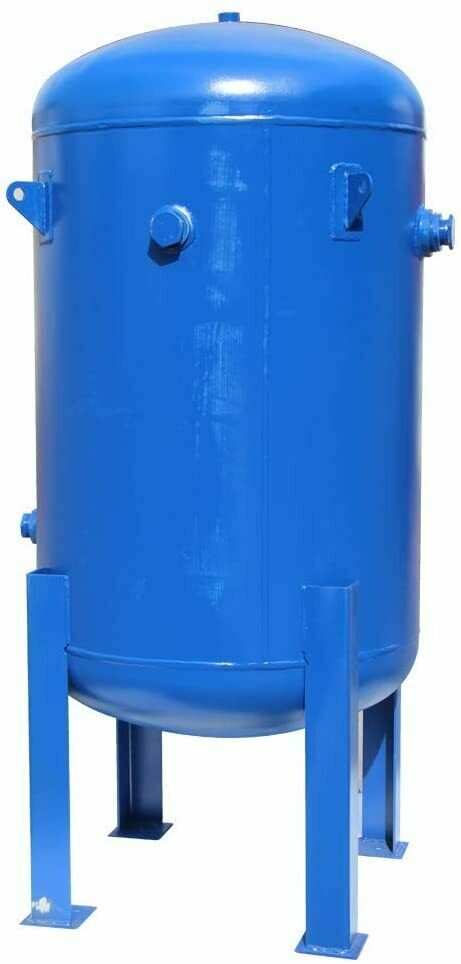
The 270-gallon receiver tank is the right call when your shop already has a 22 kW or larger screw compressor and needs a large buffer between the compressor and plant air demand. This carbon steel tank is rated to 160 PSI maximum and comes with 1", 2", and 3" NPT connections, so you can route it to match your existing piping. It's fully assembled and ready to use, with ASME certification available for government acceptance. The tradeoff is that a receiver tank doesn't produce air; it only stores it. Without a compatible screw compressor feeding it, the tank can't act as a standalone air source.
2.8Hp Industrial Air Blower (GHBH 002 34 1R5)
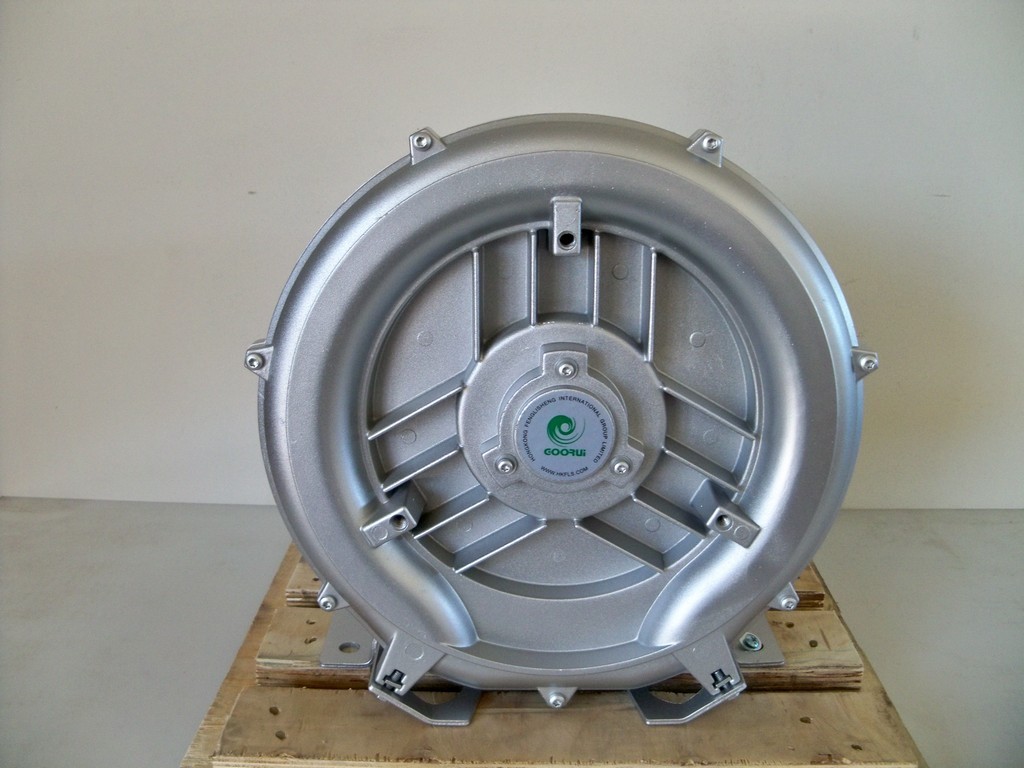
If your process calls for pressure or vacuum air movement, the 2.8 HP regenerative blower is built for exactly that. It moves up to 150 CFM using a cast aluminum alloy housing and an oil-free, maintenance-free design. The 220V-480V three-phase motor, CE/ISO9001/RoHS certifications, and IP55 enclosure make it suitable for industrial environments. The 2-inch inlet and outlet keep ducting connections straightforward. The limitation is that it is not a storage device: it moves air but does not provide a reservoir of compressed air for intermittent heavy draws, nor can it replace a compressor-and-tank setup if your process needs sustained high-pressure stored air.
Final Choice by Use Case
For a facility with an existing compressor system, the receiver tank gives you storage, pressure stability, and a vessel that meets construction standards. For drying, ventilation, cooling, or pneumatic conveying, the blower is the more direct tool. Match the unit to the job, and you'll get the right outcome.