If you need to move air in a workshop or small industrial setting, the first decision is whether you are exhausting large volumes of contaminated air or building a concentrated airflow for a process. These two units sit on opposite sides of that split. The centrifugal blower is a high-volume extractor; the regenerative blower is a compact machine for steady process duty. They are not two versions of the same tool, so the right pick depends on what you are trying to accomplish.
Quick verdict
Choose the centrifugal extractor when the goal is clearing fumes, dust, smoke, or vapour from a cabinet, chemical area, or workspace. It moves 2300 m³/h and is listed at USD 184.23. Choose the regenerative air blower when you need steady output for process lines. It is listed at USD 779.00 and delivers 150 CFM / 255 m³/h. The USD 594.77 price gap reflects the different jobs the two machines are built to do.
Comparison
| Centrifugal Blower Fume Extractor | Regenerative Air Blower | |
|---|---|---|
| Listed price | USD 184.23 | USD 779.00 |
| Air flow | 2300 m³/h | 150 CFM / 255 m³/h |
| Power supply | 110V/60Hz, 300W | 220V-480V/3Ph, 2.8Hp |
| Connections | 250 mm exhaust port | 2 in inlet and outlet |
Where each product wins
- The centrifugal extractor wins for ventilation jobs that need to clear a large space quickly. Its wide exhaust port accepts ducting, and its open-flow design moves air freely through cabinets and work areas without choking on dust or fumes.
- The extractor is also the easier fit for a modest electrical service. It draws only 300W and runs on 110V/60Hz, so it can be placed where three-phase power is not practical.
- The regenerative blower wins for process work where steady output matters. The design delivers consistent airflow and can run continuously, which is what a production line wants from its air mover.
- The regenerative blower also wins on low-maintenance operation: the oil-free, maintenance-free internals mean less routine attention.
Product notes
Centrifugal Blower Fume Extractor
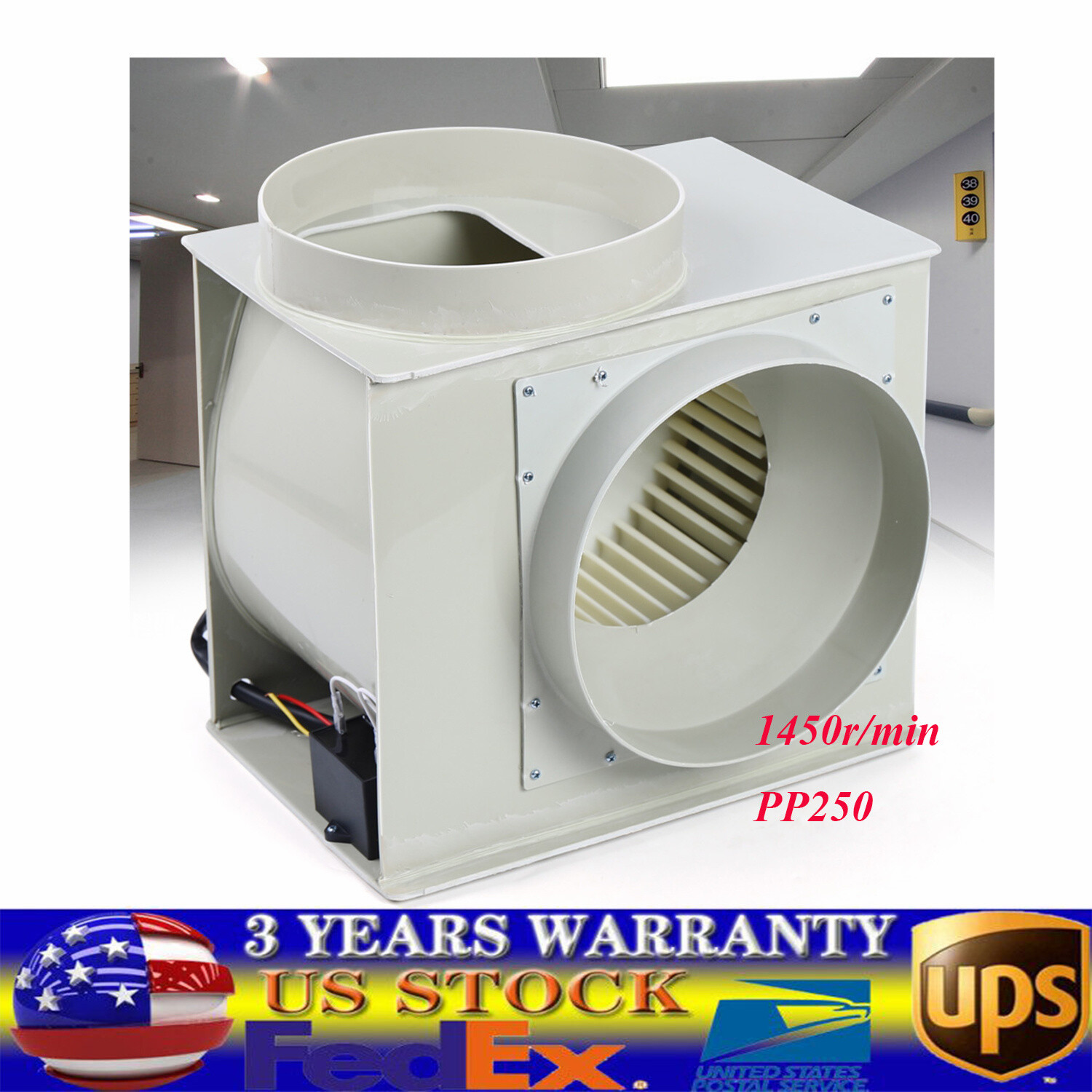
The LXFJ-250 centrifugal fan is the straightforward answer when a space needs to breathe. Its polypropylene housing resists corrosion, and the 250 mm exhaust port gives you a large opening for ducting. At 40 decibels, it is quiet enough for a shop or cabinet area that runs continuously. The limitation is pressure: 260 Pa is fine for moving air through an open path, but not for pushing through a long restrictive duct run or creating vacuum. If you need to exhaust fumes, smoke, dust, or vapour rather than pressurize a line, this unit matches that job directly.
Regenerative Air Blower
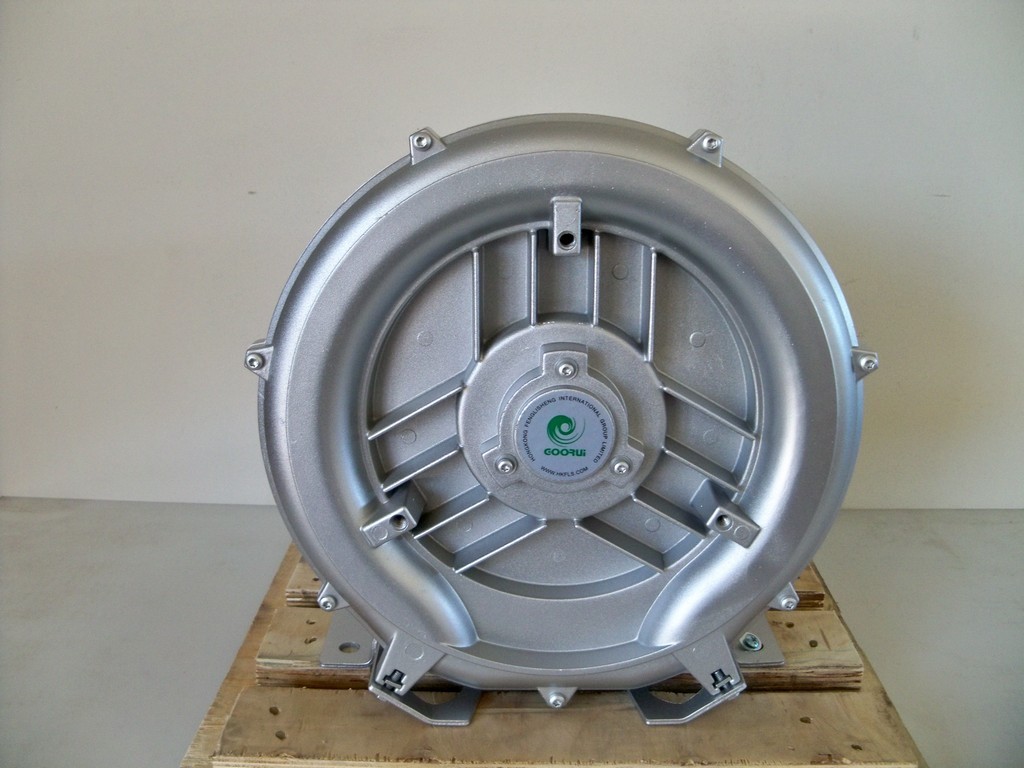
The GHBH 002 34 1R5 is a regenerative blower for pressure and vacuum duty, with 2-inch inlet and outlet connections that tie into process piping. The cast aluminum housing and oil-free, maintenance-free design make it a low-attention option for continuous industrial use. The 2.8Hp motor rating puts it in a different output class than a small extractor fan. The trade-off is capacity: this is not a high-volume ventilator, so don't expect it to clear a room the way an extractor can. If your process needs sustained pressure or vacuum, its design direction is the right one.
Final choice by use case
For fume, dust, smoke, or vapour exhaust in a cabinet, chemical area, or workshop, the centrifugal extractor is the clear choice. Its volume-first design fits a venting job.
For process lines that need steady output, the regenerative blower is the better fit. It is built for steady operation and stable airflow.