When you need to clean the air in a workshop, garage, or enclosed work area, the first question is whether you should push or pull. If you push, you are choosing a blower; if you pull, you are choosing an extractor fan. These two tools approach that job from opposite ends: the 520W Portable Industrial Blower pushes a strong stream of air, while the 300W Centrifugal Blower Fume Industrial Extractor Fan pulls dust, smoke, vapour, and fumes out of a contained space. The right purchase depends less on raw power and more on where the contaminated air is sitting.
Quick Verdict
At a glance, the decision is about airflow direction. The 520W Portable Industrial Blower is the open-space air mover, built to push a strong current around a large area. The 300W Centrifugal Extractor Fan is the contained-air specialist, built to pull fumes, dust, smoke, and vapour away from the work. Choose the blower for broad ventilation; choose the extractor for exhaust at a fixed point.
At a Glance
| Feature | 520W Portable Industrial Blower | 300W Centrifugal Extractor Fan |
|---|---|---|
| Listed price | USD 189.51 | USD 184.23 |
| Power | 520 W | 300 W |
| Airflow listing | 2300 cfm | 2300 m³/h |
| Air handling | Blower with 25 ft PVC hose | Centrifugal extractor with 250 mm exhaust port |
| Best fit | Open-site ventilation | Fume, dust, smoke, and vapour exhaust |
Where Each Tool Wins
520W Portable Industrial Blower: This is the better match when you need to ventilate an open workspace and want to send a current of air away from the machine. It is the easier tool for keeping a large area from feeling stale.
300W Centrifugal Extractor Fan: This is the better match when you need to remove contaminated air at the source. It is the more deliberate tool for keeping fumes, dust, smoke, and vapour from lingering in the air.
Closer Look
520W Portable Industrial Blower Steel Yellow 2300CFM with 25ft PVC Pipe
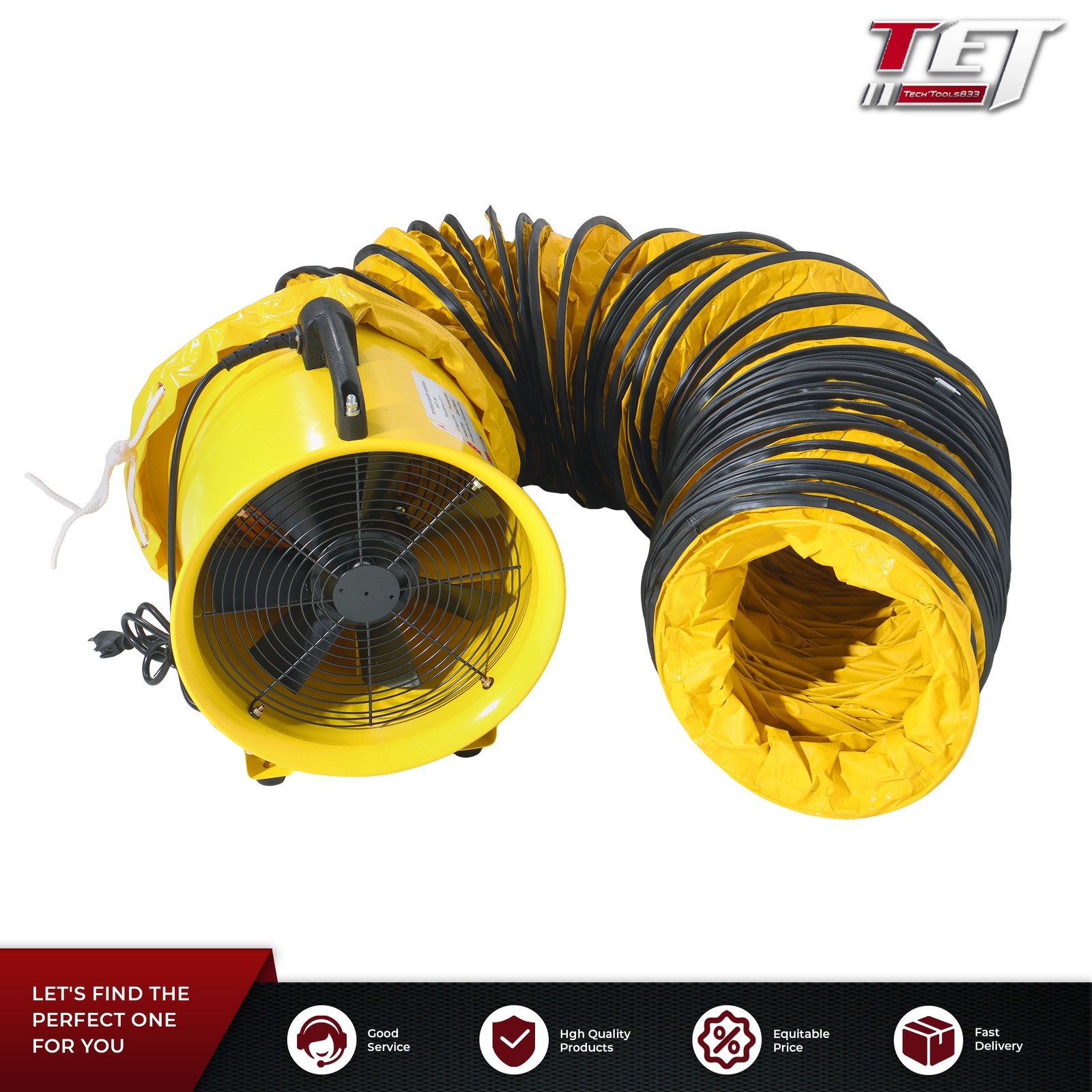
This unit is built for moving large volumes of air in busy spaces. A copper motor and heavy-duty construction give it the kind of durability that construction sites, workshops, and garages demand. Because it comes with a 25 ft PVC hose, you can set the machine in one place and aim a steady current toward a doorway, a workbench, or a specific spot. That flexibility is what separates it from a fixed extractor setup. The trade-off is that it is a blower, not an extractor. It will push stale air and help ventilate an open area, but it is not designed to pull fumes, dust, smoke, or vapour out of a sealed cabinet or hood. If your problem is contaminated air trapped inside a confined workspace, this open-air tool is the wrong shape for the job.
300W Centrifugal Blower Fume Industrial Extractor Fan Dust Smoke Vapour Exhaust
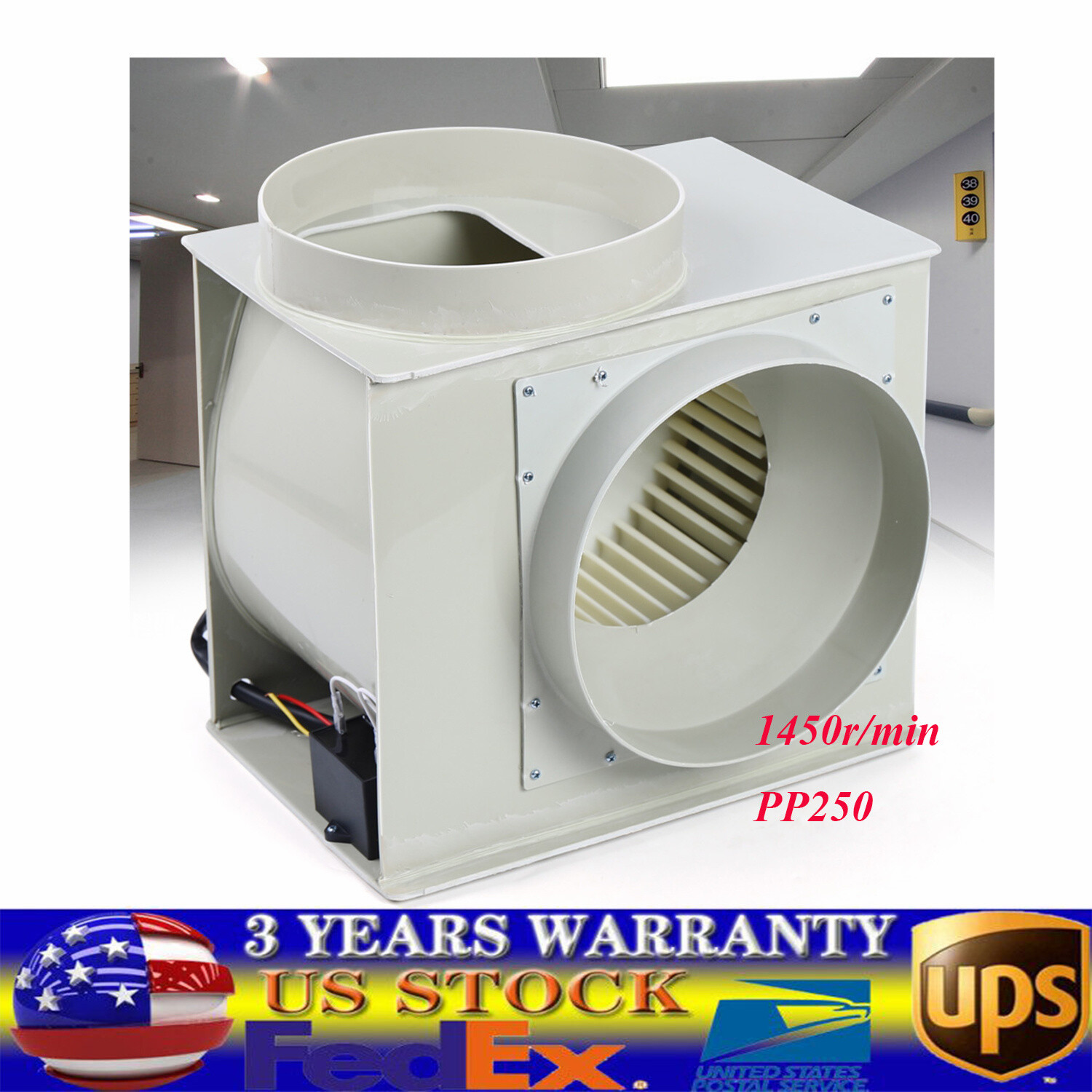
This extractor is the stronger pick when contaminated air needs to be removed rather than stirred. The polypropylene housing resists corrosion, wear, and high temperatures, so it is suited to fumes, vapours, and other aggressive exhaust streams. It also carries a 260 Pa hydrostatic pressure rating and a 40-decibel noise level, which gives you a sense of the pulling capacity you get in a contained setup. Its exhaust connection defines the setup: air leaves through a fixed 250 mm port instead of being aimed by hand. That is the main limitation to weigh. On its own, it will not blow a stream of air across an open room the way a hose blower can. Use it where you can route the exhaust away from a bench, cabinet, or enclosed workspace.
Final Choice by Use Case
Make the final call based on your workspace layout and the contaminant you are dealing with.
- For construction sites, garages, and workshops where you need broad ventilation from a portable air mover, the 520W Portable Industrial Blower is the practical pick.
- For fume, dust, smoke, and vapour exhaust from a bench, cabinet, or enclosed workspace, the 300W Centrifugal Extractor Fan is the right fit.
Both tools are priced within a few dollars of each other, so the deciding factor should be airflow direction, not the small price gap.