When you're sorting through compressors, blowers, and air treatment options, two very different tools can move stale or contaminated air: a portable high-output blower and a centrifugal extractor fan. The better choice depends less on raw specs and more on where the air is going and what it contains.
Quick Verdict
If you want a directed stream of air that can travel through a flexible hose, the portable industrial blower with the 25ft hose is the more flexible tool. If your priority is pulling fumes away from a chemical cabinet or lab fume hood, the centrifugal extractor fan is the better match. The price gap between them is only about $5, so budget is not the deciding factor.
At a Glance
| Feature | 520W Portable Industrial Blower | 300W Centrifugal Extractor Fan |
|---|---|---|
| Price | USD 189.51 | USD 184.33 |
| Power | 520W | 300W |
| Airflow spec | 2300 cfm | 2300 m³/h |
| Included hose/port | 25ft PVC pipe | 250mm exhaust port |
| Construction emphasis | Heavy-duty, copper motor | High-quality polypropylene, anti-corrosion |
| Best match | General ventilation and directed airflow | Fume hood, chemical cabinet, ducted extraction |
Note that the two airflow numbers use different units: one is cubic feet per minute, the other is cubic meters per hour, so do not treat them as directly comparable.
Where Each Product Wins
The portable blower wins when you need to ventilate a large space, dry out an area, or push air through a specific opening. Its 25-foot PVC hose lets you aim airflow without moving the whole unit, and the copper motor adds durability for frequent use on construction sites, in workshops, or in garages.
The centrifugal fan wins when the job involves chemical fumes, dust, smoke, or vapour, especially inside a fume hood or connected to ductwork. Its polypropylene body is positioned for corrosion resistance, and the 250mm exhaust port is designed for ducted extraction.
Product Notes
Portable Industrial Blower with 25ft PVC Pipe (USD 189.51)
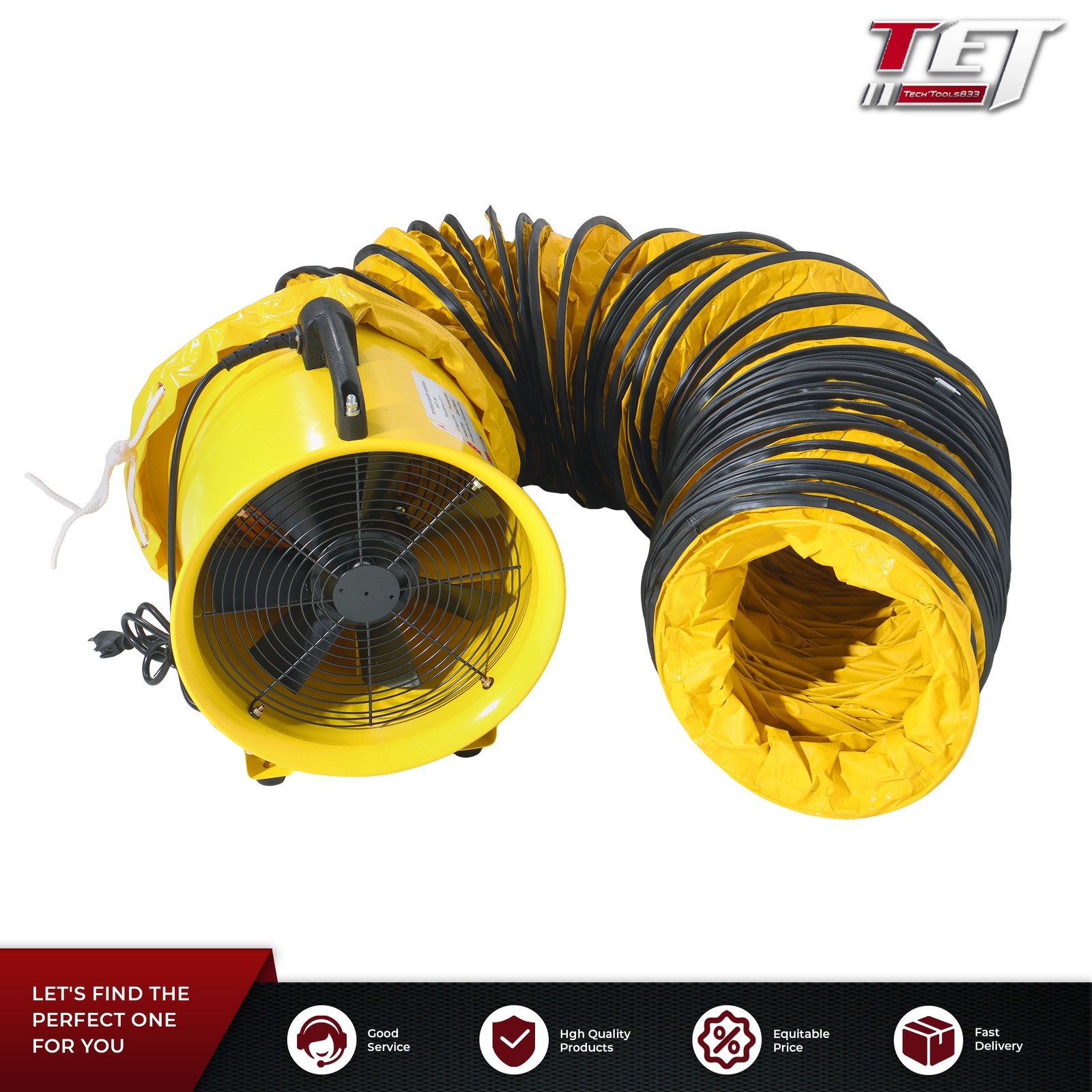
With a 25-foot flexible PVC hose and a copper-wound motor, this blower is built to direct a strong current of air exactly where you need it. Its heavy-duty construction is aimed at construction sites, workshops, and garages. It carries a 2300 cfm airflow rating and is finished in yellow with an industrial style. Choose this when you need to ventilate a room, dry a surface, or move dust and vapors out of a confined area. The trade-off is that it is classified as a blower and utility unit, not a fume extractor, so if your work involves chemical fumes rather than general air movement, a centrifugal extractor will handle the task better.
Centrifugal Extractor Fan for Fume Hoods (USD 184.33)
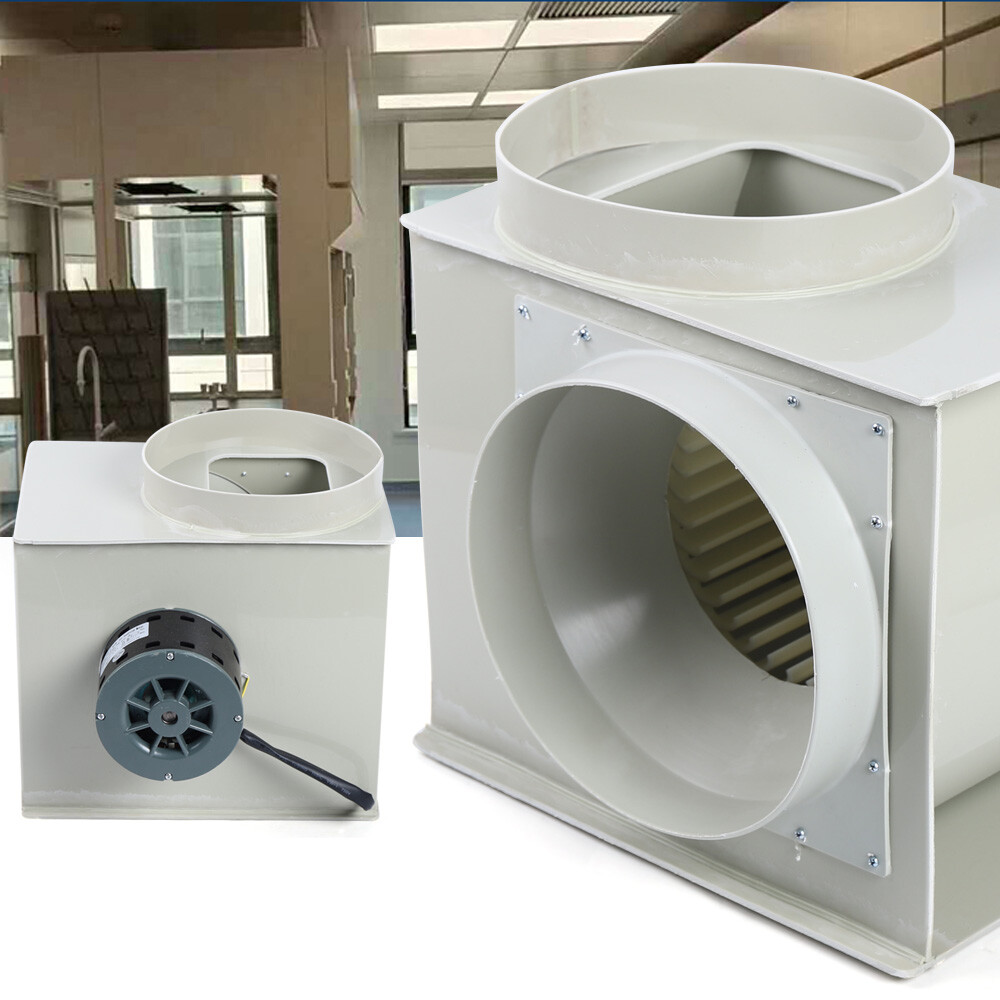
This unit is specialized for fume hoods and chemical cabinets. Its high-quality polypropylene body and anti-corrosion build make it a more suitable fit for lab air movement, and the 250mm exhaust port connects to ducting. The motor draws less power than the portable blower, and the price is slightly lower. It is a centrifugal fan, which means it is better at moving air through ductwork than a utility blower. The limitation is that it is a dedicated extractor rather than a portable ventilation tool; its specialization means it is not meant for open-space ventilation. If you need general-purpose air movement outside a ducted system, the portable blower is the more practical choice.
Final Choice by Use Case
- Choose the 520W Portable Industrial Blower for construction sites, workshops, garages, and any job that needs a flexible hose to direct high-volume airflow.
- Choose the 300W Centrifugal Extractor Fan for fume hoods, chemical cabinets, and ducted exhaust systems where corrosion-resistant construction matters more than portability.
For most general air-moving tasks, the blower offers more versatility. For controlled removal of dust, smoke, vapour, and chemical fumes, the centrifugal extractor is the specialized alternative.