When you're building or upgrading a compressed air system, the first question isn't which part is "better." It's which job you need done: keeping the air clean and dry where it's used, or storing enough compressed air to handle high demand. An air line dryer and an industrial receiver tank sit at opposite ends of both purpose and price. The dryer is a small unit that conditions air right before a tool or a dedicated line. The tank is a large storage vessel that banks compressed air for a facility-scale setup.
Quick Verdict
If moisture and debris are reaching your tools, the air line dryer is the direct fix. If you're losing pressure because demand outruns your compressor, the receiver tank is the storage you need. The real decision here is air quality versus air volume.
Comparison at a Glance
| Product | Listed Price | Price Bar | Key Spec | Best For |
|---|---|---|---|---|
| 1/4" NPT Air Line Dryer | USD 14.78 | 5-micron brass filter, 145 PSI max | Drying air at the point of use | |
| Industrial Air Compressor Receiver Tank | USD 1,999.00 | 270-gallon capacity, 160 PSI max | Storing a large volume of air |
Where Each Product Wins
The dryer wins when air quality is the priority. It is designed to reduce moisture and particulates before the air reaches your tool, and the bowl with manual drain makes maintenance straightforward. For a small workshop or a single sensitive application, this is the part to focus on.
The tank wins when you need air volume. The large storage reserve lets high-demand operations keep running without constantly waiting for the compressor to catch up. It's the piece that gives an air system a reliable supply buffer for multiple tools or production lines.
Product Notes
Air Line Dryer
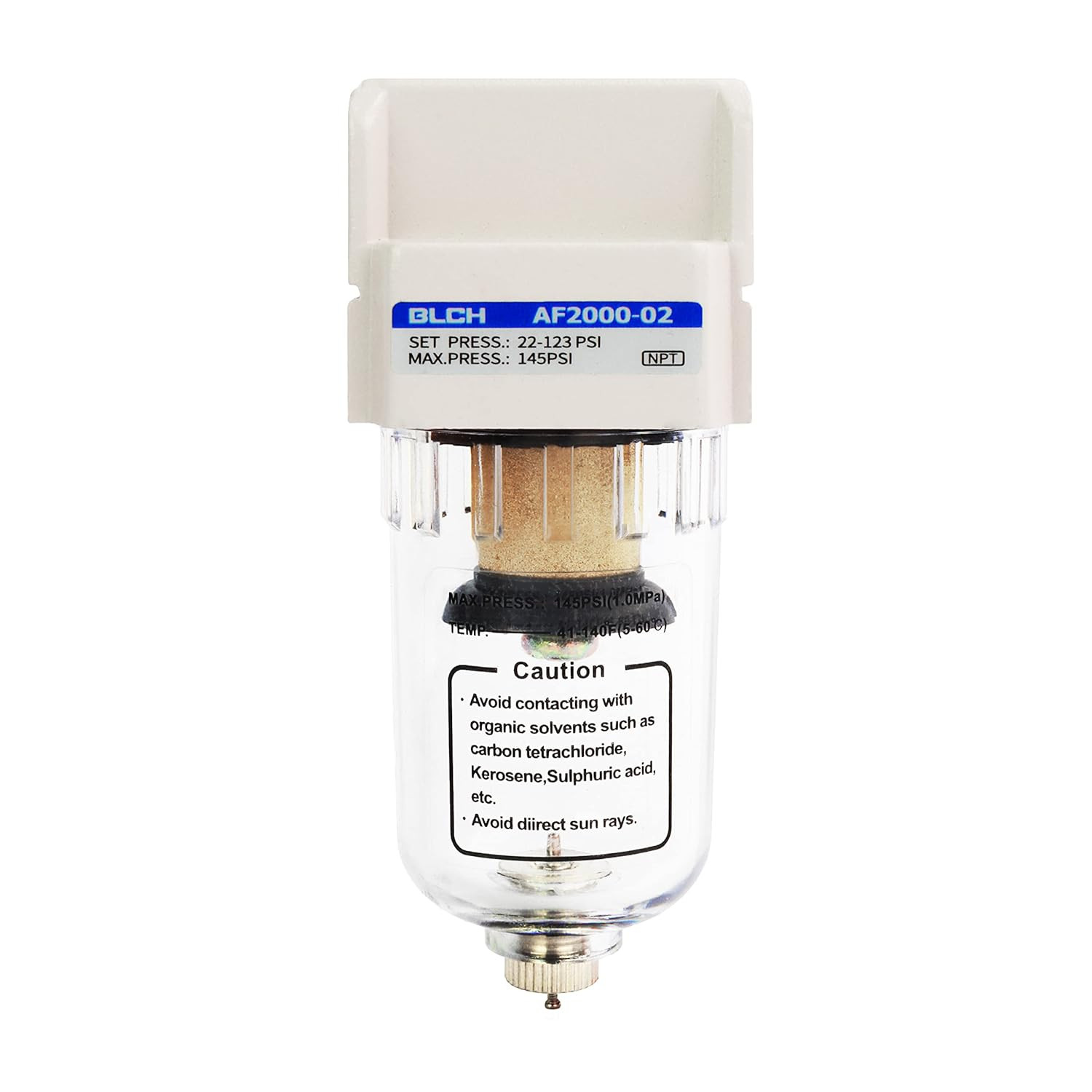
At just over $14, this compact unit is an easy add-on for a workshop line. It's designed for a single air line rather than a whole factory. The 5-micron brass filter element is a notable feature, and the built-in dryer design helps cut moisture before it reaches downstream equipment. With a max supply pressure of 145 PSI and a flow rate of 27 CFM, it is aligned with typical small-compressor output. Keep in mind that a 27 CFM flow rate means this unit is not intended for high-volume use. The polycarbonate bowl and manual drain require occasional attention, but the bracket makes mounting simple. This is a practical first-line defense, not a replacement for a full system.
Industrial Air Compressor Receiver Tank
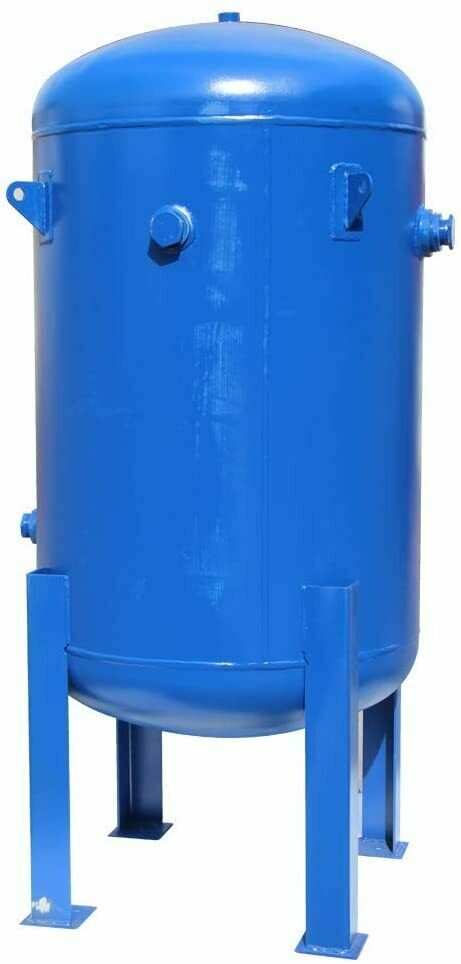
On the other end of the scale, this receiver tank is a large piece of storage equipment. It's rated for 160 PSI and is designed and constructed in accordance with ASME Section Code for compressed air storage. It arrives fully assembled and ready to use, with multiple NPT connection options that make it easy to match piping arrangements. The vertical orientation helps stabilize installation in a fixed location. The trade-off is compatibility: this tank is intended for use with a 22 kW or larger screw compressor, so it is aimed at larger installations. At $1,999, it is a large investment that only makes sense when your demand genuinely outpaces what a smaller tank can supply.
Final Choice by Use Case
- For a single spray gun, pneumatic control, or air tool that keeps getting moisture or grit in the line, go with the Air Line Dryer. It's a low-cost way to improve air quality at that specific point.
- For a workshop or plant that runs multiple high-volume tools and the pressure keeps sagging, the Industrial Air Compressor Receiver Tank is the storage solution. It provides the reserve you need when paired with a properly sized screw compressor.