When a workshop needs to move air, you're really choosing between two different jobs: generating compressed air for tools or blowing/exhausting air for ventilation. The first machine is a fixed 10HP rotary screw compressor that delivers 34 CFM at 125 PSI; the second is a compact 370W blower meant for airflow, not pressure. The price gap between them is more than twenty times, so picking the wrong one can be an expensive mistake.
Quick verdict
If you run impact wrenches, sanders, or any pneumatic equipment on a regular basis, the 3 Phase 10HP Rotary Screw Air Compressor is the clear choice. It gives you a steady, high-pressure air supply for continuous shop use. If you just need to clear dust, smoke, or stale air from a room or garage, the 370W Air Blower does that job for a fraction of the cost and without a 3-phase power connection.
Comparison at a glance
| Feature | 10HP Rotary Screw Compressor | 370W Air Blower |
| Price | USD 3,099.00 | USD 141.14 |
| Air delivery | 34 CFM at 125 PSI | 80 m³/h airflow |
| Power | 230V, 3-phase, 60Hz | 370W corded electric motor |
| Best for | Air tools and industrial lines | Ventilation, exhaust, dust extraction |
Note: the compressor is a 10HP fixed-speed unit with a 3/4" NPT outlet, while the blower is an aviation aluminum unit with a US standard plug. Both are new, but they serve completely different roles.
Where the 10HP rotary screw compressor wins
The compressor wins on every metric that involves pressure. Its 34 CFM output at 125 PSI is squared at a level where you can run multiple tools or a small production line. It has an oil-air separator, oil gauge, and acoustic insulation, details you'd expect on an industrial duty machine. The 3-phase 230V motor and star-delta start make it a permanent installation piece, not a wheel-around unit.
Where the 370W blower wins
The blower wins on price, size, and simplicity. At USD 141.14, it's a low-cost way to add ventilation to a paint booth, remove smoke, or keep a grow room fresh. The all-copper motor and aviation aluminum shell make it rust-resistant and reasonably quiet with built-in sound insulation. It plugs straight into a standard wall outlet and can be moved wherever you need it.
Product notes
3 Phase 10HP Rotary Screw Air Compressor (34 CFM)
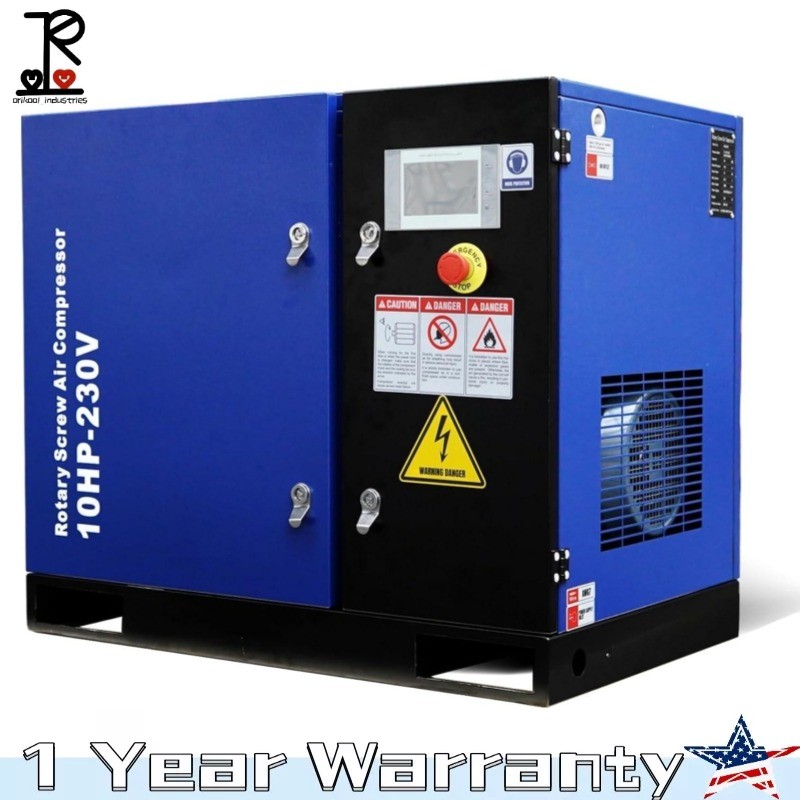
This is the machine to pick when you have a real demand for compressed air. The 34 CFM at 125 PSI is enough to feed sanders, drills, and nailers simultaneously, and the fixed-speed screw design is built to run for long stretches. It also comes with the practical bits you'd expect on an industrial unit: an oil-air separator, a strip oil gauge, and sound-dampening panels. The obvious limitation is the price: USD 3,099.00 is a serious investment. You'll also need a 230V three-phase supply, which many home garages lack. If you only need air occasionally, you're paying for capacity you might not use.
All-copper 370W Industrial Air Blower
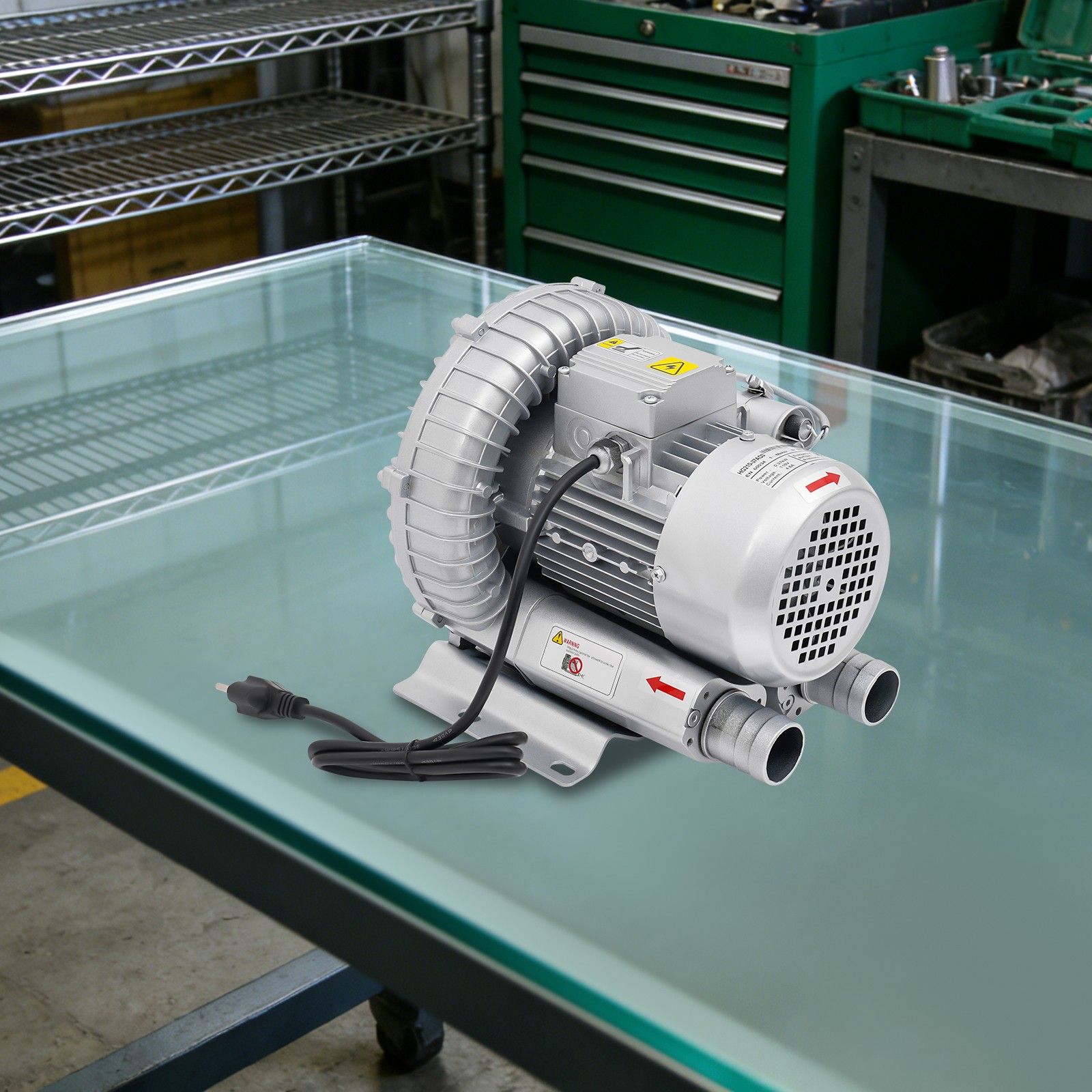
If your task is moving air rather than storing it under pressure, this blower is a smart choice. The 370W all-copper motor pushes around 80 m³/h, which is useful for ventilation, smoke extraction, exhaust, aquaculture oxygenation, and dust control. The housing is aviation aluminum, so it's light and resistant to rust, and the built-in sound insulation sponges keep the noise level down. It costs only USD 141.14 and plugs into a standard US outlet (corded electric), making it truly portable. The trade-off is that it's a blower, not a compressor: it generates airflow but essentially no pressure, so it cannot fill a tank or run pneumatic tools.
Final choice by use case
Choose the 10HP rotary screw compressor if you need dependable compressed air for tools, require 34 CFM of sustained output, and have 3-phase power available. Choose the 370W blower if you need affordable ventilation, smoke or dust removal, or simple air circulation in a garage or workshop. Both are useful, but they solve different problems.