Moisture in a compressed air line can rust tools, foul controls, ruin the finish on a paint job, and leave water spitting out of blow guns. Choosing the wrong size means either wet lines from too little drying or a needlessly expensive unit from too much capacity. A refrigerated air dryer solves that problem only if its airflow rating matches the compressor feeding it. This head-to-head looks at two very different options for your compressors blowers air treatment setup: the SCHULZ unit, sold as a complete kit for 10 HP and 15 HP compressors, and the Compressor Source model, aimed at 5 HP compressors. Both are new refrigerated dryers, but they serve different air demand levels.
Quick verdict
If your compressor is in the larger range and you need more airflow, choose the SCHULZ. If your compressor is a smaller unit and you want the lower-priced option for a moderate line, choose the Compressor Source. Match the airflow rating to your compressor's output, not just the biggest tool you plan to run.
Comparison table
| Model | Listed Price | Airflow | Max Working Pressure |
|---|---|---|---|
| SCHULZ Refrigerated Air Dryer | $1,552.28 | 50 CFM @ 100 PSI | 200 PSI max input |
| Compressor Source Refrigerated Air Dryer | $999.95 | 21 CFM | 232 PSI max working pressure |
Where each wins
The SCHULZ wins for larger compressed air systems. It is the more capable unit when your air demand is high, and its integrated electronic controller keeps the dryer operating without constant attention. The Compressor Source wins for smaller systems and gives you a higher 232 PSI working pressure.
SCHULZ Refrigerated Air Dryer
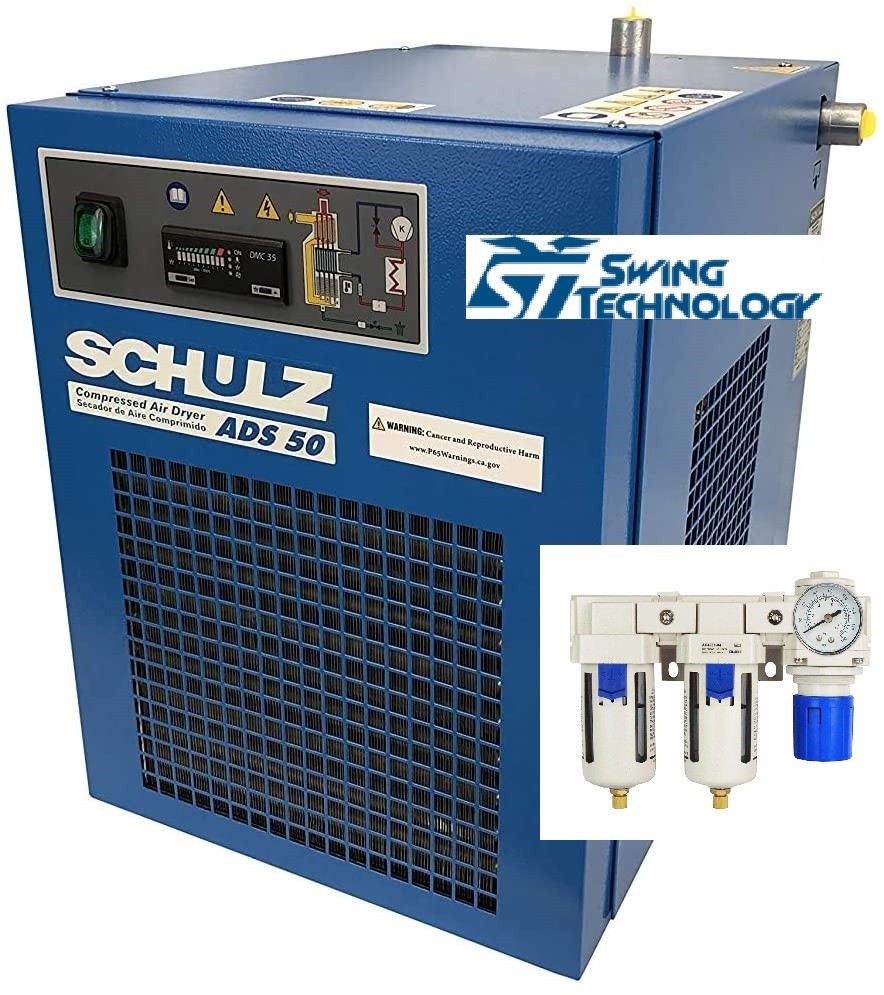
The Schulz ADS 50 is the dryer to pick when your air demand actually reaches the top of its range. It is a non-cycling refrigerated dryer, which means it runs consistently to hold the dew point down. That steady moisture removal is the strongest reason to choose it, especially in a shop with prolonged air tool use. If you run multiple tools at once, the extra airflow gives you a safety margin against pressure drop and moisture carryover. The limitation is that it is overkill for a smaller compressor unless you plan to expand later; you would be carrying a lot of capacity you cannot use. It is also made in Italy, so it fits a shop that expects to keep the extra airflow busy.
Compressor Source Refrigerated Air Dryer
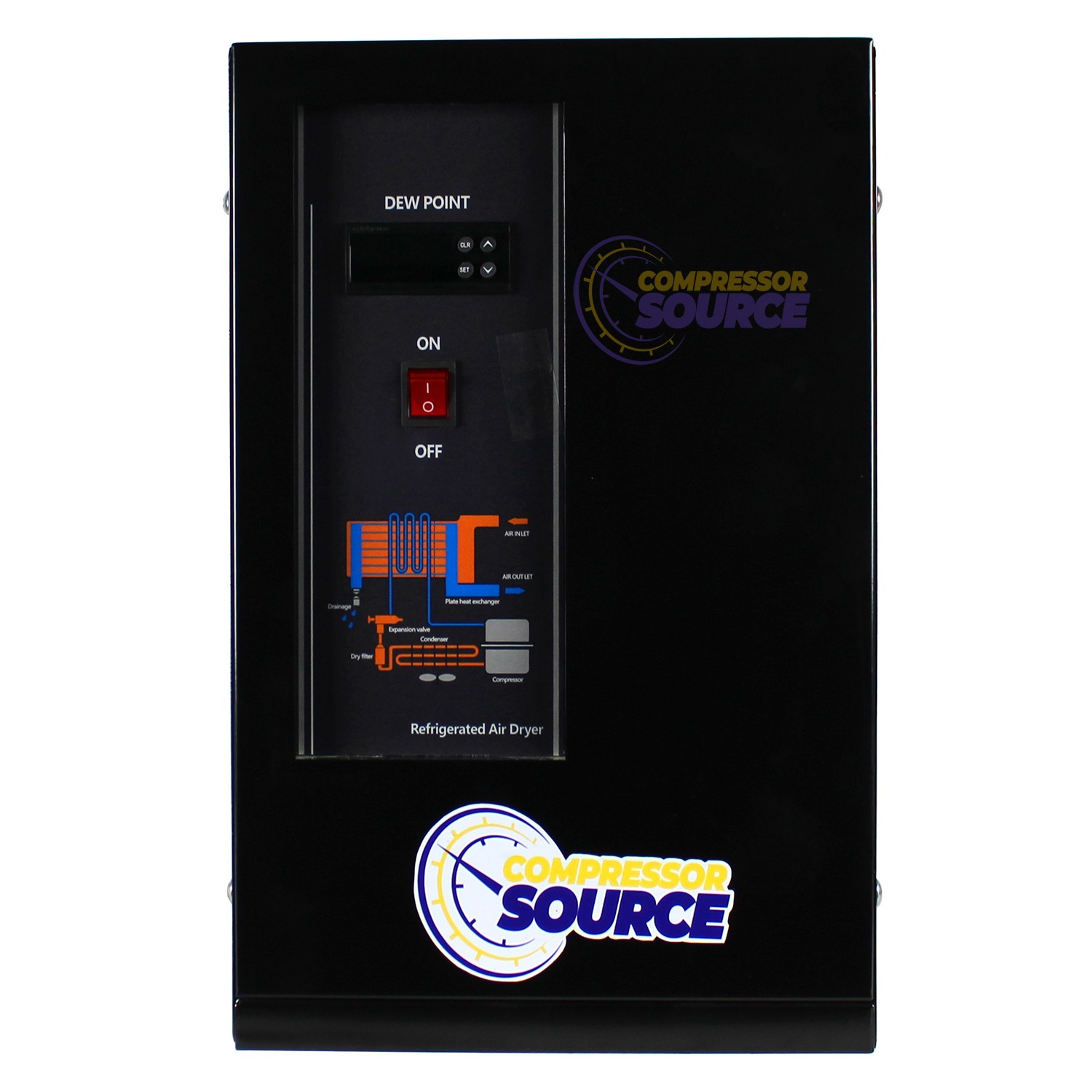
The Compressor Source dryer uses R134a refrigerant and is sized for compressors that deliver up to its airflow rating, which typically means a 5 HP unit, but it can be used on smaller compressors as well. The automatic timer drain, the electronic display that shows dew point and error codes, and the 1/2" NPT inlet and outlet make installation and maintenance straightforward. The timer drain helps keep the unit from being left with a full water bowl at the end of the day. The trade-off is that it cannot keep up with a larger 10 HP or 15 HP compressor; if you push that much air through it, moisture will remain in the line. This is the right dryer for a lower-volume shop that wants solid dehumidifying without paying for capacity it cannot use.
Final choice by use case
Choose the SCHULZ when you have a larger compressor and want a dryer that runs steadily with automatic control. Choose the Compressor Source when you have a smaller compressor and want a straightforward refrigerated dryer for moderate air flow. A refrigerated air dryer only does its job when the compressor can feed it enough air, so match capacity first. Match the dryer to the compressor, and your tools and finished work will stay dry.